Where Care Excellence Meets Business Success. Transform your operations today - 0333 577 0877
We are here to help 24/7.



Can Vitamin B12 Deficiency Be a Sign of Cancer? 2026 Update

Text to speech
Duration: 00:00
Font size
Published: 18 May, 2026
Share this on:
Vitamin B12 deficiency can sometimes signal an underlying medical condition, including certain cancers that affect the digestive system or bone marrow. However, most cases develop because of poor diet, aging, medication use, or absorption problems rather than cancer.
Caregivers should pay attention to persistent symptoms, especially when they appear alongside unexplained weight loss, severe fatigue, or ongoing digestive issues.
Now let’s answer the big question: can vitamin b12 deficiency be a sign of cancer? The short answer is yes, but let’s get some explanations.

Key Takeaways
- Vitamin B12 helps the body produce healthy red blood cells and maintain nerve function.
- Most people develop low B12 because of diet or poor absorption, not cancer.
- Some digestive and blood cancers can contribute to vitamin B12 deficiency.
- Caregivers often notice early symptoms before the individual seeks medical help.
- Persistent symptoms deserve medical evaluation, especially in older adults.
- Early treatment can prevent serious complications linked to the 4 stages of B12 deficiency.
Why Caregivers Should Not Ignore Low Vitamin B12
Caregivers often notice subtle health changes long before a diagnosis happens. An older adult may suddenly become forgetful, unusually tired, dizzy, or unsteady while walking. Families sometimes dismiss these symptoms as normal aging, but low vitamin B12 cancer concerns usually begin when the symptoms continue or worsen despite rest and dietary changes.
Vitamin B12 supports nerve health, brain function, and red blood cell production. When levels drop, the body struggles to carry oxygen efficiently. This problem can leave people weak, confused, and exhausted during daily activities.
Many caregivers searching “is lack of vitamin B12 dangerous” worry about cancer immediately. In reality, most vitamin B12 deficiencies result from diet, aging, stomach problems, or medication use rather than cancer. Older adults commonly develop absorption difficulties because the stomach produces less acid with age.
Still, caregivers should not ignore persistent symptoms. Some cancers that affect the stomach, intestines, pancreas, or bone marrow can interfere with vitamin B12 absorption over time. In these situations, low vitamin B12 cancer symptoms may appear alongside digestive changes, appetite loss, or unexplained weight reduction.
Caregivers also play an important role in tracking symptom patterns. Someone with low B12 cancer concerns may experience:
- Extreme fatigue
- Tingling in the hands or feet
- Poor balance
- Memory problems
- Loss of appetite
- Dizziness or headaches
Many people also ask, “can low vitamin B12 cause dizziness” or “can low B12 cause headaches?” Yes, vitamin B12 deficiency can affect the nervous system and reduce oxygen delivery, which may contribute to dizziness, headaches, and weakness.
Doctors usually treat vitamin B12 deficiency successfully once they identify the cause. That is why caregivers should encourage medical testing early instead of assuming symptoms will disappear on their own.
RELATED: Is MS Hereditary or Inherited? What Causes Multiple Sclerosis (2026)
Can Cancer Cause Vitamin B12 Deficiency?
Yes, some cancers can cause vitamin B12 deficiency, particularly cancers that affect the digestive system or bone marrow. These conditions may interfere with how the body absorbs, stores, or uses vitamin B12. However, doctors do not consider low B12 alone a reliable sign of cancer because many non-cancerous conditions can also lower vitamin B12 levels.
Caregivers often ask, “can cancer cause B12 deficiency” after noticing ongoing fatigue, weakness, or sudden weight loss in someone they support. While the connection exists, doctors usually investigate more common causes first, including poor nutrition, medication use, pernicious anemia, or digestive disorders like Crohn’s disease.
Some cancers that cause B12 deficiency include:
- Stomach cancer
- Colorectal cancer
- Pancreatic cancer
- Leukemia and other blood cancers
These cancers affect the body differently. Stomach and intestinal cancers may damage the digestive lining or block proper nutrient absorption. Blood cancers can disrupt bone marrow function and reduce healthy red blood cell production.
Pernicious anemia also plays an important role in the relationship between vitamin B12 deficiency and cancer. This autoimmune condition damages the stomach cells responsible for producing intrinsic factor, a substance the body needs to absorb vitamin B12. People with pernicious anemia carry a higher risk of developing stomach cancer over time.
Many families searching “is low vitamin B12 a sign of cancer” feel anxious after reading symptom lists online. Caregivers should remember that most people with vitamin B12 deficiency do not have cancer. Doctors usually look for additional warning signs before ordering extensive cancer investigations.
Symptoms that may require further evaluation include:
- Unexplained weight loss
- Persistent vomiting or diarrhea
- Blood in stool
- Severe abdominal pain
- Ongoing appetite loss
- Fatigue that does not improve with treatment
Research also continues to explore the link between low vitamin B12 cancer risk and early cancer detection. Some studies suggest that lower vitamin B12 levels appear more frequently in people with colorectal cancer, especially during early stages. Researchers still need more evidence before confirming whether low vitamin B12 directly contributes to cancer development.
Caregivers should focus on patterns rather than isolated symptoms. A single low B12 result rarely points to cancer by itself, but persistent deficiency combined with worsening health changes deserves medical attention.
READ MORE: UK Two-Child Limit Abolition: What the 2026 Changes Mean
4 Stages of B12 Deficiency and Symptoms Caregivers Often Notice
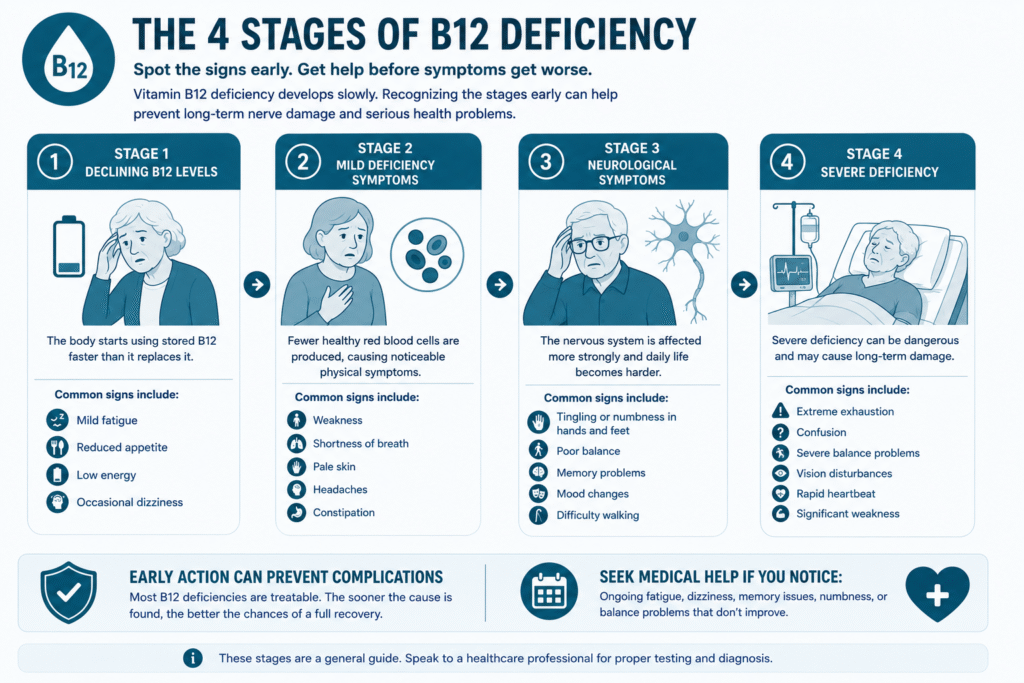
The 4 stages of B12 deficiency usually develop slowly, which makes the condition easy to miss during the early phases. Caregivers often notice small physical or behavioral changes before blood tests confirm the problem. Recognizing these stages early can help prevent long-term nerve damage and serious complications.
Stage 1: Declining Vitamin B12 Levels
During the first stage, the body begins using stored vitamin B12 faster than it replaces it. Most people do not notice symptoms immediately, but some may start feeling tired more often or struggle with concentration.
Caregivers may notice:
- Mild fatigue
- Reduced appetite
- Low energy
- Occasional dizziness
Many people searching “can low vitamin B12 cause dizziness” first discover the deficiency during this stage.
Stage 2: Mild Deficiency Symptoms
As vitamin B12 levels continue dropping, the body starts producing fewer healthy red blood cells. This stage often resembles general exhaustion or stress.
Common symptoms include:
- Weakness
- Shortness of breath
- Pale skin
- Headaches
- Constipation
People frequently ask, “can low B12 cause headaches” or “can lack of B12 cause headaches?” Yes, low oxygen delivery and nerve involvement can contribute to recurring headaches in some individuals.
Some individuals also develop digestive symptoms, leading families to wonder, “does B12 cause constipation?” Vitamin B12 deficiency may slow normal digestive function in certain cases.
Stage 3: Neurological Symptoms
This stage affects the nervous system more aggressively. Caregivers often notice mobility or memory changes that interfere with daily life.
Symptoms may include:
- Tingling in the hands and feet
- Numbness
- Poor balance
- Memory problems
- Mood changes
- Difficulty walking
At this point, caregivers should seek medical attention quickly because nerve damage may become harder to reverse over time.
Hair changes may also appear. Many people ask, “can vitamin B12 deficiency cause hair loss” or “does vitamin B12 deficiency cause hair loss?” Yes, low vitamin B12 may contribute to hair thinning because the body struggles to produce healthy red blood cells and support normal cell growth.
Stage 4: Severe Deficiency
Severe vitamin B12 deficiency can become dangerous if treatment does not begin early. The body may struggle to support normal brain, nerve, and blood cell function.
Symptoms may include:
- Extreme exhaustion
- Confusion
- Severe balance problems
- Rapid heartbeat
- Vision disturbances
- Significant weakness
Families often search “is lack of vitamin B12 dangerous” during this stage because symptoms can become frightening very quickly.
Caregivers should also understand that severe vitamin deficiencies do not automatically mean cancer. Most deficiencies still result from absorption problems, aging, restricted diets, or gastrointestinal conditions rather than low vitamin B12 cancer itself. However, persistent symptoms always deserve proper medical evaluation.
SEE ALSO: What Are Rachel Reeves Disability Benefits? 2026 Update
When Low Vitamin B12 May Signal Something More Serious
Most vitamin B12 deficiencies develop because of diet, aging, medication use, or digestive conditions. However, doctors may investigate further when low B12 appears alongside symptoms that suggest a more serious underlying illness.
Caregivers should pay close attention when vitamin B12 deficiency continues despite supplements or dietary improvements. Persistent symptoms sometimes point to digestive disease, autoimmune disorders, or cancers that interfere with nutrient absorption.
Doctors usually look for warning signs such as:
- Unexplained weight loss
- Persistent vomiting or diarrhea
- Blood in stool
- Ongoing abdominal pain
- Severe fatigue
- Loss of appetite
- Night sweats
- Rapid decline in overall health
Many people searching “is low vitamin B12 a sign of cancer” worry after seeing these symptoms together. While cancer remains uncommon compared to other causes, doctors may order additional testing to rule out gastrointestinal cancers or blood cancers when symptoms continue worsening.
Caregivers should also understand the connection between folate deficiency and serious illness. Some people ask, “can low folate be a sign of cancer” or “can low folate be a sign of leukemia?” In certain cases, low folate levels may appear alongside leukemia, digestive disease, malnutrition, or chronic illness because the body struggles to produce healthy blood cells properly.
Doctors often investigate both vitamin B12 and folate levels together because deficiencies can create similar symptoms, including:
- Fatigue
- Weakness
- Dizziness
- Pale skin
- Memory problems
- Mouth soreness
Low folate and vitamin B12 deficiencies may also contribute to hair thinning, which explains why caregivers frequently search “can folic acid deficiency cause hair loss” or “can lack of folic acid cause hair loss.”
Importantly, caregivers should avoid assuming the worst after seeing a low B12 result. Most people with vitamin B12 deficiency do not have cancer. Doctors typically begin with blood tests, dietary reviews, medication history, and digestive evaluations before considering more serious conditions.
Still, early medical evaluation matters. Some cancers that affect the stomach or intestines develop gradually and may first appear through unexplained anemia, persistent digestive symptoms, or chronic vitamin deficiencies. Caregivers who notice these patterns early can help loved ones receive faster diagnosis and treatment.
MORE: Moving From ESA Support Group to Universal Credit: What You Need to Know in 2026
Can Vitamin B12 Deficiency Cause Cancer?
Researchers continue studying the relationship between vitamin B12 deficiency and cancer, but current evidence does not prove that vitamin B12 deficiency directly causes cancer. Doctors instead view low B12 as a possible contributing factor in certain situations or as a warning sign of underlying disease.
Many people searching “can vitamin B12 deficiency cause cancer” or “cancer is deficiency of B12” misunderstand the connection. Vitamin B12 deficiency alone does not automatically trigger cancer growth. However, long-term deficiencies may affect DNA production, red blood cell formation, and overall cell health, which explains why researchers continue exploring possible links.
Some studies suggest that chronic inflammation, poor nutrition, and absorption problems associated with vitamin deficiencies may increase certain cancer risks over time. Researchers have particularly examined links between vitamin B12 deficiency and cancer involving the digestive system, including colorectal and stomach cancers.
At the same time, scientists have also studied whether high vitamin B12 levels may indicate hidden disease. This explains why many people ask, “does high B12 mean cancer?” Elevated vitamin B12 levels do not necessarily mean someone has cancer, but doctors sometimes investigate unexplained high levels because liver disease, blood disorders, and some cancers can affect vitamin B12 metabolism.
Researchers also continue studying low vitamin B12 cancer growth patterns, especially in colorectal cancer. Some findings suggest that abnormal vitamin B12 levels appear more frequently in cancer patients, but researchers still need stronger evidence to determine whether the deficiency contributes to cancer development or simply reflects underlying illness.
Caregivers should focus on balanced, evidence-based information instead of alarming online claims. Most vitamin B12 deficiencies develop because of:
- Poor dietary intake
- Aging
- Pernicious anemia
- Medication side effects
- Digestive disorders
Early testing and treatment usually improve symptoms significantly. Doctors may recommend supplements, injections, dietary changes, or further investigations depending on the underlying cause.
READ: DWP Text Message Warning: How to Protect Pensioners From Winter Fuel Payment Scams
What Foods Give You Vitamin B12?
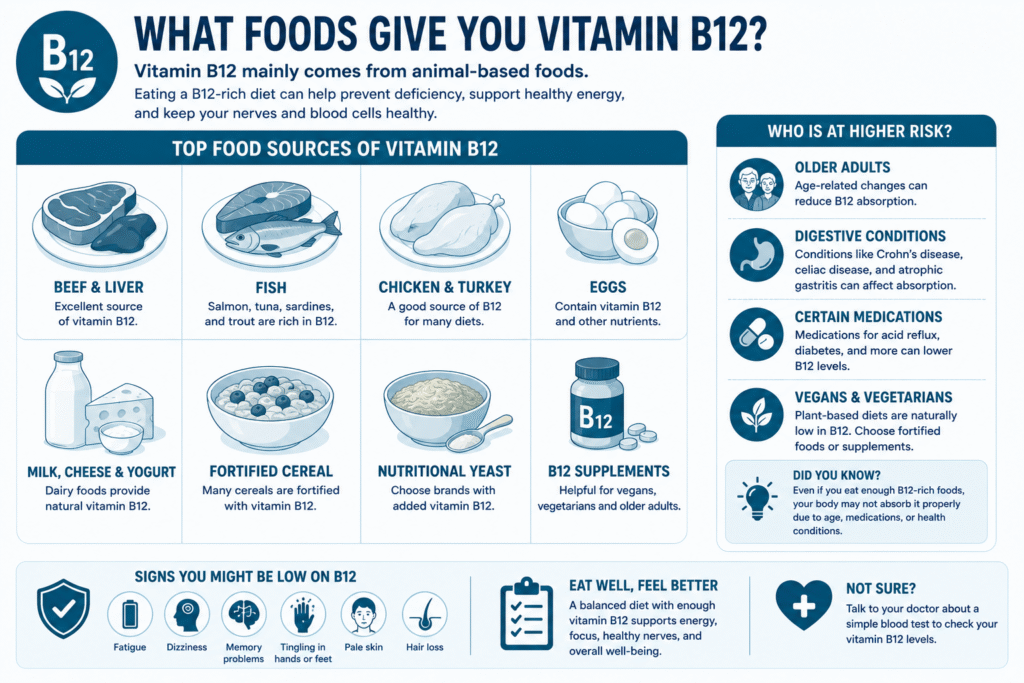
Vitamin B12 mainly comes from animal-based foods, which means older adults, people with digestive disorders, and individuals following strict vegan diets face a higher risk of deficiency. Caregivers should understand which foods give you vitamin B12 so they can support healthy meal planning and reduce the risk of long-term complications.
Foods rich in vitamin B12 include:
- Beef and liver
- Fish like salmon, tuna, and sardines
- Chicken and turkey
- Eggs
- Milk, cheese, and yogurt
- Fortified breakfast cereals
- Nutritional yeast with added B12
Many caregivers first notice symptoms like fatigue, weakness, dizziness, or memory problems before realizing diet may play a role. People often search “can low vitamin B12 cause dizziness” after experiencing balance problems or lightheadedness during daily activities.
Older adults may still develop deficiency even when they eat enough vitamin B12-rich foods. Aging, stomach acid reduction, and digestive conditions can prevent proper absorption. Some medications used for acid reflux or diabetes may also lower vitamin B12 levels over time.
Caregivers supporting vegetarian or vegan individuals should pay close attention to fortified foods and supplements because plant-based diets naturally contain very little vitamin B12. Early prevention often reduces the risk of severe symptoms linked to the 4 stages of B12 deficiency.
When Caregivers Should Encourage Medical Testing
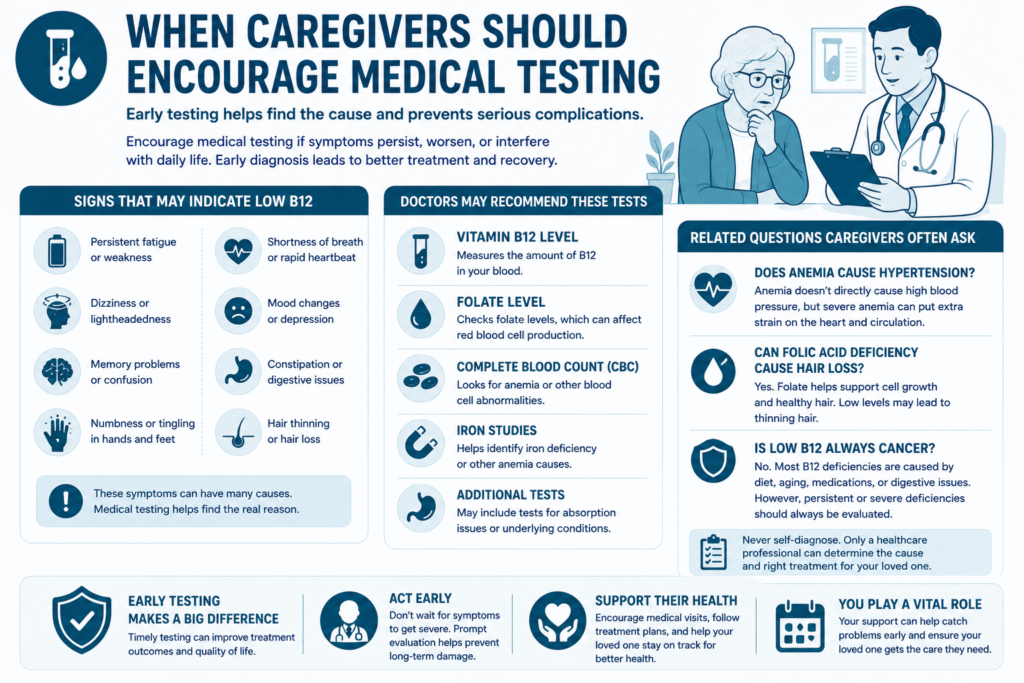
Caregivers should encourage medical testing when vitamin B12 deficiency symptoms persist, worsen, or interfere with daily life. Early diagnosis helps doctors identify the underlying cause before complications affect nerve function, mobility, or overall health.
Doctors usually begin with blood tests to measure:
- Vitamin B12 levels
- Folate levels
- Red blood cell count
- Iron levels
- Markers of anemia
Testing becomes especially important when symptoms appear alongside unexplained weight loss, digestive problems, severe fatigue, or neurological changes.
Many caregivers also ask related questions, such as “does anemia cause hypertension?” While anemia does not directly cause high blood pressure in most cases, severe anemia can place extra stress on the heart and circulation. Doctors often evaluate the full health picture instead of focusing on one symptom alone.
Some individuals experience multiple nutritional deficiencies at the same time. This explains why searches like “can folic acid deficiency cause hair loss” and “can lack of folic acid cause hair loss” often appear alongside vitamin B12 concerns. Folate and vitamin B12 both support healthy cell growth, hair production, and red blood cell formation.
Caregivers should also avoid self-diagnosing based on internet searches alone. Symptoms such as dizziness, headaches, weakness, constipation, or hair thinning can develop from many different medical conditions, not only low B12 cancer concerns.
The good news is that most vitamin B12 deficiencies improve with proper treatment. Doctors may recommend dietary changes, oral supplements, vitamin B12 injections, or additional testing depending on the cause.
Most importantly, caregivers should act early rather than wait for symptoms to become severe. Prompt medical attention can improve quality of life, prevent long-term complications, and help rule out serious underlying conditions, including cancers that cause B12 deficiency.
Concerned About Persistent Vitamin B12 Deficiency Symptoms?
Care Sync Experts helps caregivers, families, and care providers stay informed about important health concerns affecting older adults and vulnerable individuals.
If someone you support shows ongoing fatigue, dizziness, memory problems, unexplained weight loss, or other symptoms linked to vitamin B12 deficiency and cancer, encourage early medical evaluation instead of ignoring the warning signs.
At Care Sync Experts, we provide trusted caregiver-focused insights, practical healthcare guidance, and evidence-based resources designed to support better care decisions every day.
FAQ
What is the treatment for B12 deficiency?
Doctors treat vitamin B12 deficiency based on the underlying cause and severity of symptoms. Mild cases often improve with oral vitamin B12 supplements and dietary changes, while severe deficiencies may require vitamin B12 injections. People with absorption problems, pernicious anemia, or digestive disorders sometimes need long-term treatment and regular monitoring.
What is a severe B12 deficiency level?
Many doctors consider vitamin B12 levels below 150 pg/mL (picograms per milliliter) severely deficient, especially when neurological symptoms appear. However, symptoms can develop even at slightly higher levels in some individuals. Doctors usually evaluate blood results alongside fatigue, numbness, balance problems, memory changes, and anemia symptoms.
Can low B12 be life threatening?
Yes, severe untreated vitamin B12 deficiency can become dangerous over time. Long-term deficiency may cause permanent nerve damage, serious anemia, mobility problems, cognitive decline, and heart-related complications. Early diagnosis and treatment usually prevent these outcomes and improve recovery chances significantly.
What happens if B12 deficiency is left untreated?
Untreated vitamin B12 deficiency can gradually damage the nervous system and reduce healthy red blood cell production. People may develop worsening fatigue, tingling sensations, memory loss, depression, poor coordination, and difficulty walking. In severe cases, some neurological complications may become permanent if treatment starts too late.

Would you like to receive update from CareSync Experts?
All rights reserved. Copyright © - Care Sync Experts.


