Care Work
Equality Act Protected Characteristics: 2026 Importance for Care Work
The nine protected characteristics explained with care sector examples, what counts as discrimination, and where care providers get it wrong.
- Updated
- Reading time
- 9 min read
The Equality Act protected characteristics refer to specific personal traits that the law protects from discrimination in the UK. The Equality Act 2010 makes it unlawful to treat someone unfairly because of these characteristics in areas such as employment, education, housing, and access to services. The law aims to promote equality, diversity, and equal opportunities by ensuring that individuals receive fair treatment regardless of who they are.
When people ask “what are protected characteristics?”, they are referring to the legally recognised traits that the Act safeguards. These protections help prevent discrimination at work, harassment, and victimisation, particularly in workplaces where fair treatment and inclusive practices are essential.
The Equality Act recognises nine protected characteristics in the UK. If someone treats a person less favourably because of one of these characteristics, that behaviour may count as discrimination under the law. In many workplaces, including health and social care, employers must actively ensure that policies, recruitment decisions, and daily practices respect these protections.
What are the 9 protected characteristics of the Equality Act?

The Equality Act protected characteristics are the nine personal traits that the law protects from discrimination in the UK. If someone treats a person unfairly because of one of these characteristics, it may count as unlawful discrimination under the Equality Act 2010.
So, how many protected characteristics are there?
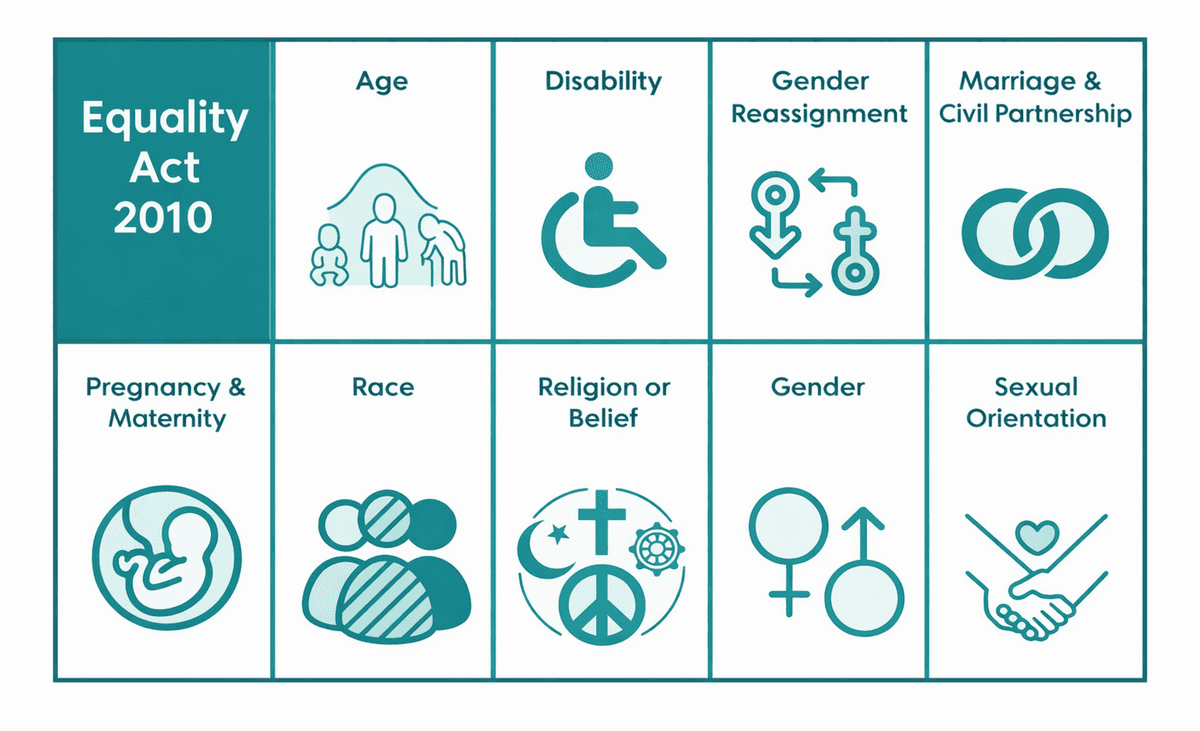
The law recognises nine protected characteristics in the UK:
- Age – protection from discrimination because someone belongs to a particular age group.
- Disability – a physical or mental impairment that has a substantial, long-term effect on daily activities.
- Gender reassignment – protection for people who are proposing to transition, are transitioning, or have transitioned.
- Marriage and civil partnership – protection for people who are married or in a civil partnership, mainly in employment.
- Pregnancy and maternity – protection during pregnancy, maternity leave, and the period after childbirth.
- Race – includes colour, nationality, and ethnic or national origins.
- Religion or belief – includes religious beliefs, philosophical beliefs, or lack of belief.
- Sex – being a man or a woman.
- Sexual orientation – whether someone is attracted to people of the same sex, opposite sex, or both.
These protected characteristics UK law recognises form the foundation of equality legislation. Employers, organisations, and service providers must ensure their policies and decisions do not unfairly disadvantage people because of any of these traits.
Equality Act protected characteristics examples in the workplace
Understanding equality act protected characteristics in the workplace helps employers and care providers recognise when behaviour crosses the line into unlawful discrimination. Many situations may seem small at first, but they can still lead to discrimination at work if someone treats a person unfairly because of a protected characteristic.
Here are some Equality Act protected characteristics examples that commonly occur in workplaces:
Age
A manager refuses to hire a qualified applicant because they believe the person is “too old” to adapt to new systems.
Disability
An employer refuses to make reasonable adjustments for a worker with a long-term health condition. For example, an employee with severe arthritis may need flexible duties. If the condition has a substantial and long-term impact on daily activities, it may qualify as a disability under the law. This raises common questions such as “is arthritis a disability?” In many cases, it can be if it significantly affects normal activities.
Pregnancy and maternity
A supervisor removes a pregnant employee from a promotion shortlist because they expect her to go on maternity leave.
Religion or belief
An employer refuses to allow a worker to take a short break to observe an important religious practice when other staff receive flexible break times.
Race
A worker receives fewer opportunities or harsher treatment because of their nationality or ethnic background.
These examples show how discrimination can appear in everyday workplace decisions such as recruitment, scheduling, training opportunities, or promotion. Employers must actively prevent these situations to maintain equal opportunities and promote a workplace culture built on equality and diversity.
What is discrimination under the Equality Act?
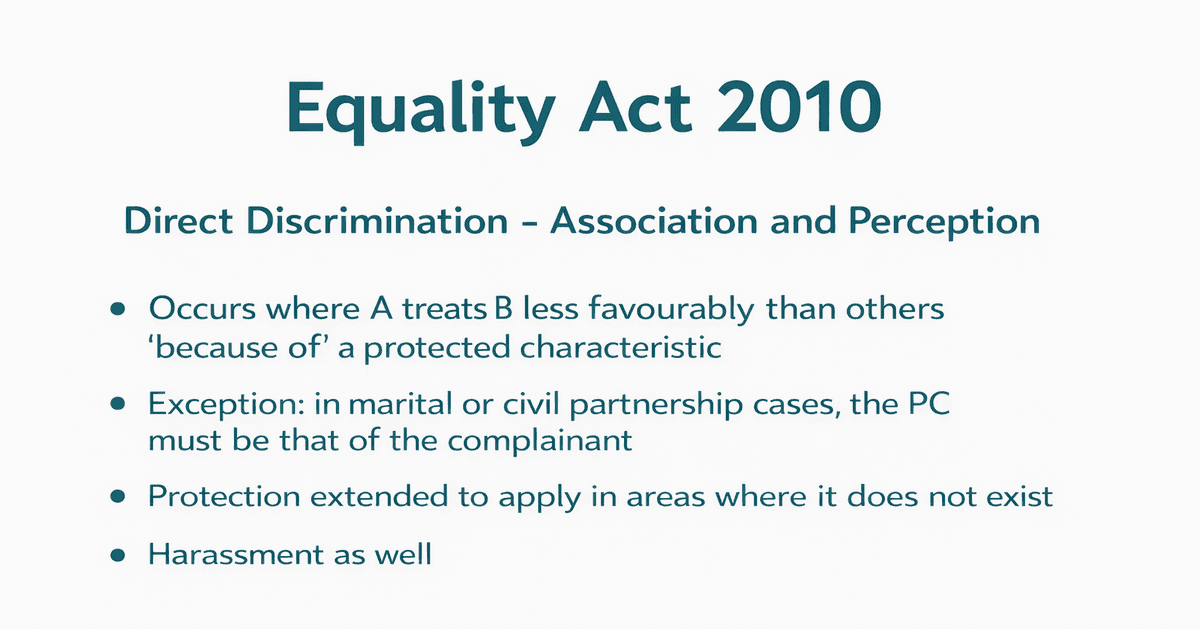
Discrimination happens when someone treats a person unfairly because of one of the Equality Act protected characteristics. The Equality Act 2010 recognises several types of discrimination, and each can occur in workplaces, services, education, and housing.
Understanding what discrimination is helps employers and care providers recognise unlawful behaviour and prevent discrimination at work.
Direct discrimination
Direct discrimination occurs when someone treats a person worse than others because of a protected characteristic.
Example:
A care agency rejects a qualified job applicant because of their race or religion.
Indirect discrimination
Indirect discrimination happens when a rule or policy applies to everyone but disadvantages people with a particular protected characteristic.
Example:
A workplace policy requires all staff to work late evenings. This may disadvantage employees with certain religious commitments.
Harassment
Harassment occurs when behaviour makes someone feel humiliated, offended, or degraded because of a protected characteristic.
Example:
A colleague repeatedly makes offensive jokes about a worker’s disability or sexual orientation.
Victimisation
Victimisation happens when someone treats a person unfairly because they made a complaint about discrimination or supported another person’s complaint.
Example:
An employee reports discrimination at work, and their manager then excludes them from training opportunities.
Recognising these types of discrimination helps employers protect workers and create fair policies that support equality, diversity, and equal opportunities in the workplace.
Discrimination by association and discrimination by perception
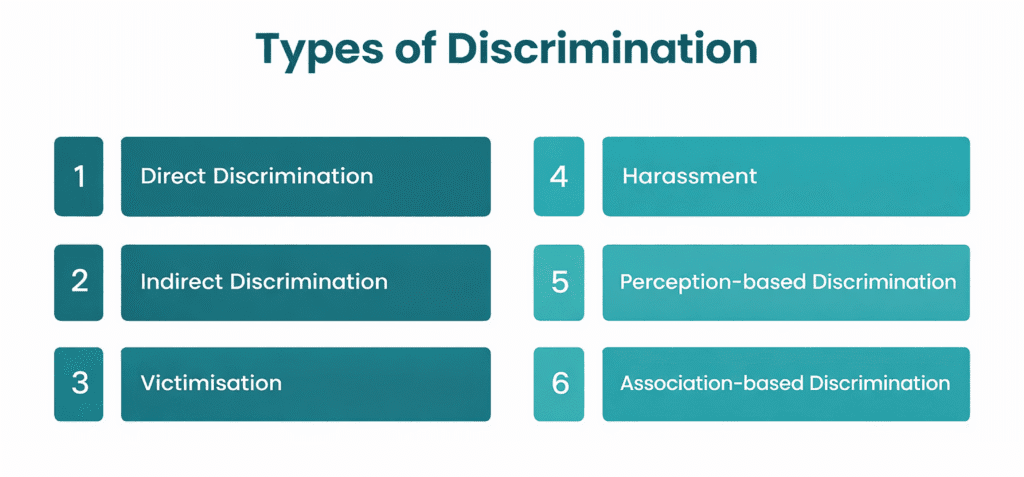
The Equality Act also protects people in situations where discrimination happens indirectly through assumptions or relationships. Two important legal concepts are discrimination by association and discrimination by perception.
Discrimination by association
Discrimination by association happens when someone treats a person unfairly because of their connection with someone who has a protected characteristic.
The person experiencing the discrimination does not need to have the characteristic themselves.
Example:
A manager treats an employee unfairly because the employee’s child has a disability and sometimes requires flexible working arrangements. Even though the worker is not disabled, the treatment may still count as unlawful discrimination.
Discrimination by perception
Discrimination by perception occurs when someone treats a person unfairly because they believe that person has a protected characteristic, even if that assumption is incorrect.
Example:
An employer refuses to promote a worker because they assume the worker belongs to a particular religion or sexual orientation. Even if the assumption is wrong, the action may still be discrimination under the Equality Act.
These protections ensure that employers and organisations cannot justify unfair treatment based on assumptions, stereotypes, or personal associations. Understanding these rules helps workplaces create fair policies that support equality, diversity, and equal opportunities.
Why protected characteristics matter in health and social care
Understanding Equality Act protected characteristics plays a vital role in health and social care settings. Care providers work with people from many backgrounds, so employers must actively promote equality, diversity, and equal opportunities in both employment and service delivery.
In care environments, staff support individuals who may already face vulnerability due to age, disability, or health conditions. If workers or service users experience unfair treatment because of a protected characteristic, it can undermine trust and create unsafe care environments. This is why preventing discrimination at work is essential in caregiving roles.
Employers in health and social care must ensure that recruitment, training, and workplace policies treat everyone fairly. For example, a care organisation should not refuse to hire someone because of their age, religion, or pregnancy. Similarly, managers should provide reasonable adjustments for workers with disabilities so they can perform their roles effectively.
Promoting fairness also improves the quality of care. When organisations respect protected characteristics UK law recognises, they build inclusive teams that better understand the needs of diverse communities. This approach supports professional standards in caregiving and strengthens public confidence in care services.
Respecting protected characteristics helps care providers deliver compassionate, lawful, and respectful support to everyone they serve.
How many protected characteristics are there: 9, not 10 or 12
People often search questions like “how many protected characteristics are there?”, “what are the 10 protected characteristics?”, or even “what are the 12 protected characteristics?”. The Equality Act 2010 is clear on this point.
UK law recognises nine protected characteristics.
These are the only characteristics specifically protected under the Equality Act:
- age
- disability
- gender reassignment
- marriage and civil partnership
- pregnancy and maternity
- race
- religion or belief
- sex
- sexual orientation
No additional characteristics appear in the legislation. Some people confuse positive discrimination, workplace diversity initiatives, or other equality concepts with protected characteristics. However, these ideas do not add new characteristics to the law.
Employers can take positive action to support groups that face disadvantage or under-representation, but this differs from positive discrimination, which is generally not permitted in most situations.
Understanding how many protected characteristics exist under UK law helps organisations apply the Equality Act correctly and avoid misunderstandings when developing workplace policies or diversity programmes.
Key takeaway
The Equality Act protected characteristics form the foundation of UK equality law. The Act identifies nine protected characteristics that safeguard people from unfair treatment in employment, education, housing, and public services.
For employers and care providers, understanding what protected characteristics are is essential. Fair recruitment, respectful workplace behaviour, and inclusive policies help prevent discrimination at work and promote equal opportunities for everyone.
When organisations recognise and respect protected characteristics in the UK, they strengthen workplace culture, support equality and diversity, and ensure that staff and service users receive fair and lawful treatment.
Need Expert Guidance on Equality and Compliance in Health and Social Care?
Care Sync Experts supports care providers, managers, and healthcare organisations across the UK with clear, practical guidance on Equality Act compliance, workplace policies, and inclusive care practices.
From helping organisations understand Equality Act protected characteristics and preventing discrimination at work to strengthening equality, diversity, and equal opportunities within care teams, our specialists help providers build workplaces that are both legally compliant and supportive for staff and service users.
Whether you need support reviewing workplace policies, staff training programmes, recruitment practices, or regulatory compliance, our team provides structured, professional guidance that aligns with modern UK health and social care standards.
Create safer, fairer, and more inclusive care environments.
Contact Care Sync Experts today and strengthen your organisation’s equality and compliance practices with confidence.
FAQ
What is Section 13 of the Equality Act 2010?
Section 13 of the Equality Act 2010 defines direct discrimination. Direct discrimination occurs when someone treats another person less favourably because of a protected characteristic, such as age, race, disability, religion, or sex.
For example, if an employer refuses to hire a qualified candidate because of their religion or age, that decision may amount to direct discrimination. In most situations, direct discrimination is unlawful unless a specific legal exception applies.
What is Section 4 of the Equality Act 2010?
Section 4 of the Equality Act 2010 formally defines the protected characteristics recognised under UK law. These characteristics represent the personal traits that the law protects from discrimination, harassment, and victimisation.
The section establishes the legal framework that ensures individuals receive fair treatment regardless of their age, disability, gender reassignment status, marital status, pregnancy, race, religion or belief, sex, or sexual orientation.
What is Section 7 of the Equality Act 2010?
Section 7 explains the protected characteristic of gender reassignment. It protects individuals who are proposing to transition, are undergoing a transition, or have transitioned from one gender to another.
Importantly, the law does not require a person to undergo medical treatment or surgery to receive protection. If someone faces discrimination because they intend to transition or are perceived to be transitioning, the Equality Act may protect them.
What is Section 20 of the Equality Act 2010?
Section 20 introduces the duty to make reasonable adjustments for people with disabilities. Employers, service providers, and organisations must take reasonable steps to remove barriers that place disabled individuals at a disadvantage.
Reasonable adjustments may include modifying workplace equipment, providing flexible working arrangements, or adapting physical environments. The goal is to ensure disabled individuals can access employment, services, and opportunities on equal terms with others.
Topics
Care Work · Equality Act · Protected Characteristics
Written by
Muhideen Ajibade
Blog writer assistant, Care Sync Experts
Care Sync Experts helps care providers with CQC, Ofsted, CIW and RQIA registration, compliance and tenders. Our team has more than 10 years' experience and has supported over 1,200 providers.
Published 13 Mar, 2026 · Last updated 26 Sept, 2026
Want this handled for you?
Our team has supported over 1,200 care providers with registration, compliance and tenders, with a 94% first-time approval rate.