Individual Support Package:
What It Means for Care at Home

Text to speech
Duration: 00:00
Font size
Published: 19 May, 2026
Share this on:
An individual support package is a personalised plan of care built around one person’s daily needs, health, safety, independence, and personal wishes. It explains the support someone needs, how carers should provide it, and what outcome the person wants from that support.
For an older person living at home, an individual support package may include help with washing, dressing, meals, medication reminders, mobility, companionship, night care, or live-in care. For someone with a disability, long-term condition, dementia, or changing health needs, it may also include risk management, family updates, specialist support, and regular reviews.
In adult social care, this support may connect to a care and support plan, personal budget, or direct payment after a local council assessment. In private home care, families may also arrange their own package directly with a care provider.
The best individual support package does not start with a list of tasks. It starts with the person: what they can do, what they struggle with, what matters to them, and how care can help them live with dignity, confidence, and as much independence as possible.

What Is the Purpose of a Care Plan?
The purpose of a care plan is to give carers a clear, practical guide for supporting someone safely and consistently. It tells the care team what the person needs, how they prefer to receive support, what risks to watch for, and what daily routines matter most.
A good care plan does more than list tasks. It helps carers protect dignity, encourage independence, and avoid guesswork. For example, one person may need help getting dressed but still want to choose their own clothes. Another may need medication prompts but prefer carers to explain each step before offering support.
A care plan usually covers personal care, mobility, meals, medication, communication needs, health conditions, emergency contacts, family preferences, and review dates. It should also show what the person can still do for themselves.
So, what is the purpose of a care plan? It helps everyone work from the same page: the person receiving care, their family, the care provider, and the carers who visit each day. That consistency makes care safer, more personal, and easier to review when needs change.
RELATED: CQC Nominated Individual vs Registered Manager (2026): What You Need to Know?
Individual Support Package vs Care and Support Plan
An individual support package describes the full arrangement of support a person receives. A care and support plan records the assessed needs, agreed goals, and services needed to meet those needs.
In simple terms, the care and support plan explains the “what” and “why.” The individual support package explains how that support works in real life.
For example, a care and support plan may say that an elderly person needs help with personal care, meals, medication prompts, and mobility. The individual support package turns that into daily support: a morning visit, lunchtime meal preparation, an evening check-in, night care, or live-in care if the person needs continuous help.
Families may arrange an individual support package through the local council, direct payments, a private home care provider, or a mix of family and professional support.
This is also where people may hear terms like individual service plan. In many care settings, an individual service plan means a personalised plan that explains how support should be delivered to one person based on their needs, preferences, risks, and goals.
What Can an Individual Support Package Include?
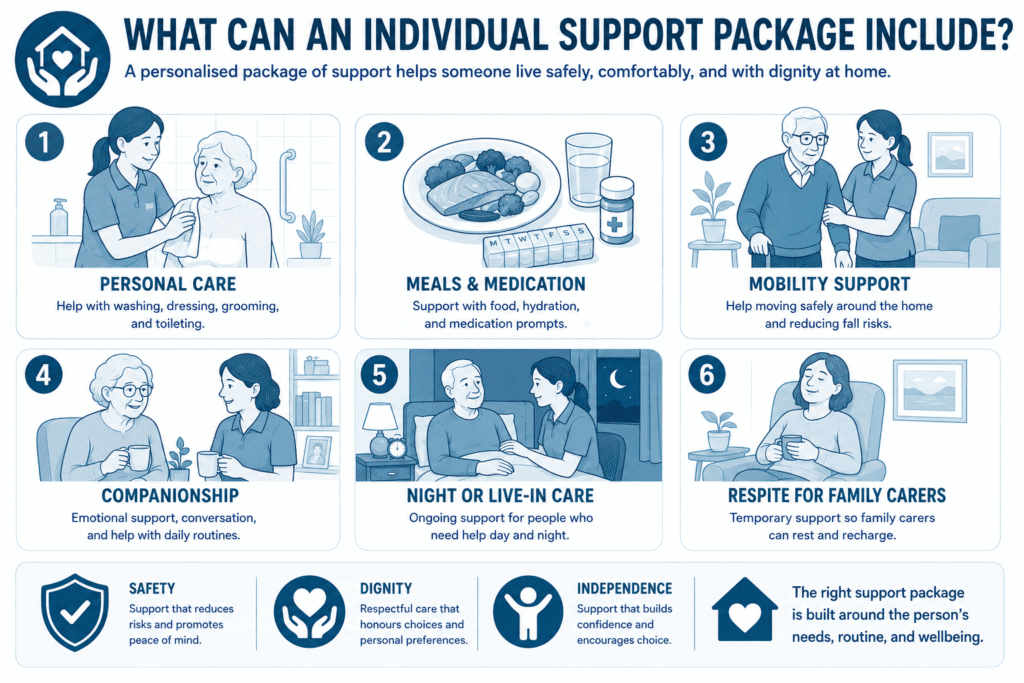
An individual support package can include any support that helps a person live safely, comfortably, and with dignity. The exact support depends on the person’s needs, health, routine, risks, and level of independence.
In home care, an individual support package may include:
- Personal care, such as washing, dressing, toileting, grooming, and continence support
- Help with getting in and out of bed
- Meal preparation and support with eating or drinking
- Medication prompts or support, depending on the care arrangement
- Mobility support around the home
- Companionship and emotional reassurance
- Dementia care and memory support
- Night care for people who wake often or need overnight help
- Live-in care for people who need regular support throughout the day
- Respite care so family carers can rest
- Help with appointments, shopping, light household tasks, and daily routines
- Risk checks, family updates, and emergency planning
So, what is personal care? It means hands-on support with private daily tasks such as washing, dressing, toileting, oral care, and grooming.
And what is home care? It means professional support delivered in the person’s own home, so they can stay in familiar surroundings while receiving the care they need.
Care Plan Examples Families Can Understand
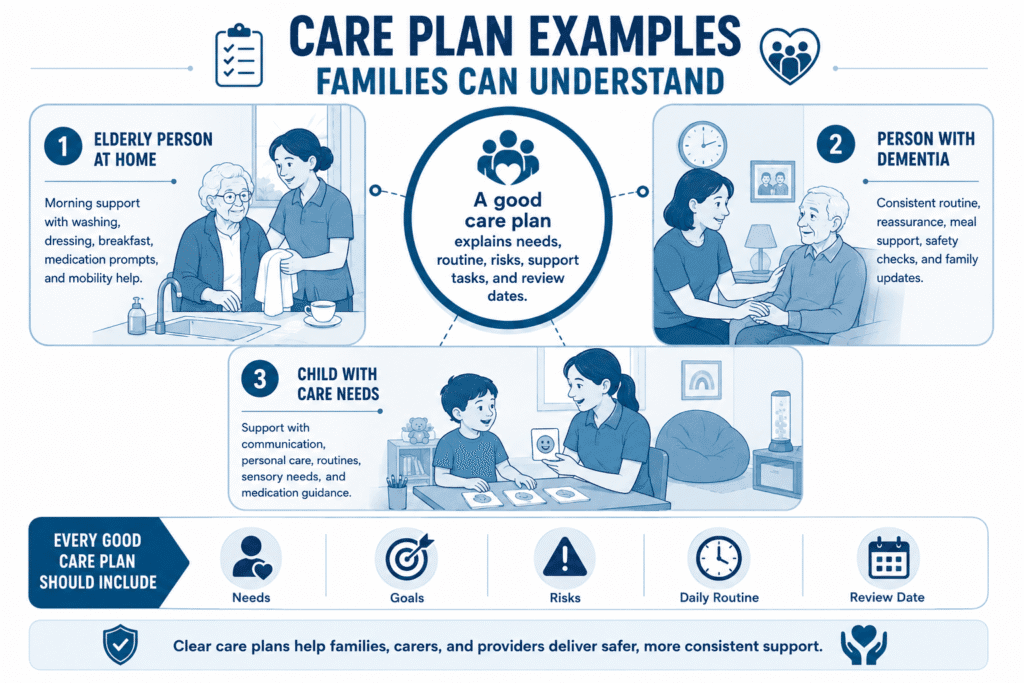
Care plan examples help families see how support works in real life. Every person needs something different, but a good care plan always gives carers clear instructions, respects the person’s choices, and keeps support consistent.
For an elderly person living at home, a care plan may include a morning visit for washing, dressing, breakfast, medication prompts, and mobility support. This type of care plan for elderly at home helps the person start the day safely without losing their normal routine.
For someone living with dementia, the care plan may focus on reassurance, familiar routines, meal support, safety checks, and regular family updates. The carer may use the same words, same visit pattern, and same calm approach to reduce confusion.
For a child with care needs, a care plan may include communication support, personal care, sensory needs, school routines, medication guidance, and family preferences. So, what is a care plan for a child? It is a clear support plan that helps adults understand the child’s health, safety, emotional, and daily care needs.
A simple example of care plan in health and social care could include the person’s needs, goals, risks, preferred routine, support tasks, emergency contacts, and review date.
What Is a Care Plan in a Care Home?
A care plan in a care home gives staff a clear guide for supporting each resident every day. It explains the person’s health needs, personal care routine, medication support, mobility level, food preferences, communication needs, risks, and social interests.
In a care home, several staff members may support the same person across different shifts. The care plan helps everyone provide consistent care, even when the staff change. It also helps the care home review what works, what needs to change, and whether the person’s needs have increased.
For example, one resident may need help moving safely from bed to chair, support with meals, and encouragement to join social activities. Another may need dementia support, regular reassurance, and close monitoring at night.
Families often ask how to get an elderly person into a care home when home care no longer feels safe or manageable. The first step is usually to arrange a care needs assessment, compare care options, and decide whether residential care, nursing care, or more support at home would best protect the person’s safety and wellbeing.
How Much Does Home Care Cost in the UK?
Home care costs vary by location, care needs, visit length, and whether the person needs daytime, night, live-in, or specialist support. A paid carer at home can cost around £15 to £30 per hour, while the NHS gives a typical hourly rate of around £20, depending on where you live.
Families often ask, how much does home care cost per hour UK or how much do private carers charge per hour UK. The honest answer is that simple companionship may cost less than complex personal care, dementia support, night care, or nurse-led care. A home care provider should assess the person first, then explain the price clearly before care starts.
Live-in care usually costs more overall but gives the person one-to-one support at home. The NHS says a live-in carer can cost from around £800 to £1,600 per week, while 2026 home care market guides often place live-in care around £900 to £1,400 per week, with complex needs sometimes reaching £2,000 per week.
So, how much does live in care cost, how much does a live-in carer cost per week, or how much does a night carer cost UK? The final cost depends on the person’s needs, risk level, sleeping or waking night support, and whether they need a carer, home nurse, or specialist care team. A good provider will not guess; they will assess, explain, and build the individual support package around real care needs.
What About Children, SEND, and Individual Service Plans?
Children can also need an individual support package, especially when they have health needs, disabilities, personal care needs, or extra support needs at home or school. In this context, the package may involve parents, carers, teachers, healthcare professionals, social workers, and specialist support teams.
So, what is a care plan for a child? It is a personalised plan that explains the child’s daily needs, communication style, medical support, personal care, emotional wellbeing, routines, risks, and the best way adults should support them.
Families may also hear the term SEND, which means Special Educational Needs and Disabilities. When people ask what is S.E.N.D, they usually want to understand the extra help a child may need to learn, communicate, move around, manage emotions, or take part safely in daily life.
An individual service plan works in a similar way. It sets out the support one person needs and how carers or professionals should deliver that support. For a child, this plan should always protect dignity, encourage development, and keep the family involved.
How to Arrange an Individual Support Package
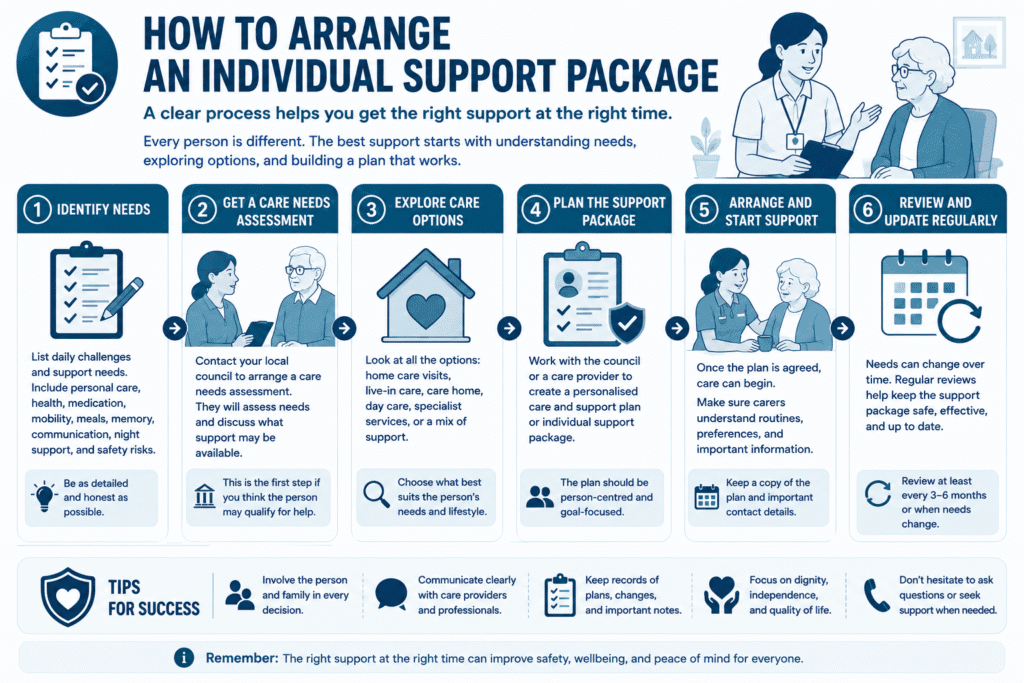
Start by writing down what the person struggles with each day. Look at personal care, meals, medication, mobility, memory, communication, night-time needs, safety risks, and how much support family members can realistically provide.
If the person may qualify for council-funded support, request a care needs assessment from the local council. The council can assess the person’s needs, decide whether they qualify for help, and create a care and support plan. If they qualify, they may receive support through arranged services, a personal budget, or direct payments.
Families can also arrange private home care directly. In that case, a care provider should visit, assess the person, discuss risks, understand their routine, and build an individual support package around their real needs.
Some families search for do it yourself UK care planning options. You can start the process yourself by listing needs, routines, risks, and preferred support times. However, when care involves falls, dementia, medication, moving and handling, night care, or complex health needs, professional guidance helps protect the person and the carers supporting them.
Final Thoughts…
The best individual support package does not start with forms, fees, or care tasks. It starts with the person.
A good carer looks beyond the question, “What care plan does this person need?” and asks better questions: What makes them feel safe? What routine gives them confidence? What can they still do for themselves? What support would help them stay independent for longer?
Families should never wait until care becomes a crisis. If daily tasks feel harder, if an elderly parent keeps falling, forgets meals, struggles with personal care, or feels isolated at home, start the conversation early.
The right support package can protect dignity, reduce family stress, and help the person stay connected to the life they know. Whether care happens at home, in a care home, or through a wider care and support plan, the goal should remain the same: safe, respectful, person-centred support that helps someone live as well as possible.
Need Help Planning the Right Support at Home?
Choosing the right individual support package can feel overwhelming, especially when a loved one’s needs begin to change. You may be unsure whether they need a few care visits, personal care, night support, live-in care, or a full care and support plan.
At Care Sync Experts, we help families, caregivers, and care providers understand care options clearly and make better support decisions with confidence.
If someone you care for now struggles with washing, dressing, meals, medication, mobility, memory, loneliness, or staying safe at home, do not wait until it becomes a crisis. Start with a proper care conversation, review their daily needs, and build support around their dignity, independence, and wellbeing.
Care Sync Experts provides practical, care-focused guidance to help you plan safer, more personal, and more reliable care every day.
FAQ
Who funds IPS?
In the UK, Individual Placement and Support (IPS) is often funded through NHS mental health services, local commissioning arrangements, and employment support programmes. NHS England describes IPS as part of the NHS Long Term Plan and community mental health transformation for people with severe mental illness.
What does IPS mean in NHS?
In the NHS, IPS means Individual Placement and Support. It is an evidence-based employment support model that helps people with severe mental illness find and keep paid work. IPS usually works alongside mental health care, so employment support forms part of the person’s recovery and wider support plan.
How much is Income Support a week in the UK?
Income Support has mostly been replaced by Universal Credit for new claims. For people still receiving legacy benefits, rates depend on age, relationship status, disability premiums, caring responsibilities, and other circumstances. For current benefit figures, check the latest GOV.UK benefit and pension rates because amounts change each tax year.
What is the highest disability payment in the UK?
For Personal Independence Payment (PIP) in 2026/27, the highest weekly amount is £194.60 if someone receives both enhanced components: £114.60 for daily living and £80.00 for mobility. PIP is for people from age 16 to State Pension age who have a long-term health condition or disability that affects daily living or mobility.
Related reading
- What Qualifications Do You Need to Open a Care Home UK?
- Care Home Risk Assessment: 2026 Practical Guide to Safer, Person-Centred Care
- End of Life Care at Home: What to Expect in 2026, Costs, and Family Support
- Do Dementia Sufferers Have to Pay Care Home Fees in the UK? (2026 Guide)
- New Rules for Care Home Payments in 2026
- Starting a Care Home in the UK: Best 2026 Guide
Browse every article on CQC, Ofsted, CIW and RQIA compliance