Is There a Senility Test? 2026 Guide to Dementia Screening Tools
Text to speech
Duration: 00:00
Font size
Published: 30 Apr, 2026
Share this on:
There is no single senility test. Healthcare professionals use a combination of cognitive screening tools, such as the MMSE test for dementia, SAGE test, and 6 CIT test, to evaluate memory, attention, language, and thinking ability. These tests help identify possible cognitive impairment, but they do not diagnose dementia on their own.
Doctors use these assessments as a first step in understanding how dementia is diagnosed, often alongside medical history, physical exams, and, in some cases, brain imaging or blood tests. A caregiver’s observations also play a crucial role, as early signs, such as memory loss or confusion, often appear at home before clinical testing begins.
For care businesses, understanding how these tools work can help you spot early warning signs, support timely referrals, and improve the quality of care you provide.

Key Takeaways
- There is no single senility test; doctors use multiple cognitive screening tools to assess brain function.
- Common tools include the MMSE test for dementia, SAGE test, and 6 CIT test, each measuring memory, attention, and reasoning.
- A free cognitive test or sample dementia test can highlight early concerns, but only a professional can make a diagnosis.
- Caregivers often notice early warning signs first, such as confusion, memory loss, or changes in behaviour.
- Doctors combine test results with medical history, daily functioning, and sometimes lab tests to determine how dementia is diagnosed.
- Online tools like a test for dementia 30 questions online can be useful for awareness but should always lead to professional follow-up.
What Caregivers Mean by a “Senility Test”
Many caregivers use the term “senility test” to describe a quick way to check if someone is developing memory problems. In reality, healthcare professionals no longer use the term senility. They refer instead to cognitive impairment or dementia, which they assess using structured tools like a cognitive ability test or a formal cognitive assessment system.
From a caregiver’s perspective, the concern usually starts with everyday observations:
- A client forgets familiar names or routines
- They repeat the same questions multiple times
- They struggle to follow simple instructions
- Their behaviour or personality changes unexpectedly
These signs often prompt the search for a “test.” What caregivers are really looking for is a reliable way to confirm whether these changes are normal aging or something more serious.
In practice, no single test can answer that question. Instead, professionals use a series of cognitive assessments to evaluate different brain functions.
For caregiver businesses, recognising these early signs and understanding what a senility test actually means allows you to act quickly, by documenting changes, informing families, and recommending a professional evaluation at the right time.
RELATED: What are Cold Weather Payments? Eligibility & How to Claim (2026)
Common Cognitive Tests Doctors Use
Healthcare professionals rely on a range of structured tools instead of a single senility test. Each test measures different aspects of thinking, memory, and reasoning. As a caregiver, understanding these tools helps you communicate better with clinicians and support early intervention.
Mini-Cog (Quick Screening)
Doctors often use the Mini-Cog as a fast first check. The test takes about three minutes and combines:
- A short memory recall task
- A clock-drawing exercise
This tool works well in primary care because it quickly flags potential cognitive issues without requiring complex equipment.
MMSE Test for Dementia (30-Point Assessment)
The MMSE test for dementia is one of the most widely used tools. It uses a structured format often described as a test for dementia 30 questions, covering:
- Orientation (date, location)
- Memory recall
- Attention and calculation
- Language skills
Doctors assign a score out of 30. Lower scores suggest cognitive impairment and the need for further evaluation.
MoCA (Montreal Cognitive Assessment)
The MoCA helps detect mild cognitive impairment, which the MMSE may miss. It includes more complex tasks such as:
- Executive function exercises
- Visuospatial tasks
- Delayed recall
Clinicians often choose MoCA when they suspect early-stage decline.
SAGE Test (Self-Administered Option)
The SAGE test for dementia allows individuals to complete a cognitive assessment at home. It includes questions on:
- Problem-solving
- Memory
- Language
Caregivers sometimes use this as an early check before visiting a doctor. However, a professional must interpret the results.
6 CIT Test (Common in the UK)
The 6 CIT test (Six-Item Cognitive Impairment Test) is widely used in UK primary care. It focuses on:
- Orientation
- Memory recall
- Attention
Doctors calculate a 6cit score, where higher scores indicate greater impairment. This test works well in busy clinical settings due to its speed and simplicity.
Addenbrooke’s Cognitive Examination (ACE-III)
The Addenbrooke’s cognitive examination III is a more detailed assessment used by specialists. It evaluates:
- Attention and orientation
- Memory
- Verbal fluency
- Language
- Visuospatial abilities
Clinicians often use this test when they need a deeper understanding of cognitive decline beyond basic screening.
Each of these tools plays a specific role in assessing brain function. Caregivers don’t need to administer them, but knowing how they work helps you recognise when a client may need further evaluation and supports better communication with healthcare professionals.
READ MORE: Attendance Allowance Pitfalls (2026): Best Guide to Claim AA Successfully
Can You Take a Dementia Test Online?
Yes, you can take a test for dementia 30 questions online or try a free cognitive test, but these tools only provide a basic indication of cognitive function. They do not replace a clinical assessment.
Many people search for options like a dementia test online NHS UK or printable tools such as the SAGE test. These tests typically include:
- Memory recall exercises
- Orientation questions (date, place, time)
- Simple problem-solving tasks
Some online versions mimic structured tools like the MMSE test for dementia, often referred to as a test for dementia 30 questions. Others provide simplified formats designed for quick self-checks at home.
From a caregiver’s perspective, these tools can be useful for:
- Noticing early warning signs
- Starting conversations with families
- Deciding when to seek professional help
However, online tests have clear limitations:
- They cannot diagnose dementia
- They do not assess daily functioning
- They may miss early or subtle symptoms
- Results can be affected by stress, education level, or misunderstanding questions
A free cognitive test should always act as a starting point—not a conclusion. If results raise concerns, the next step should be a formal assessment by a healthcare professional who can evaluate the individual more thoroughly.
For caregiver businesses, the key is not to rely on online tools alone, but to use them as part of a broader observation process that includes behaviour, communication, and daily living patterns.
Sample Dementia Test Questions (What to Expect)
Many caregivers search for a sample dementia test to understand what happens during an assessment. While no single senility test exists, most tools—whether it’s a test for dementia 30 questions UK style format or a shorter screening—follow similar patterns.
Healthcare professionals design these questions to check memory, attention, language, and reasoning.
Here are common examples you might see:
Memory Recall
- “I’m going to say three words: Apple, Table, Penny. Can you repeat them now and again in a few minutes?”
Orientation (Time and Place)
- “What is today’s date?”
- “Where are we right now?”
Attention and Calculation
- “Count backwards from 100 in steps of 7.”
- “Spell the word ‘WORLD’ backwards.”
Language Skills
- “Name this object” (e.g., showing a pen or watch)
- “Repeat this phrase: ‘No ifs, ands, or buts.’”
Reasoning and Understanding
- “What would you do if you found a stamped letter on the ground?”
- “How are a car and a bicycle similar?”
Visuospatial Skills
- “Draw a clock and set the time to 10 past 11.”
These questions often appear in structured formats like the MMSE test for dementia, the 6 CIT test, or even a test for dementia 30 questions online.
Caregivers don’t need to administer these tests, but understanding the format helps you:
- Recognise early cognitive decline during daily interactions
- Document specific concerns (e.g., difficulty recalling words or dates)
- Provide useful observations to healthcare professionals
If a person struggles consistently with tasks like these, it signals the need for a professional evaluation, not a self-diagnosis.
A sample dementia test can guide awareness, but real diagnosis always requires a full clinical assessment.
SEE ALSO: When Does Child Benefit Stop in the UK? (2026 Guide)
How Is Dementia Diagnosed?
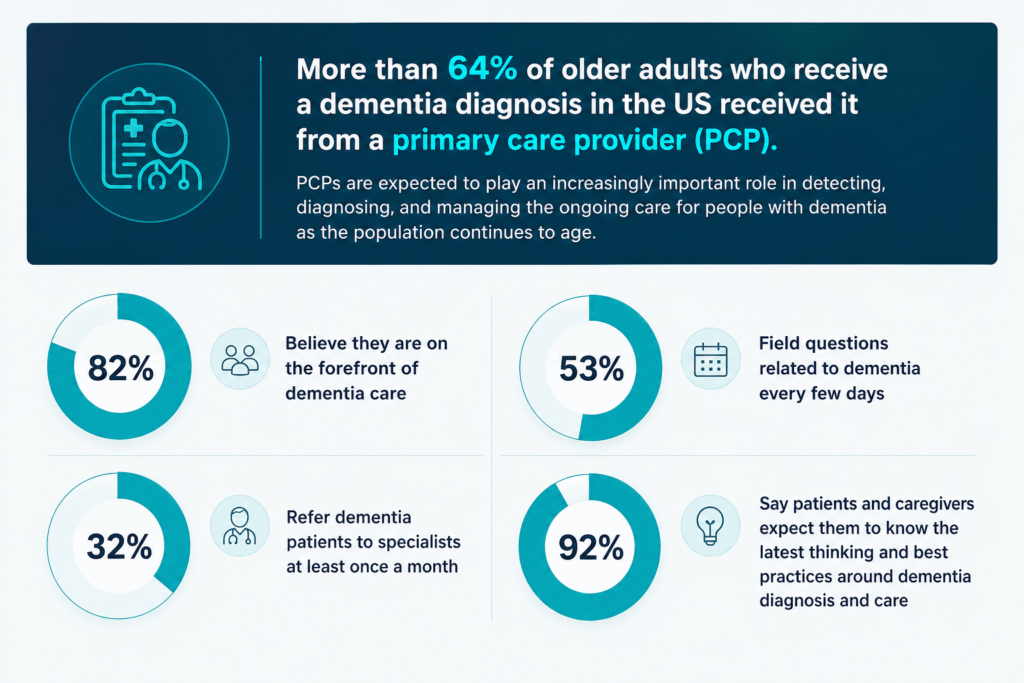
Doctors do not rely on a single senility test to diagnose dementia. Instead, they use a structured process that combines cognitive testing with medical evaluation to understand the cause and severity of symptoms.
Step 1: Cognitive Assessment
The first step usually involves a cognitive ability test such as the MMSE test for dementia, SAGE test, or 6 CIT test. These tools help identify problems with:
- Memory
- Attention
- Language
- Reasoning
A low score (for example, a high 6cit score) signals possible cognitive impairment and the need for further investigation.
Step 2: Medical History and Daily Function
Doctors then assess how symptoms affect everyday life. They ask:
- Can the person manage daily tasks independently?
- Have there been noticeable personality or behaviour changes?
- When did the symptoms begin?
Caregiver input is critical at this stage. Your observations often provide the most accurate picture of how the condition has progressed over time.
Step 3: Physical Exams and Lab Tests
Healthcare providers rule out other causes of confusion or memory loss. They may order:
- Blood tests (often called confusion screen bloods) to check for infections, vitamin deficiencies, or thyroid issues
- Neurological exams to assess reflexes and coordination
These tests ensure that reversible conditions do not get mistaken for dementia.
Step 4: Brain Imaging
In some cases, doctors request imaging such as:
- CT scans
- MRI scans
These scans help identify structural changes in the brain or rule out other conditions like tumours or stroke.
Step 5: Specialist Assessment
If needed, the patient may see a neurologist or geriatric specialist. They may use advanced tools like the Addenbrooke’s cognitive examination or the Addenbrooke’s cognitive examination III for a more detailed evaluation.
Understanding how dementia is diagnosed helps you take the right steps at the right time. A screening test may raise concerns, but only a full medical evaluation can confirm a diagnosis.
As a caregiver, your role includes:
- Noticing early warning signs
- Documenting changes in behaviour or memory
- Encouraging timely medical consultation
Early diagnosis allows families to plan care, access support, and improve quality of life.
MORE: UK Cost of Living Payment Eligibility (2026): What Caregivers and Families Need to Know
When Should Caregivers Be Concerned?
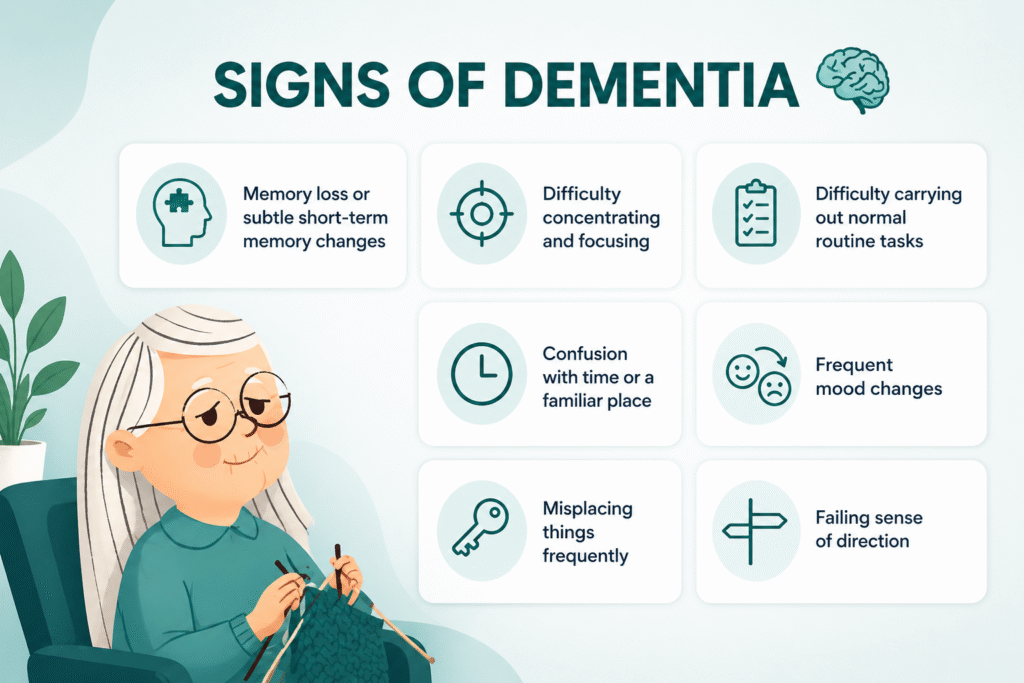
Caregivers often notice subtle changes long before any senility test or clinical assessment takes place. Recognising these early signs can make a significant difference in how quickly someone receives help.
Common Warning Signs to Watch For
You should pay attention if a client or loved one:
- Repeats the same questions or stories frequently
- Forgets recent events or important appointments
- Struggles to follow simple instructions or conversations
- Gets confused about time, place, or familiar routines
- Shows sudden personality or mood changes
- Has difficulty completing everyday tasks (e.g., cooking, dressing)
- Gets lost in familiar environments
These symptoms often appear gradually, which makes them easy to overlook at first.
Caregiver Insight Matters Most
A cognitive ability test can highlight problems, but caregivers see the full picture. You observe:
- Daily behaviour
- Communication patterns
- Emotional changes over time
This ongoing insight often provides more context than a one-time assessment.
When to Take Action
You should recommend a professional evaluation if:
- Symptoms start affecting daily life
- Confusion becomes frequent or severe
- Safety becomes a concern (e.g., wandering, forgetting appliances)
- There is a sudden or rapid decline
In some cases, doctors may also order tests like confusion screen bloods to rule out other causes before confirming cognitive decline.
Early intervention improves outcomes. It allows:
- Faster diagnosis
- Better care planning
- Access to treatment and support services
For caregiver businesses, acting early shows professionalism and builds trust with families. Instead of waiting for symptoms to worsen, you help guide clients toward the right care at the right time.
Should You Get a Professional Assessment?
You should not rely on a senility test, a free cognitive test, or even a test for dementia 30 questions online to make decisions about someone’s health. These tools can raise concerns, but only a healthcare professional can confirm what is happening.
When to Seek Professional Help
You should arrange a medical assessment if:
- Memory loss starts affecting daily activities
- Confusion becomes frequent or noticeable
- Behaviour or personality changes without clear reason
- Results from a sample dementia test or SAGE test for dementia raise concerns
Taking action early gives doctors more time to identify the cause and recommend appropriate care.
What Happens During an Assessment?
A professional evaluation goes beyond a simple cognitive ability test. It usually includes:
- A structured screening tool (e.g., MMSE test for dementia, 6 CIT test)
- Questions about daily functioning and behaviour
- Input from caregivers or family members
- Medical history review and physical examination
If needed, the doctor may refer the individual to a specialist or recommend further testing.
Why Professional Diagnosis Matters
Online tools and self-assessments cannot:
- Identify the cause of symptoms
- Measure the progression of cognitive decline
- Rule out other medical conditions
Only a clinician can determine how dementia is diagnosed and whether symptoms relate to dementia or another treatable condition.
The Caregiver’s Role
Caregivers play a critical role in this process. You can:
- Document changes in memory, behaviour, and communication
- Share accurate observations with healthcare providers
- Encourage families to seek timely medical advice
By guiding clients toward a professional assessment, you help ensure they receive the right diagnosis, support, and care plan.
Need Expert Support with Cognitive Assessments and Care Planning?
At Care Sync Experts, we help caregiver businesses move from uncertainty to clarity.
If you’re noticing early signs of memory loss, confusion, or behavioural changes in a client, don’t wait. Our team supports you with:
- Guidance on recognising early cognitive decline
- Help interpreting screening tools like the MMSE test for dementia, SAGE test, and 6 CIT test
- Step-by-step support for referrals and professional assessments
- Compliance-ready documentation for care providers
Whether you run a care agency or support clients directly, we make it easier to act early, stay compliant, and deliver better care outcomes.
Get in touch with Care Sync Experts today and take the next step toward confident, informed care.
FAQ
What are the 5 cognitive tests?
Five common cognitive tests include the Mini-Cog, MMSE, MoCA, SAGE test, and 6 CIT test. Clinicians use these tools to screen memory, attention, language, orientation, and reasoning, but they do not diagnose dementia alone. A doctor must interpret the results alongside medical history and daily functioning.
What is the 3 words test for memory?
The 3 words test checks short-term memory. A clinician says three unrelated words, asks the person to repeat them immediately, and then asks them to recall the same words a few minutes later. This task often appears in brief cognitive screening tools such as the Mini-Cog.
What is the 7 minute test for dementia?
The 7 Minute Screen is a cognitive screening tool that combines four short tasks: orientation, memory recall, clock drawing, and verbal fluency. It helps identify people who may need further dementia assessment, but it should not replace a full clinical diagnosis.
What are the 7 stages of dementia?
The 7-stage model describes progression from no visible impairment to very severe decline. In simple terms, it moves from normal function, to mild memory changes, to noticeable cognitive problems, to increasing difficulty with daily activities, and finally to full dependence on care. Alzheimer’s Association also commonly groups progression into early, middle, and late stages because symptoms vary from person to person.