Where Care Excellence Meets Business Success. Transform your operations today - 0333 577 0877
Log in to CareSync Interview Preparation.



New Style ESA (Employment and Support Allowance) 2026
Text to speech
Duration: 00:00
Font size
Published: 29 Apr, 2026
Share this on:
New Style Employment and Support Allowance (New Style ESA) is a fortnightly payment for people who cannot work due to illness or disability and have recently paid National Insurance contributions.
New Style ESA is not means tested, which means your savings or your partner’s income do not affect your entitlement. You can also claim New Style ESA and Universal Credit at the same time, although your Universal Credit payment will be reduced by the amount you receive.

Key Takeaways
- New Style ESA is not means tested, so savings and partner income do not affect your claim
- You qualify based on your National Insurance contributions, not household income
- DWP pays New Style ESA every two weeks directly into your account
- You can claim New Style ESA alongside Universal Credit, depending on your situation
- The amount you receive depends on your assessment and health condition
- Many caregivers and self-employed workers use New Style ESA as income protection when they cannot work
What Is New Style ESA? (Caregiver Perspective)
New Style ESA (Employment and Support Allowance) is a government benefit designed to support people who cannot work due to illness or disability but have a recent history of working and paying National Insurance contributions.
The Department for Work and Pensions (DWP) introduced New Style ESA as part of the wider shift toward Universal Credit, and it now replaces most older contributory ESA claims.
Unlike older systems, New Style ESA focuses purely on your work history, not your household income. This makes it especially relevant for caregivers who:
- work in physically demanding roles
- operate as self-employed carers
- rely on consistent income to support others
If a caregiver becomes ill or injured, New Style ESA provides a financial safety net without penalising savings or a partner’s earnings.
When Did New Style ESA Start, and Is It Being Phased Out?
The government introduced New Style ESA in 2018 as part of welfare reforms linked to Universal Credit.
New Style ESA is not being phased out.
Instead, the government has phased out income-related ESA, replacing it with Universal Credit. This means:
- New claims now focus on New Style ESA (contribution-based)
- Universal Credit handles means-tested support (rent, children, low income)
In simple terms:
- New Style ESA = based on your work history
- Universal Credit = based on your household finances
Why New Style ESA Matters for Caregivers
Care work often comes with:
- physical strain
- long hours
- inconsistent income (especially for agency or self-employed carers)
When illness strikes, many caregivers do not qualify for traditional sick pay, especially those who are self-employed.
New Style ESA fills that gap.
For example:
- A self-employed carer without sick pay can still claim New Style ESA
- A part-time care worker with enough NI contributions may qualify even if their income is low
- A caregiver with savings can still claim because New Style ESA is not means tested
This makes New Style ESA one of the most important financial protections in the UK care sector.
RELATED: Bereavement Support Payment (BSP) in the UK: Who Qualifies, How Much You Get, and How to Apply
Is New Style ESA Means Tested?
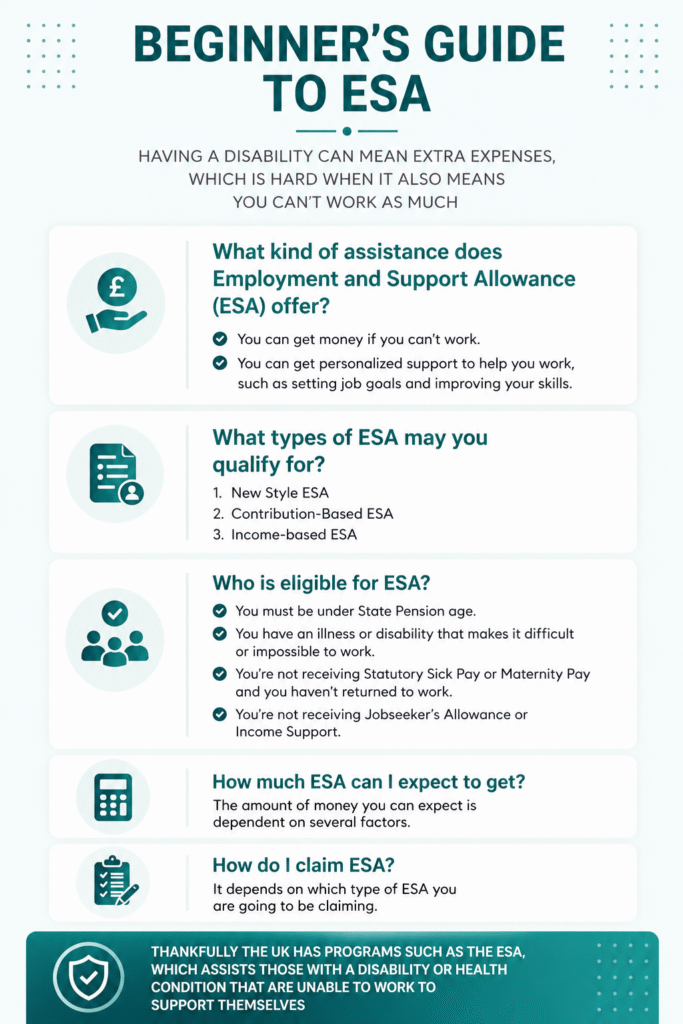
New Style ESA is not means tested.
This means your savings, investments, and your partner’s income do not affect your eligibility or how much you receive.
What “Not Means Tested” Actually Means
A means-tested benefit looks at your household finances before deciding if you qualify.
New Style ESA does NOT do this.
Instead, DWP only checks:
- your National Insurance contribution record
- your ability to work due to illness or disability
What Does NOT Affect Your New Style ESA
You can still claim New Style ESA even if:
- You have savings over £16,000
- Your partner works full-time
- Your household has other sources of income
This makes New Style ESA very different from Universal Credit, which is means tested.
What Can Affect Your Payment
Although New Style ESA is not means tested, a few things can still reduce how much you get:
- Private pensions (above a certain weekly amount)
- Certain types of income
- Failing to meet agreed conditions (e.g. missing appointments if required)
Why This Matters for Caregivers
Many caregivers assume they cannot claim support because:
- they have savings
- their partner earns
- they work part-time
In reality, New Style ESA remains one of the few benefits that protects caregivers without penalising their financial situation.
This makes it especially valuable for:
- self-employed carers
- agency workers
- caregivers transitioning back to work
Who Can Claim New Style ESA? (Eligibility)
You can claim New Style ESA if you meet specific work and health conditions set by the Department for Work and Pensions (DWP).
Basic Eligibility Criteria
To qualify for a New Style ESA claim, you must:
- Be aged 16 or over and below State Pension age
- Have a health condition or disability that limits your ability to work
- Provide a fit note (sick note) from your GP
- Have paid or been credited with enough National Insurance contributions in the last 2–3 years
- Not be receiving Statutory Sick Pay (SSP) from an employer
DWP uses these conditions to decide whether to approve your ESA claim.
National Insurance Requirement (Key Rule)
Your eligibility depends heavily on your recent work history.
In most cases, you must:
- Have worked as an employee or self-employed
- Have paid Class 1 or Class 2 National Insurance contributions
If you do not meet this requirement, DWP will usually reject your New Style ESA claim.
Can Caregivers and Self-Employed Workers Claim?
Yes, many caregivers qualify for New Style ESA, including those without traditional sick pay.
You may qualify if you are:
- A self-employed carer without sick pay
- An agency care worker with irregular hours
- A part-time caregiver who has paid enough NI contributions
This makes New Style ESA one of the closest options to sick pay for self-employed workers in the UK.
When You Cannot Claim
You usually cannot claim New Style ESA if:
- You are still receiving Statutory Sick Pay (SSP)
- You have not paid enough National Insurance contributions
- You do not provide medical evidence of your condition
Caregiver Insight
Many caregivers assume they are not eligible because they:
- work part-time
- are self-employed
- have gaps in income
However, if you have built up enough National Insurance contributions, you can still successfully claim New Style ESA.
This makes it a critical fallback for caregivers who lose income due to illness.
READ MORE: Blue Badge PIP Welfare Reform: What Care Businesses Need to Know in 2026
How Much Is New Style ESA in 2026? (Rates)
The amount you receive from New Style ESA depends on your age and the result of your Work Capability Assessment (WCA).
Assessment Phase (First 13 Weeks)
DWP places you on a standard rate while they assess your condition.
- Under 25: £75.65 per week
- 25 or over: £95.55 per week
DWP pays this amount while you complete your ESA claim and wait for your assessment.
After Assessment (Two Possible Groups)
After your Work Capability Assessment, DWP places you into one of two groups:
1. Work-Related Activity Group (WRAG)
You cannot work now but can prepare for work in the future.
- Usually stays around: £95.55 per week
- May include a work-related activity component (£37.95) in some cases
- Paid for up to 12 months
2. Support Group (Higher Rate)
You have severe limitations and do not need to prepare for work.
- Total: £145.90 per week
- (£95.55 personal allowance + £50.35 support component)
- No time limit
Quick Summary (New Style ESA Rate)
- Assessment phase: £75.65 – £95.55 per week
- WRAG: Around £95.55 per week
- Support Group: Up to £145.90 per week
These figures represent the current New Style ESA rate for 2026/27.
Is New Style ESA Taxable?
Yes, New Style ESA is taxable.
You may need to pay tax depending on your total income.
What This Means for Caregivers
For caregivers who cannot work due to illness:
- New Style ESA provides stable weekly income
- The Support Group offers long-term financial protection
- Self-employed carers can access this even without traditional sick pay
This makes New Style ESA a reliable fallback when caregiving work becomes physically or mentally impossible.
New Style ESA and Universal Credit
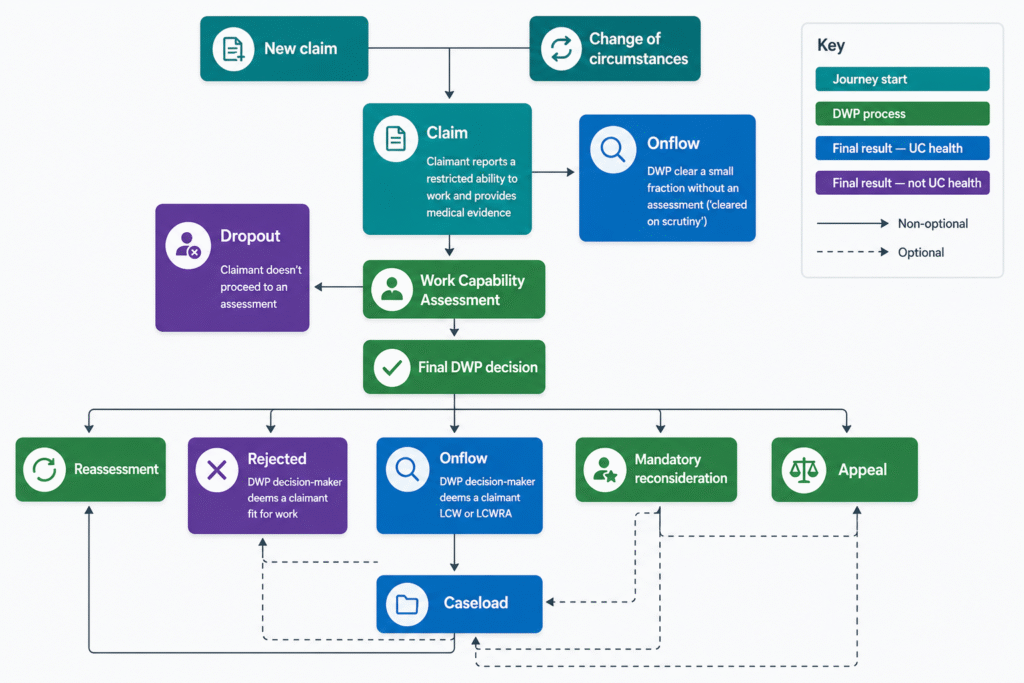
You can claim New Style ESA and Universal Credit at the same time, but they work differently and affect each other.
Can You Get Both Benefits?
Yes, you can receive both, but Universal Credit will be reduced by the amount of New Style ESA you receive.
This means:
- You do not lose money overall
- Universal Credit simply adjusts your payment
Key Difference Between the Two
Understanding the difference helps you decide what to claim.
New Style ESA
- Based on your National Insurance contributions
- Not means tested
- Paid individually (not household-based)
Universal Credit
- Based on your household income and savings
- Means tested
- Covers:
- rent
- children
- low income support
SEE ALSO: Living Wage UK 2026: What Care Providers Need to Know
When Should Caregivers Claim Both?
You should consider claiming New Style ESA and Universal Credit together if:
- You need help with rent or housing costs
- You have children or dependents
- Your household income is low
- You want to continue receiving National Insurance credits
Many caregivers use this combination to maximise financial support.
When New Style ESA Alone May Be Enough
You may only need New Style ESA if:
- You have significant savings (over £16,000)
- Your partner earns enough to support the household
- You do not qualify for Universal Credit
Remember: Universal Credit is means tested, New Style ESA is not.
Caregiver Insight
Caregivers often make one mistake:
They apply for only one benefit when they could claim both.
For example:
- A self-employed carer with low income may qualify for Universal Credit
- At the same time, their NI contributions allow them to claim New Style ESA
Combining both ensures:
- steady income
- long-term financial protection
- continued National Insurance contributions
How to Apply for New Style ESA (Step-by-Step)
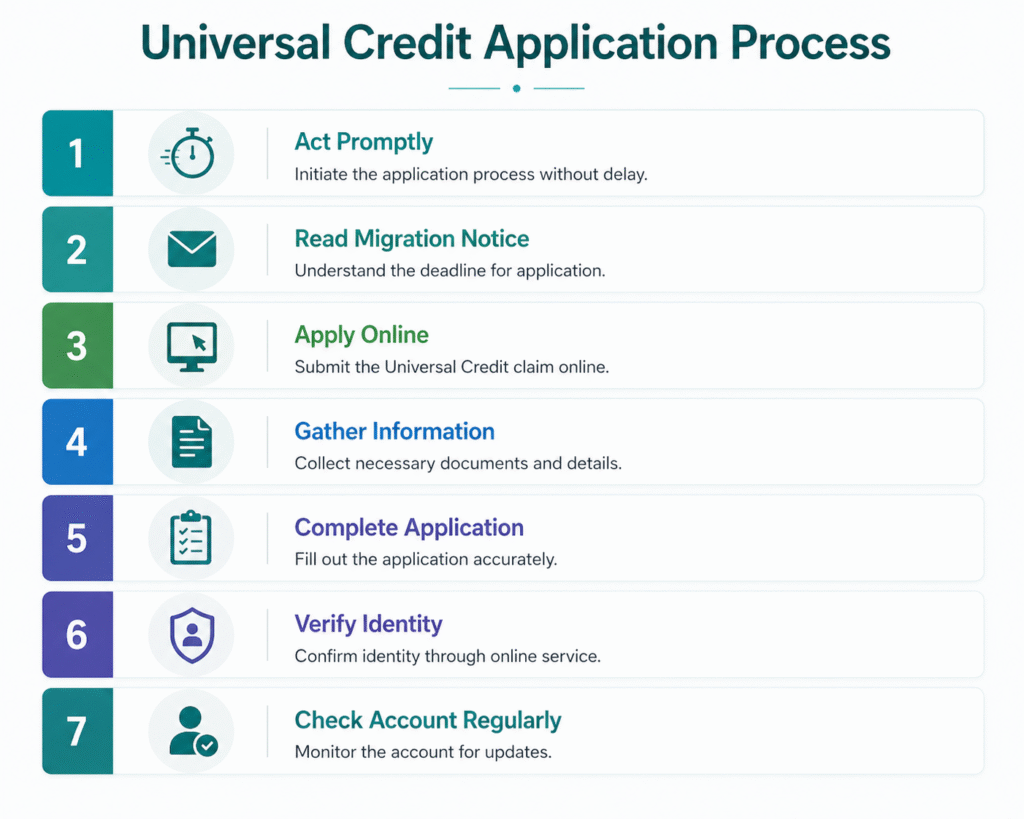
You can apply for New Style ESA online or by phone through the Department for Work and Pensions (DWP). The process is straightforward if you prepare the right information in advance.
Step 1: Apply Online or Contact DWP
The fastest way to apply for New Style ESA is online via GOV.UK.
If you cannot apply online, you can call the ESA phone number (0800) to start your claim.
This begins your official ESA claim.
Step 2: Provide Required Information
DWP will ask for:
- Your National Insurance number
- Your bank account details
- Your doctor’s details
- A fit note (sick note) from your GP
- The date your Statutory Sick Pay (SSP) ends (if applicable)
Without a fit note, DWP cannot process your New Style ESA claim.
Step 3: Submit Medical Evidence
You must provide ongoing medical evidence showing that your condition limits your ability to work.
Most claims require updated fit notes until your assessment is complete.
Step 4: Complete the Work Capability Assessment (WCA)
After applying, DWP will:
- Send you an ESA50 form
- Ask about your health condition
- Schedule an assessment (phone, video, or in-person)
This step determines whether you enter the Support Group or Work-Related Activity Group.
Step 5: Receive a Decision
DWP usually responds within a few weeks after your assessment.
You will:
- Start receiving payments
- Be placed into a group
- Receive instructions on next steps
Important Notes
- You cannot claim New Style ESA while receiving SSP, but you can apply before it ends
- If someone applies on your behalf, you must use the ESA support phone number
- Missing appointments may affect your payments
Caregiver Insight
Caregivers often delay applying because they feel unsure about eligibility.
In reality, starting your ESA claim early ensures:
- faster payments
- less financial stress
- continuous support during illness
For self-employed carers or agency workers without sick pay, this step is critical.
MORE: What Is Tenants in Common Meaning UK: 2026 Update
ESA Phone Numbers and Contact Details
If you cannot apply online or need help with your ESA claim, you can contact the Department for Work and Pensions (DWP) directly using the official ESA phone number UK.
Main ESA Contact Numbers
Use the Employment and Support Allowance contact number below to start or manage your claim:
- ESA phone number (DWP): 0800 055 6688
- ESA phone number 0800 (Welsh language): 0800 328 1744
- Relay UK (for hearing or speech difficulties): 18001 then 0800 055 6688
These are the official ESA support phone numbers for new claims and general enquiries.
Opening Hours
- Monday to Friday
- 8:00 AM to 5:00 PM
Calling early in the day often reduces waiting time.
When Should You Call?
You should contact the ESA phone number DWP if:
- You cannot apply for New Style ESA online
- You need help with an existing ESA claim
- You are applying on behalf of someone else
- You want to update your circumstances
- You missed a call or letter from DWP
Important Tips Before Calling
- Have your National Insurance number ready
- Keep your claim details nearby
- Take note of any reference numbers
This helps DWP process your request faster.
Caregiver Insight
Caregivers often juggle demanding schedules and may not have time to complete online applications.
Using the ESA support phone number allows you to:
- start your claim quickly
- resolve issues faster
- speak directly to a DWP advisor
This can be especially useful for:
- self-employed carers
- agency workers
- caregivers supporting someone else
Support Group vs Work-Related Activity Group
After you complete your Work Capability Assessment (WCA), DWP will place you into one of two groups. This decision determines how much New Style ESA you receive and what you are expected to do next.
1. Work-Related Activity Group (WRAG)
DWP places you in this group if your condition limits your ability to work now, but you can prepare to return in the future.
What this means:
- You may need to attend regular meetings with a work coach
- You may take part in training or job preparation activities
- Your payments usually stay around the standard New Style ESA rate
- Payments typically last for up to 12 months
DWP expects you to gradually move closer to employment.
2. Support Group (Higher Protection)
DWP places you in the Support Group if your condition severely limits your ability to work.
What this means:
- You do not need to attend interviews or job preparation activities
- You receive a higher weekly payment
- There is no time limit on your ESA
- You focus entirely on your health and recovery
This group offers the highest level of financial and practical support.
ESA Support Group and PIP
Many people in the ESA Support Group also receive Personal Independence Payment (PIP).
These are separate benefits:
- ESA supports your income
- PIP supports extra costs related to your condition
You can claim both if you meet the criteria.
What If You Disagree with the Decision?
If DWP places you in the wrong group, you can:
- Request a mandatory reconsideration
- Submit an appeal if needed
Acting quickly improves your chances of success.
Caregiver Insight
Caregivers often underestimate how their condition affects their ability to work.
If your illness:
- limits mobility
- causes fatigue
- affects mental health
You may qualify for the Support Group, not WRAG.
This can significantly increase your New Style ESA payments and reduce pressure to return to work too soon.
ALSO: What is the SSP rate? 2026 Update for Care Businesses
Should Caregivers Apply for New Style ESA?
You should apply for New Style ESA if illness or disability prevents you from working and you have recently paid National Insurance contributions.
When It Makes Sense to Claim New Style ESA
Caregivers benefit most from New Style ESA in situations where income suddenly stops.
You should consider starting an ESA claim if you are:
- A self-employed carer with no access to sick pay
- An agency worker whose shifts have stopped due to illness
- A part-time caregiver who cannot continue working
- Waiting for Statutory Sick Pay (SSP) to end
- Recovering from a long-term physical or mental health condition
In these cases, New Style ESA acts as a financial safety net.
When It May Not Be the Best Option
You may not benefit as much from New Style ESA if:
- You have not paid enough National Insurance contributions
- You need support for housing or children (Universal Credit may be better)
- You are still receiving Statutory Sick Pay (SSP)
In these situations, you should explore Universal Credit alongside or instead of New Style ESA.
Real Caregiver Scenarios
Self-Employed Carer
A self-employed caregiver falls ill and cannot work.
They can claim New Style ESA as a form of sick pay for self-employed workers, even without employer support.
Agency Care Worker
An agency worker loses shifts due to illness.
They can start an ESA claim based on their National Insurance contributions.
Caregiver with Savings
A caregiver has savings but cannot work.
They can still claim New Style ESA because it is not means tested.
Key Decision Rule
If your income stops due to illness and you have paid National Insurance, you should strongly consider applying.
Caregiving is physically and emotionally demanding. When you cannot work, income often stops immediately, especially if you are self-employed.
New Style ESA provides stability, protects your income, and gives you time to recover without financial pressure.
Final Thoughts…
New Style ESA gives caregivers a reliable financial safety net when illness or disability stops them from working. Unlike many other benefits, it does not penalise savings or a partner’s income, making it one of the most accessible forms of support in the UK.
If you have recently paid National Insurance contributions and your income has dropped due to illness, you should strongly consider starting an ESA claim.
The key points to remember:
- New Style ESA is not means tested
- You can claim New Style ESA alongside Universal Credit
- Payments depend on your health assessment and eligibility
- Self-employed carers can use it as a form of income protection
What You Should Do Next
- Check your National Insurance record
- Get a fit note from your GP
- Apply for New Style ESA as soon as possible
- Contact the ESA phone number (0800) if you need help
Caregiver Insight
Many caregivers delay applying because they are unsure if they qualify.
In reality, applying early can:
- reduce financial stress
- speed up payments
- give you time to focus on recovery
If illness has affected your ability to work, taking action early can protect your income and give you the support you need.
Protect Your Income Streams and Support Your Clients With Confidence
Changes to benefits like New Style ESA and Universal Credit directly impact how caregivers stay financially stable, and how care providers support vulnerable clients.
Care providers who understand these systems early:
- protect their workforce
- reduce service disruption
- strengthen their position with commissioners
At Care Sync Experts, We Help You:
- Understand how New Style ESA and benefit changes affect your staff and clients
- Build compliant, inspection-ready processes around DWP requirements
- Support clients through claims, assessments, and eligibility challenges
- Position your organisation to win contracts and maintain funding stability
Don’t Wait Until Staff or Clients Fall Through the Gaps
Get ahead of benefit changes before they affect your operations.
Speak to our team today and get a clear, practical plan to:
- protect your caregivers
- support your clients
- and grow your care business with confidence in 2026
FAQ
What is the difference between ESA and New Style ESA?
New Style ESA is the current contribution-based version of ESA, while older forms included income-related ESA.
Key difference:
New Style ESA → based on your National Insurance contributions
Income-related ESA (old) → based on household income (now replaced by Universal Credit)
Today, most new claims focus on New Style ESA, while Universal Credit handles means-tested support.
Can I get LCWRA and New Style ESA?
Yes, but LCWRA (Limited Capability for Work and Work-Related Activity) applies to Universal Credit, not ESA.
Here’s how it works:
– You can receive New Style ESA
– At the same time, you may qualify for LCWRA under Universal Credit
If approved, LCWRA gives you extra Universal Credit payments, while ESA continues separately.
Can I work while on New Style ESA?
Yes, you can do limited work, known as “permitted work.”
Rules include:
– You can work less than 16 hours per week
– You can earn up to a set weekly limit (reviewed periodically by DWP)
– You must inform DWP before starting any work.
This allows caregivers to:
– ease back into work
– maintain some income
– stay active without losing ESA support
What proof do I need for ESA?
To support your ESA claim, you must provide both personal and medical evidence.
You will usually need:
– A fit note (sick note) from your GP
– Your National Insurance number
– Details of your employment or self-employment history
– Medical information about your condition
– Completed ESA50 questionnaire (for assessment)
DWP may also request:
– further medical evidence
– or a Work Capability Assessment
Providing accurate and complete evidence helps speed up your claim and avoid delays.
Would you like to receive update from CareSync Experts?
All rights reserved. Copyright © - Care Sync Experts.


