Where Care Excellence Meets Business Success. Transform your operations today - 0333 577 0877
Log in to CareSync Interview Preparation.



UK Cost of Living Payment Eligibility (2026):
What Caregivers and Families Need to Know
Text to speech
Duration: 00:00
Font size
Published: 12 Mar, 2026
Share this on:
The main UK Cost of Living Payment scheme ended in 2024, and the government has not announced a new automatic Cost of Living Payment for 2026. The Department for Work and Pensions (DWP) confirmed that the previous DWP cost of living payments were temporary support measures issued between 2022 and 2024 to help households cope with rising energy, food, and housing costs.
During that period, people receiving certain benefits met the UK cost of living payment eligibility rules and received payments automatically. These payments went directly into the same bank account used for benefits such as Universal Credit, Pension Credit, or income-related benefits.
In 2026, financial support has shifted away from national one-off payments. Instead, help now focuses on:
- Income-related benefits such as Universal Credit and Pension Credit
- Disability benefits like Personal Independence Payment (PIP)
- Local council support, particularly through the Household Support Fund
If you currently receive benefits or support someone who does, such as an older adult, a disabled person, or a vulnerable client, checking the latest cost of living payment update on official government guidance and local council support schemes is the best way to understand what help is still available.

Who Qualified for the UK Cost of Living Payment
To meet UK cost of living payment eligibility during the 2022–2024 scheme, a person had to receive certain means-tested benefits or tax credits during specific assessment periods. The Department for Work and Pensions (DWP) automatically identified eligible claimants and issued the DWP cost of living payments directly into the same bank account used for their regular benefits.
People generally qualified if they received one of the following:
- Universal Credit
- Income-based Jobseeker’s Allowance (JSA)
- Income-related Employment and Support Allowance (ESA)
- Income Support
- Pension Credit
- Child Tax Credit
- Working Tax Credit
Eligibility depended on whether a claimant had entitlement to a payment during a defined qualifying period set by the government. Even a very small entitlement during that period could count.
However, some people did not qualify. For example, if a benefit payment was reduced to £0 during the qualifying assessment period, often called a “nil award”, the person usually did not meet UK cost of living payment eligibility for that payment round.
Because the process was automatic, eligible households did not need to apply. The UK cost of living payment arrived as a separate payment from the DWP or HMRC, depending on which benefit the person received.
RELATED: Labour Home Support Plan Pensioner Devices: 2026 Update
Universal Credit Cost of Living Payment. When Was It Paid?
Many people still search “Universal Credit cost of living payment when will it be paid”, but those payments have already finished. The government issued the last round of DWP cost of living payments in 2024.
For people receiving Universal Credit, the payments came in three instalments linked to specific assessment periods. If a claimant qualified during those windows, the payment arrived automatically.
The final payment schedule looked like this:
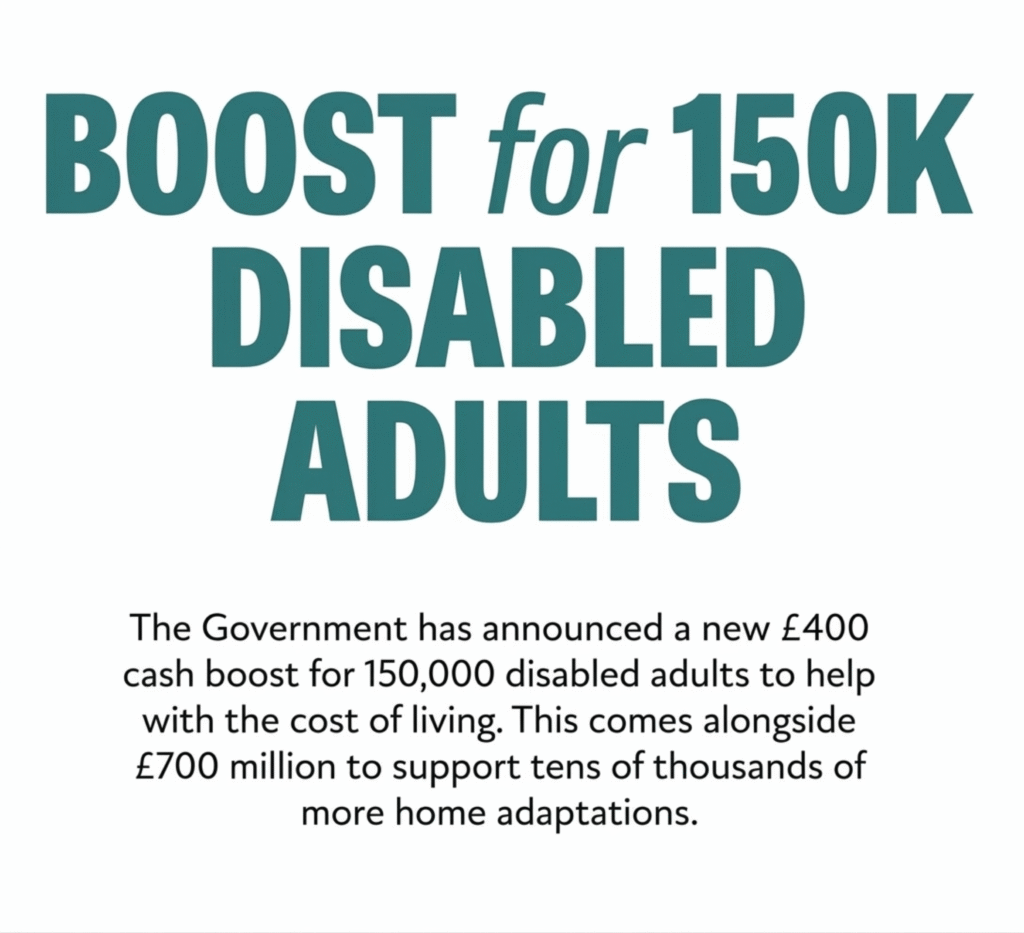
- £301 payment (2023): Paid between April and May 2023
- £300 payment (2023): Paid between October and November 2023
- £299 payment (2024): Paid between February and February 2024
The £299 instalment, sometimes searched as the DWP 299 cost of living payment, was the last major payment issued under the scheme.
To receive any of these payments, a person had to show entitlement to Universal Credit during a specific assessment period set by the DWP. If a claim showed a nil payment during that period, the person usually did not qualify for that round.
Importantly, the cost of living payment never required an application. The DWP processed payments automatically using the same bank details linked to a claimant’s Universal Credit account.
Cost of Living Payment for Disability Benefits (PIP)
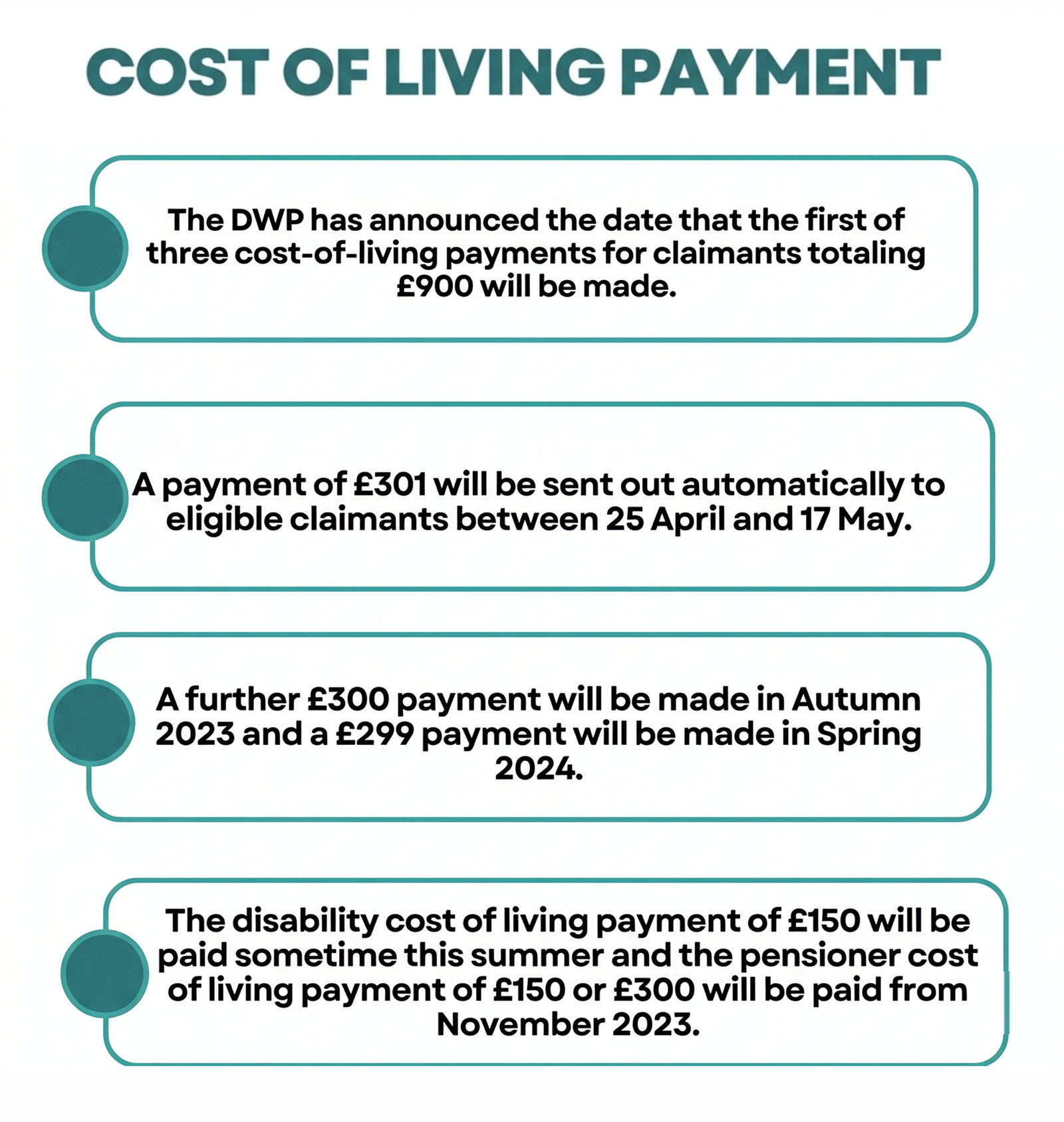
People receiving certain disability benefits also received additional DWP cost of living payments during the scheme. These payments aimed to support individuals who face higher daily costs because of disability or long-term health conditions.
Eligible benefits included:
- Personal Independence Payment (PIP)
- Disability Living Allowance (DLA)
- Attendance Allowance
- Adult Disability Payment (Scotland)
- Child Disability Payment
- Armed Forces Independence Payment
Claimants who met the cost of living payment (PIP) eligibility rules received two separate £150 Disability Cost of Living Payments. The government issued these payments automatically once it confirmed that a person received a qualifying disability benefit on the required eligibility dates.
Many caregivers support individuals who rely on these benefits to cover mobility support, personal care, or specialist equipment. For those households, the additional cost of living payment provided extra financial help during periods of high inflation.
Like the other DWP cost of living payment instalments, people did not need to apply. The payment arrived automatically in the same bank account used for their disability benefit.
READ MORE: What Is Person Centred Care? 2026 Guide
Cost of Living Payment for Pensioners
Pensioners also received extra help through the UK cost of living payment scheme, mainly through Pension Credit and the Winter Fuel Payment. These payments aimed to support older households who often face higher heating and energy costs during the winter months.
If someone met the UK cost of living payment eligibility rules and received Pension Credit, they could qualify for the same DWP cost of living payments issued to other low-income households. The payment arrived automatically in the same bank account used for their regular benefit.
In addition, many pensioners received an extra Cost of Living Payment added to their Winter Fuel Payment during the 2022–2024 scheme. Depending on age and circumstances, this additional support ranged between £150 and £300 on top of the usual winter fuel allowance.
For caregivers supporting older adults, checking Pension Credit eligibility remains important. Even a small Pension Credit award can unlock multiple forms of support, including heating assistance, council tax reductions, and other benefits tied to the UK cost of living payment eligibility rules that previously applied.
Can You Apply for a Cost of Living Payment?
No. You cannot apply for a Cost of Living Payment. The government designed the scheme so the DWP cost of living payment reached eligible households automatically.
If someone met the UK cost of living payment eligibility rules during the qualifying period, the payment arrived directly in the same bank account used for their benefits or tax credits. People did not need to fill out a form, submit documents, or contact the Department for Work and Pensions.
Because the payment process was automatic, scammers often targeted vulnerable households. Some people still search “apply for cost of living payment” or “will I get cost of living payment tomorrow”, but legitimate payments never required applications, links, or bank detail requests.
If someone receives a message asking them to apply or provide bank information to receive a cost of living payment, they should treat it as suspicious. The DWP and HMRC only issue these payments automatically based on benefit records.
SEE ALSO: Do Dementia Sufferers Have to Pay Care Home Fees in the UK? (2026 Guide)
What Support Is Available in 2025–2026 Instead?
Although the national UK cost of living payment scheme ended in 2024, several forms of financial support remain available in 2025 and 2026. Many people still search for a cost of living payment 2025 or a DWP 2025 cost of living payment, but the government has shifted most support toward existing benefits and local assistance programs.
One of the most important options is the Household Support Fund. The UK government provides funding to local councils, which then distribute support to residents who face financial hardship. Councils may offer help through:
- Energy bill support
- Food vouchers
- Essential household items
- Emergency cash grants
Each council manages its own application process, so eligibility rules can vary by location.
People receiving Universal Credit, Pension Credit, or disability benefits may also continue to receive broader financial help through benefit increases or targeted schemes. While many households still hope for a 2025 cost of living payment, the current system focuses more on local support and existing benefits rather than nationwide lump-sum payments.
For families and caregivers supporting vulnerable people, checking local council websites regularly can help identify available Household Support Fund assistance and other regional cost-of-living support programs.
MORE: When Does Child Benefit Stop in the UK? (2026 Guide)
What Caregivers Should Do Next
Caregivers often help older adults, disabled people, or vulnerable clients manage benefits and financial support. Even though the national UK cost of living payment scheme has ended, caregivers can still take practical steps to ensure people receive the support they qualify for.
Start by reviewing benefit eligibility. Many households miss out on support because they do not claim benefits such as Pension Credit or the correct Universal Credit components. These benefits can unlock additional help that previously linked to UK cost of living payment eligibility.
Next, check the local council’s support programs. Many councils distribute grants and vouchers through the Household Support Fund, especially for residents struggling with heating, food, or essential household costs.
Caregivers should also:
- Review the person’s Universal Credit statements to confirm active entitlement
- Check eligibility for disability benefits such as PIP if the person’s condition has changed
- Ensure bank details are correct for benefit payments
- Watch for scams claiming to offer a cost of living payment update
Taking these steps helps ensure vulnerable individuals receive the financial help still available, even without new nationwide DWP cost of living payments.
Final Thoughts…
The UK cost of living payment scheme helped millions of households manage rising expenses between 2022 and 2024. While those one-off payments have now ended, financial support for vulnerable people has not disappeared. The government now directs most assistance through existing benefits, disability support, and local council programmes such as the Household Support Fund.
For many households, especially older adults, people living with disabilities, and families on low incomes, understanding UK cost of living payment eligibility rules from the previous scheme still matters. Those rules often connect closely with benefits like Universal Credit, Pension Credit, and disability benefits, which continue to provide long-term support. Many people miss out on help simply because they do not realise they qualify.
Caregivers and care professionals play an important role here. By helping clients check benefit eligibility, reviewing Universal Credit statements, and staying informed about local council assistance, they can ensure vulnerable individuals receive the financial support available in 2025 and 2026. Even small benefits or council grants can make a meaningful difference when energy bills, food prices, and daily living costs remain high.
Understanding the latest cost of living payment update and the support that has replaced it helps families and care providers make better financial decisions, avoid scams, and access the help that still exists.
Need Expert Guidance on Home Care and Support Services?
Care Sync Experts supports care providers, managers, and healthcare teams across the UK with clear, practical guidance on navigating home care services, care packages, and funding pathways for older adults.
From helping organisations understand care package assessments and continuing healthcare eligibility to strengthening care planning and preparing for regulatory expectations, our team helps providers deliver safe, effective support for people living at home.
Whether you need assistance reviewing care documentation, improving service quality, or aligning your organisation with modern health and social care standards, we provide structured, professional guidance you can rely on.
Support older adults to live safely and independently at home.
Contact Care Sync Experts today and strengthen your home care services with confidence.
FAQ
Is £2,000 a month enough to live in the UK?
Usually, yes, for one person outside the most expensive areas, but it depends heavily on rent. The ONS says the average UK household spent about £623.30 a week in 2023/24, which is roughly £2,701 a month across all households, while the poorest fifth spent about £1,641 a month on average.
That means £2,000 a month can be workable for a single person with modest housing costs, but it will feel tight in places with high rent, especially London.
Is £1,500 enough to live in the UK?
For most people, £1,500 a month is possible but tight, and it often requires low rent, shared housing, or living in a cheaper area. Based on ONS spending data, £1,500 sits below the average spend of even the poorest fifth of households at roughly £1,641 a month, so it usually leaves very little room for unexpected costs. It may be manageable for a single person in low-cost accommodation, but it is not comfortable for most households.
How much money will you need per month for living expenses in the UK?
A useful benchmark is that the average household spends about £2,701 a month, but your own figure depends on rent, transport, household size, and location. The ONS data also shows a very wide spread: the poorest fifth spent about £1,641 a month, while the richest fifth spent about £4,111 a month. For a single adult, the main swing factor is usually housing, not groceries.
What are the biggest expenses in the UK?
According to the ONS, the largest share of weekly household spending goes to housing, fuel, and power at 18% (£113.30 a week), followed by transport at 14% (£88.20 a week). Food and drink are also major costs, with households spending £70.50 a week on average, and energy alone averaged £40.50 a week. In practice, the biggest pressure points for most people are rent or mortgage, utility bills, transport, and food.

Would you like to receive update from CareSync Experts?
All rights reserved. Copyright © - Care Sync Experts.


