What Is a Care Needs Assessment? (England Guide for Families and Caregivers)
Text to speech
Duration: 00:00
Font size
Published: 4 Mar, 2026
Share this on:
A care needs assessment is a free evaluation carried out by your local council under the Care Act 2014 to decide whether you qualify for support from adult social care services. It looks at how your physical or mental health affects your ability to manage daily life and whether those difficulties significantly impact your wellbeing. If you meet the legal criteria, the council must arrange a care plan and consider funding support.
In England, councils call this a Care Act assessment or social care assessment, but most people refer to it as a care needs assessment. It applies to adults aged 18 and over.

Who Can Request a Care Needs Assessment in the UK?
Anyone aged 18 or over who appears to need care or support can request a care needs assessment UK wide, but the legal framework described here applies specifically to England.
You do not need:
- A diagnosis
- A minimum income level
- Savings below a threshold
- A GP referral (although a GP can support your request)
If you or someone you care for says, “I want care”, you can contact your local council directly and make an adult social care referral. The council must assess anyone who may have care and support needs, regardless of their financial situation.
How to get a needs assessment
You can:
- Contact your local council’s adult care services department
- Complete an online referral form
- Call social services directly
- Ask a GP or hospital discharge team to refer you
A family member, friend, or advocate can request the assessment on someone’s behalf if that person gives permission. If the individual lacks mental capacity, the council can still arrange the assessment in their best interests.
What if you are a carer?
If you support someone regularly, you can request a carers assessment (also called an assessment for carers) separately. The council must assess your needs too, especially if caring affects your health, work, or wellbeing.
A carers assessment is not the same as a care needs assessment. The first focuses on the person providing care. The second focuses on the adult who needs support.
In short, a care needs assessment starts when someone struggles to cope day to day and reaches out. The council then decides, under the Care Act, whether it must step in and provide a care package or other support.
What Does a Care Act Assessment Actually Look At?
A Care Act assessment (another term for a care needs assessment) does not focus on your diagnosis alone. It focuses on how your condition affects your daily life. The council must follow a national legal framework under the Care Act 2014 when carrying out this social care assessment.
The assessor looks at three legal tests.
1. Do You Have a Physical or Mental Condition?
The council first confirms whether you have a physical illness, disability, mental health condition, frailty, or cognitive impairment. This includes:
- Dementia
- Parkinson’s disease
- Arthritis
- Stroke recovery
- Learning disabilities
- Long-term mental health conditions
You do not need a formal diagnosis at the time of referral, but you must show that your difficulties relate to a health condition.
2. Are You Unable to Achieve Two or More Daily Living Outcomes?
This is where the care needs assessment questions become practical.
The assessor will ask whether you can safely and reliably manage key areas of daily life. These are sometimes called “outcomes” in the law.
Common questions include:
- Can you wash, bathe, and maintain personal hygiene safely?
- Can you dress appropriately for the weather?
- Can you prepare and eat food?
- Can you manage medication?
- Can you use the toilet independently?
- Can you keep your home safe and habitable?
- Can you maintain relationships or avoid isolation?
- Can you access work, volunteering, or education?
- Can you stay safe at home?
The council does not simply ask whether you can sometimes do these things. They assess whether you can do them:
- Safely
- Consistently
- To an acceptable standard
- Within a reasonable time
If you cannot achieve at least two of these outcomes, you may meet the second test.
3. Does This Have a Significant Impact on Your Wellbeing?
This final stage separates mild difficulty from legal eligibility.
The council must decide whether your inability to manage daily tasks significantly affects your:
- Personal dignity
- Physical health
- Mental health
- Safety
- Control over daily life
- Social participation
If all three tests apply, you have what the law calls “eligible needs.”
At this stage, the social services elderly care assessment moves toward determining support rather than questioning eligibility.
Important: The Assessment Is About Impact, Not Diagnosis
Many families focus too much on the medical condition. The council focuses on functional impact.
For example:
- Two people may both have arthritis.
- One manages independently.
- The other cannot wash safely or cook without risk.
Only the second person may qualify.
This distinction often determines whether the council provides a care package or simply offers advice.
What Types of Support Can a Care Needs Assessment Unlock?
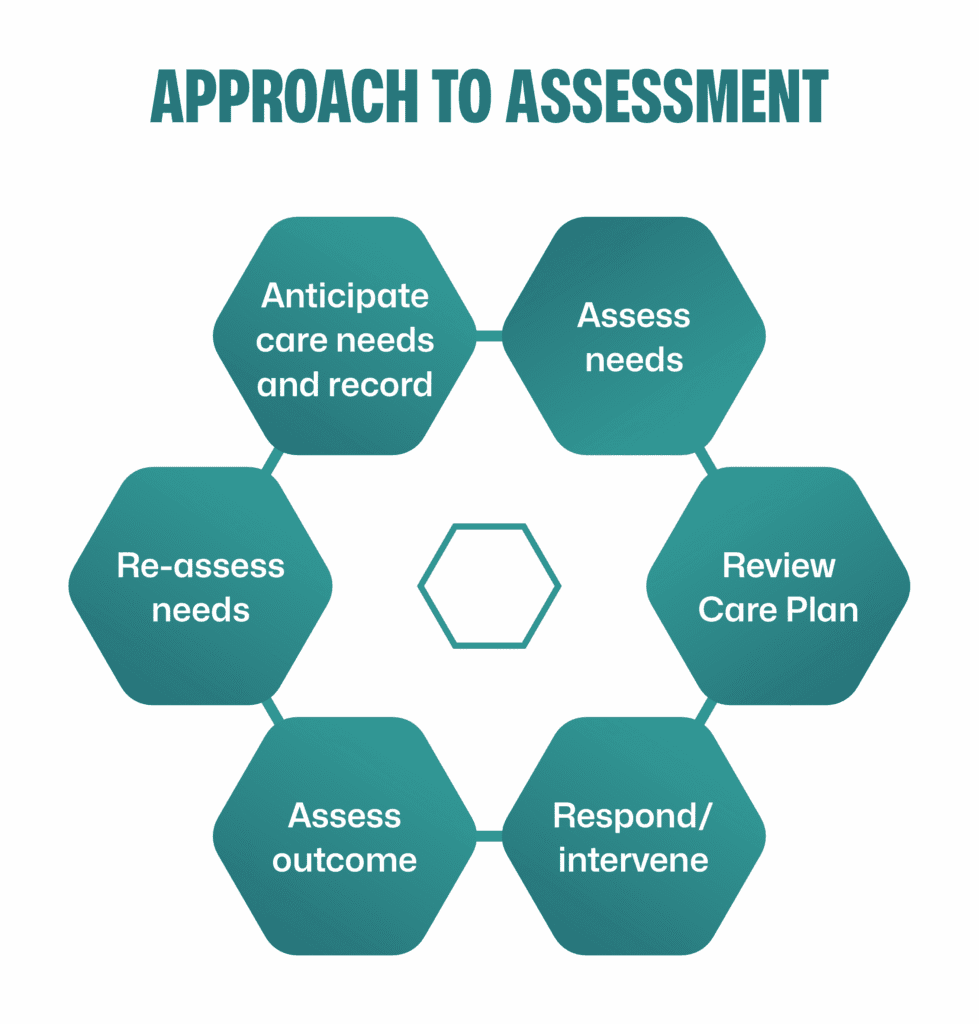
If you meet the legal eligibility criteria, the council must create a care plan. This plan outlines the support you need and how the council will meet those needs. Many people refer to this support as a care package.
A care needs assessment does not automatically mean free services. The council will carry out a separate financial assessment (means test) to decide how much you must contribute. However, the assessment itself remains free.
Examples of Support a Care Needs Assessment Can Lead To
Depending on your situation, the council may arrange:
- Home help for elderly adults, such as support with washing, dressing, or meal preparation
- Medication reminders or administration
- Equipment like grab rails, walking aids, or personal alarms
- Adaptations to your home
- Access to day centres
- Respite care
- Support workers for community access
- Supported living or residential care
These are common care needs examples that fall under adult care services.
If you qualify financially, the council may fully or partly fund your care package. If you do not qualify for funding, you may still receive guidance and advice about arranging private care.
Does This Mean Free Home Help for the Elderly?
Not necessarily.
A care needs assessment determines eligibility for support. Funding depends on your financial assessment. Some people receive free home help for the elderly if their income and savings fall below certain thresholds. Others must contribute or self-fund.
The key point: The council must assess your needs regardless of your finances. Money only affects how care gets funded, not whether you receive an assessment.
What Happens After the Assessment?
If you qualify:
- The council agrees a care plan with you.
- You receive details of your support package.
- A financial assessment determines contributions.
- Services begin once arrangements are in place.
If you do not qualify, the council must still provide information and advice about alternative support.
How Long Does a Social Services Assessment Take?
There is no fixed national deadline for how long a social care assessment should take. Each council sets its own timeframes based on demand and urgency.
However, the law requires councils to act within a reasonable timeframe.
What affects the timeline?
Several factors influence how long a care needs assessment takes:
- Whether the situation involves safeguarding risks
- Recent hospital discharge
- Level of urgency
- Waiting lists within adult care services
- Availability of assessors
In urgent cases, councils can put interim support in place before completing the full assessment.
Typical Time Expectations
In practice, many councils:
- Contact you within a few weeks of referral
- Complete the assessment within 4–8 weeks in non-urgent cases
- Prioritise urgent cases within days
If you face immediate risk, for example, falls, neglect, or unsafe living conditions, the council must act quickly. They cannot delay support while paperwork continues.
What If You Wait Too Long?
If you believe the delay is unreasonable:
- Contact the council for an update.
- Request written confirmation of the expected timeline.
- Use the council’s complaints procedure if necessary.
If the issue remains unresolved, you can escalate concerns to the Social Care Ombudsman, who reviews complaints about local authority adult social care decisions.
Delays should not leave vulnerable adults without support.
How to Prepare for a Care Needs Assessment (From a Caregiver’s Perspective)
Many families underestimate this stage. The way you present information during a care needs assessment can influence the outcome.
The council assesses impact, not bravery. If you describe only the good days, you risk underrepresenting the real level of need.
1. Think in “Bad Days,” Not Good Days
When answering care needs assessment questions, describe what happens on the most difficult days.
Instead of saying: “Mum manages, but slowly.”
Say: “Mum cannot shower safely without assistance and has slipped twice in the last month.”
Be specific. Use real examples.
2. Create Your Own Care Needs Assessment Template
Before the assessment, write your own structured summary. You can use this as a simple care needs assessment template to guide the discussion.
Include:
Daily Living
- Washing and bathing
- Dressing
- Toileting
- Eating and drinking
Mobility
- Getting out of bed
- Using stairs
- Risk of falls
Medication
- Missed doses
- Confusion about prescriptions
Home Safety
- Gas left on
- Doors unlocked
- Clutter hazards
Emotional and Social Needs
- Isolation
- Anxiety
- Cognitive decline
This acts as a practical care needs assessment for the elderly template that ensures you do not forget key concerns.
3. Bring Evidence
If possible, take:
- GP letters
- Hospital discharge summaries
- Occupational therapist reports
- Falls records
- Medication lists
Concrete evidence strengthens your case.
4. Clarify the Level of Support Needed
Use realistic care needs examples, such as:
- “Requires prompting for medication daily.”
- “Needs assistance to prepare hot meals.”
- “Cannot manage personal hygiene safely.”
- “Requires supervision at night due to wandering.”
Avoid vague language. Precision helps the assessor apply the Care Act criteria correctly.
5. Remember the Carer
If you provide regular support, request a carers assessment at the same time. The council must consider how caring affects your work, health, and wellbeing.
An assessment for carers can lead to respite support, training, or additional services.
Preparing properly ensures the council sees the full picture. Many refusals happen because families unintentionally minimise the situation.
What If the Council Says You’re Not Eligible?
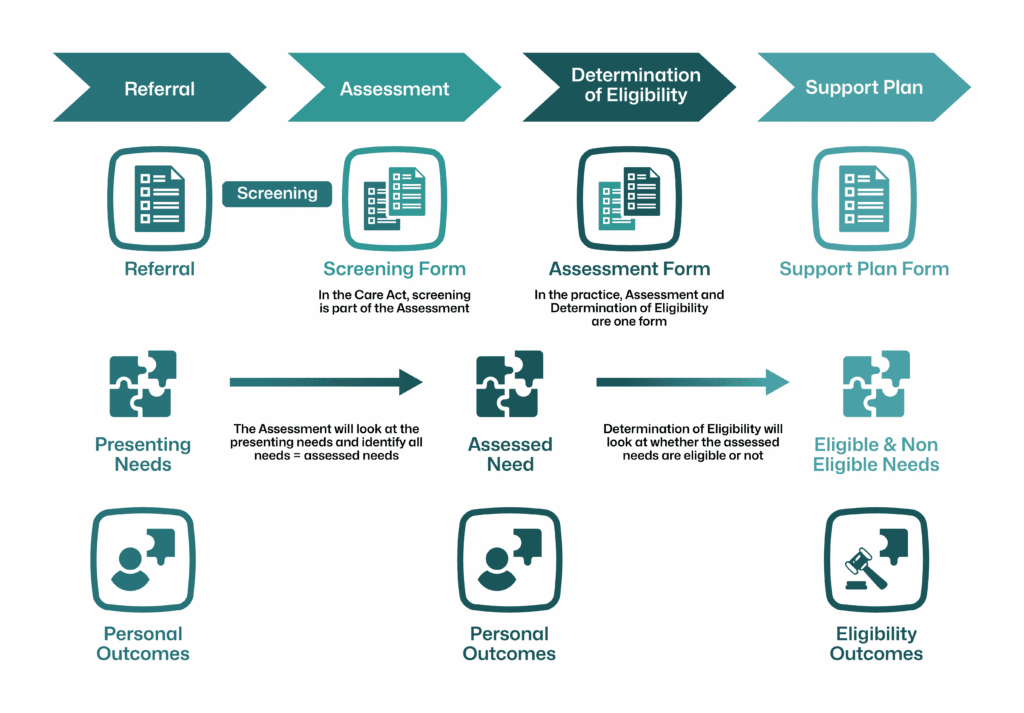
If the council decides you do not meet the Care Act eligibility criteria, do not assume the decision is final or correct. Many families accept refusals without understanding their options.
Start by asking for the decision in writing. The council must explain how it applied the three legal tests during the care assessment.
Step 1: Ask for the Full Assessment Record
Request:
- The written eligibility decision
- Notes from the social care assessment
- Explanation of which outcomes the council believes you can achieve
Check whether the assessor properly considered safety, consistency, and reasonable time.
Step 2: Challenge Informally First
Contact the adult care services team and explain why you disagree. Provide additional evidence if needed. Many issues resolve at this stage.
Be specific. For example:
- “The assessment states Mum can prepare meals independently, but she left the cooker on twice last week.”
Precision matters more than emotion.
Step 3: Use the Council’s Complaints Procedure
If the issue remains unresolved, submit a formal complaint. Every council must publish its complaints process.
Keep the complaint structured:
- What the council decided
- Why you believe it misapplied the Care Act
- Supporting evidence
Step 4: Escalate to the Social Care Ombudsman
If the council does not handle your complaint fairly, you can escalate the matter to the Social Care Ombudsman. The ombudsman investigates maladministration by local authorities.
They cannot rewrite the law, but they can require councils to correct flawed processes.
Important: Ask About Alternative Support
Even if you do not qualify for funded services, the council must still provide information and advice about community resources.
This may include:
- Voluntary sector support
- Community groups
- Preventative services
- Signposting to private providers
If you believe the refusal ignores serious medical complexity, also ask whether you should be assessed for NHS Continuing Healthcare.
Carers Assessment vs Care Needs Assessment – What’s the Difference?
Many families confuse a care needs assessment with a carers assessment, but the law treats them separately.
A care needs assessment focuses on the adult who may require support.
A carers assessment focuses on the person providing unpaid care.
You can request both at the same time.
What Is a Carers Assessment?
An assessment for carers examines how caring affects your:
- Physical health
- Mental wellbeing
- Employment
- Education
- Family life
- Ability to maintain relationships
If caring causes strain, exhaustion, or financial pressure, the council must consider support options.
Support might include:
- Respite services
- Training
- Equipment
- Emotional support
- Direct payments
You do not need to live with the person you care for to qualify.
Sometimes a council concludes that the adult does not meet eligibility criteria. However, the carer may still qualify for support under a carers assessment.
For example:
- A parent supports an adult child with autism.
- The adult may not meet Care Act eligibility.
- The parent may still qualify for support because caring significantly affects their wellbeing.
Always request both assessments if you provide regular care.
Important Clarification
A child in need plan applies under children’s services legislation and does not fall under the Care Act framework discussed here. Once a person turns 18, adult social care rules apply.
Care Needs Assessment at a Glance (Quick Summary)
Here’s what you need to know about a care needs assessment in England:
- It is a free assessment carried out by your local council under the Care Act 2014.
- Anyone aged 18 or over who appears to need support can request one.
- You do not need a GP referral or meet an income threshold to qualify for an assessment.
- The council applies three legal tests:
- You have a physical or mental condition.
- You cannot achieve at least two daily living outcomes.
- This significantly affects your wellbeing.
- If you meet the criteria, the council must create a care plan and consider funding through a care package.
- A separate financial assessment determines whether you contribute to costs.
- You can request a carers assessment if you provide unpaid care.
- If the council refuses support, you can challenge the decision and escalate complaints to the Social Care Ombudsman.
A care needs assessment UK families rely on often marks the first formal step toward adult social care services. Preparing properly and understanding the legal framework increases your chances of receiving appropriate support.
Conclusion
A care needs assessment is more than a formality. It shapes whether you receive support, what kind of help you get, and how much you may need to pay. When families approach the process unprepared, councils often underestimate the real level of need. When you understand the legal framework, present clear evidence, and describe the full impact of daily challenges, you protect your position.
The Care Act gives you rights. The assessment process applies rules. But outcomes often depend on how clearly you present your situation.
Do not minimise difficulties. Do not assume the council sees what you see at home. And do not accept confusion as normal.
You deserve clarity.
Need Expert Guidance?
Care Sync Experts supports families and care providers across the UK with clear, practical guidance on funding pathways, regulatory standards, financial assessments, and lawful planning. Whether you need clarity on who pays for care home fees, help challenging a council decision, or support understanding your rights under the Care Act framework, our team provides structured, professional advice you can rely on.
Make informed decisions. Protect your family with confidence. Contact Care Sync Experts today and move forward with clarity, not confusion.
FAQ
What Are 7 Basic Care Needs?
When professionals assess support requirements, they often group needs into core areas that affect daily living and wellbeing. Seven common basic care needs include:
Personal hygiene – washing, bathing, grooming, toileting
Nutrition and hydration – preparing meals, eating safely, drinking enough fluids
Mobility – moving safely indoors and outdoors
Medication management – taking prescriptions correctly and on time
Safety and supervision – preventing falls, managing risks at home
Emotional wellbeing – reducing anxiety, depression, or isolation
Social connection – maintaining relationships and community involvement
A formal care needs assessment focuses on how well someone manages these areas safely, consistently, and independently.
How to Support a Caregiver?
Supporting a caregiver requires more than appreciation. Practical action makes the real difference.
You can help a caregiver by:
– Offering regular respite time
– Helping with administrative tasks (appointments, paperwork)
– Assisting with shopping or transport
– Checking in consistently about stress levels
– Encouraging them to request a carers assessment
– Helping them access training or support groups
Caregiving often becomes overwhelming because carers try to manage everything alone. Shared responsibility reduces burnout and improves outcomes for both the carer and the person receiving care.
What Are Three Signs of Caregiver Stress?
Caregiver stress often develops gradually. Watch for these early warning signs:
Chronic exhaustion – constant fatigue even after rest
Irritability or emotional withdrawal – increased frustration, anxiety, or detachment
Neglecting personal health – skipping medical appointments, poor sleep, unhealthy eating
If stress continues unchecked, it can lead to depression or physical illness. Early intervention, including an assessment for carers helps protect both mental and physical wellbeing.
What Makes a Good Carer?
A good carer does more than complete tasks. They balance competence with compassion.
Key qualities include:
Patience – allowing time without rushing
Empathy – understanding emotional as well as physical needs
Reliability – showing up consistently
Attention to detail – noticing small changes in health or behaviour
Communication skills – speaking clearly and listening actively
Professional training matters, but attitude and emotional intelligence often determine the quality of care.
Related reading
- Care Home Risk Assessment: 2026 Practical Guide to Safer, Person-Centred Care
- Tender Compliance for Care Providers: A 2026 Guide
- What Does a Bid Writing Success Rate Really Tell You in 2026?
- HPFT Social Care in the Community Tender: £36m Framework Bid Guide 2026
- CQC Registration: Complete Guide for Domiciliary Care Providers
- CQC Personal Care Form: 7 Essential Application Checks
Browse every article on CQC, Ofsted, CIW and RQIA compliance