What Is Safeguarding in Care? 2026 Update
Text to speech
Duration: 00:00
Font size
Published: 3 Jun, 2026
Share this on:
Safeguarding in care means protecting children and adults with care and support needs from abuse, neglect, exploitation, discrimination, and avoidable harm. It helps people receive care in a way that protects their safety, dignity, wellbeing, choices, and human rights.
For caregivers, safeguarding means more than following a policy. It means staying alert, listening carefully, noticing changes, and acting quickly when something feels wrong. A carer may spot a bruise, a sudden change in mood, poor hygiene, missing money, fear around a certain person, or signs that someone no longer feels safe.
A simple safeguarding definition UK families can understand is this: safeguarding protects people who may not always be able to protect themselves.
So, what is safeguarding in care in everyday practice? It means carers and care providers must prevent harm where possible, recognise warning signs early, report concerns properly, and make sure the person receives support that respects who they are.
Some people search for what is safe guarding, but the correct term is safeguarding. In care, it should guide every visit, every care plan, and every decision that affects a vulnerable person.

Key Facts About Safeguarding in Care
- Safeguarding definition: Safeguarding in care means protecting children and adults with care and support needs from abuse, neglect, exploitation, discrimination and avoidable harm.
- Six safeguarding principles: The six principles of safeguarding are empowerment, prevention, proportionality, protection, partnership and accountability.
- Organisational abuse: Organisational abuse is poor care caused by unsafe routines, lack of staff training, weak management or a culture that ignores concerns.
- No proof needed: Caregivers do not need to prove abuse before reporting it and only need to recognise that something may place the person at risk.
- Never promise secrecy: If a person discloses a concern, caregivers must not promise to keep it secret and should explain it may need to be shared.
- Provider responsibility: Everyone involved in care has a responsibility to safeguard people, but care providers must create the systems that make safe care possible.
What Is Safeguarding in Health and Social Care?
Safeguarding in health and social care means protecting people from harm across care settings such as home care, care homes, hospitals, clinics, supported living, children’s services, and community care.
Care workers do not only help with daily tasks. They also play a key role in spotting risks, preventing abuse, and raising concerns when something does not feel right. A caregiver may be the first person to notice that someone looks frightened, has unexplained injuries, misses meals, struggles with hygiene, or suddenly withdraws from normal conversation.
In healthcare, safeguarding also means doctors, nurses, carers, and other professionals must respond when a person’s safety, rights, or wellbeing may be at risk. That is why people often ask what is safeguarding in healthcare or what is safeguarding health and social care.
In simple terms, safeguarding makes sure care does not just support the body. It protects the whole person: their safety, voice, dignity, choices, and right to live free from abuse and neglect.
RELATED: First Person vs Third Person Care Plan: CQC and the Mental Capacity Act Expectation in 2026
Why Is Safeguarding Important?
Safeguarding is important because abuse and neglect often start quietly. A missed meal, poor hygiene, an unexplained bruise, sudden fear, unpaid bills, or a change in behaviour can point to a deeper problem.
In care, small warning signs matter. A caregiver may notice that an older person no longer wants to speak freely, a child becomes withdrawn, or an adult with support needs seems anxious around a particular person. When carers act early, they can prevent harm from getting worse.
Safeguarding protects more than physical safety. It protects dignity, choice, independence, privacy, and human rights. It also helps families trust that their loved one receives care in a safe and respectful environment.
So, why is safeguarding important? It gives carers, families, and care providers a clear responsibility: notice risks, take concerns seriously, and act before someone suffers avoidable harm.
For safeguarding adults, this means protecting people who may struggle to protect themselves because of age, illness, disability, mental health needs, or care dependency. For children, safeguarding means protecting their welfare, development, health, and safety.
The Six Principles of Safeguarding
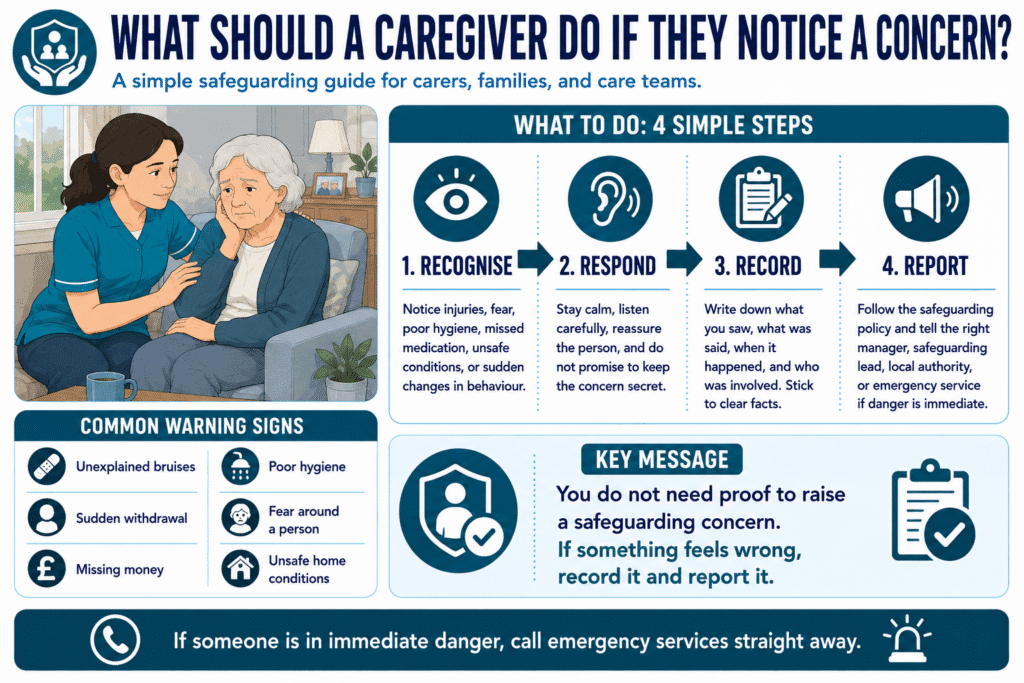
The six principles of safeguarding help caregivers protect people without taking away their voice, dignity, or independence. They guide how care teams should prevent harm, respond to concerns, and support people safely.
- Empowerment means supporting people to make their own choices. A caregiver should listen, explain options clearly, and involve the person in decisions about their care.
- Prevention means acting early before harm happens or gets worse. This may include noticing changes in behaviour, checking risks in the home, or raising concerns before a situation becomes serious.
- Proportionality means responding in a way that matches the level of risk. A safeguarding response should protect the person without becoming unnecessarily intrusive.
- Protection means giving help to people who cannot fully protect themselves. So, what is protection in safeguarding? It means taking action to keep someone safe when abuse, neglect, exploitation, or serious risk may affect them.
- Partnership means working with the right people, such as families, care managers, social workers, healthcare professionals, local authorities, or the police.
- Accountability means everyone must understand their role, keep clear records, and take responsibility for action.
These principles remind caregivers that safeguarding is not only about reporting abuse. It is about creating care that feels safe, respectful, and person-centred every day.
What Counts as a Safeguarding Issue?
A safeguarding issue is any concern that someone may be experiencing abuse, neglect, exploitation, discrimination, or avoidable harm. It can also mean a situation where a person may not be safe, even if no one has confirmed abuse yet.
In care, safeguarding concerns can appear in small changes. A caregiver may notice unexplained bruises, repeated falls, poor hygiene, missed medication, sudden weight loss, fear of a particular person, missing money, unsafe living conditions, or a person becoming unusually quiet or withdrawn.
Some concerns come from what the person says. For example, they may tell a carer that someone hurts them, takes their money, threatens them, ignores their needs, or makes them feel unsafe. Carers must take these words seriously, even if the person later becomes nervous or changes the story.
So, what are safeguarding concerns? They are warning signs that a child or adult may need protection, support, or urgent action. A good caregiver does not wait for proof. They record what they see, report the concern, and follow the safeguarding policy.
Common Types of Safeguarding Concerns in Care
Safeguarding concerns can take many forms. Some are easy to see, while others appear through patterns, behaviour changes, or small signs that something is wrong.
Common types of safeguarding concerns in care include:
- Physical abuse: hitting, pushing, rough handling, misuse of restraint, or unexplained injuries.
- Emotional or psychological abuse: threats, humiliation, intimidation, isolation, or controlling behaviour.
- Financial abuse: stealing money, pressuring someone about property, misusing bank cards, or taking belongings.
- Sexual abuse: any unwanted sexual contact, inappropriate touching, exposure, or exploitation.
- Neglect: failing to provide food, fluids, medication, hygiene support, heating, clothing, or medical attention.
- Self-neglect: when someone cannot or does not care for their own health, hygiene, home, or safety.
- Discriminatory abuse: mistreating someone because of age, disability, race, religion, gender, or sexuality.
- Organisational abuse: poor care caused by unsafe routines, lack of staff training, weak management, or a culture that ignores concerns.
Real examples of safeguarding in care may include an elderly person losing weight because meals are missed, a resident becoming frightened around a staff member, or a vulnerable adult suddenly losing control of their money.
A caregiver may not always see abuse happen. That is why observation, listening, accurate recording, and fast reporting matter.
SEE ALSO: The 5 Principles of Mental Capacity Act: A Practical Guide for 2026
Who Is Responsible for Safeguarding?
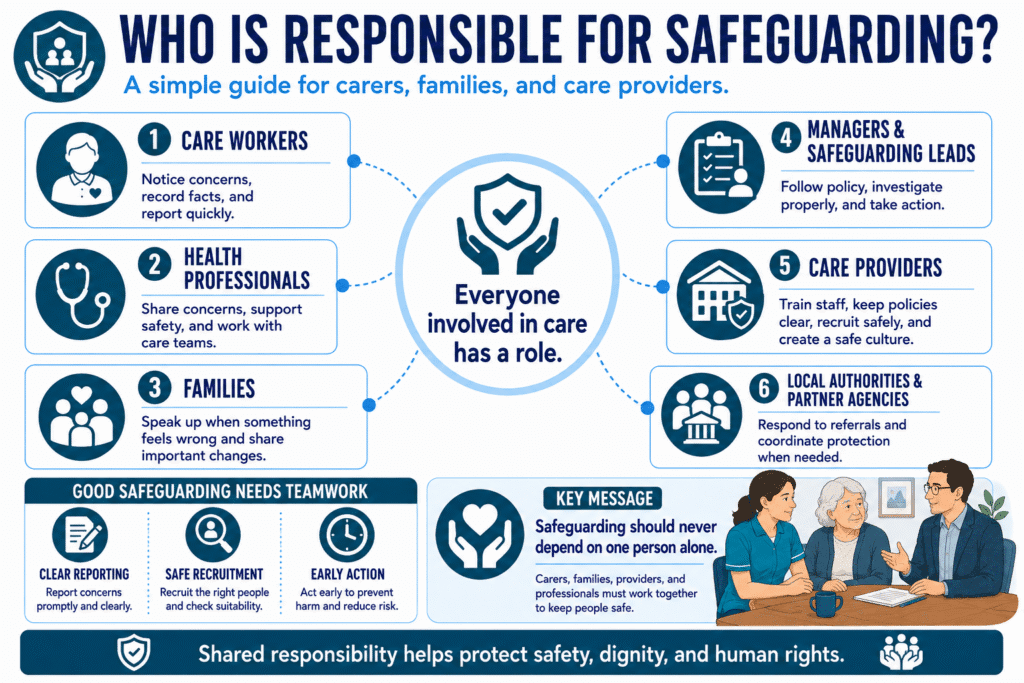
Everyone involved in care has a responsibility to safeguard people. This includes care workers, care managers, nurses, doctors, social workers, family members, volunteers, local authorities, and care providers.
A caregiver may notice the concern first, but safeguarding should never depend on one person alone. Good care providers train staff, check recruitment properly, keep safeguarding policies clear, and make sure every worker knows how to report a concern.
So, who is responsible for safeguarding? In simple terms, everyone who supports or works with a child or adult at risk must help keep them safe. Each person has a role, but care providers must create the systems that make safe care possible.
This includes clear reporting routes, accurate record keeping, regular training, safe staffing, risk assessments, and strong leadership. Families also play an important role because they often notice changes in mood, behaviour, money, hygiene, or confidence before anyone else.
Safeguarding works best when carers, families, health professionals, and local services share concerns early and act together.
Duty of Care: What Caregivers Must Do
Duty of care means caregivers must act in a way that protects the person from avoidable harm. In simple terms, carers must provide support safely, follow agreed care plans, and speak up when something puts a person at risk.
In health and social care, duty of care applies to everyday decisions. A carer should not ignore a loose rug if the person has a falls risk. They should not skip medication prompts, rush personal care, or dismiss a person who says they feel unsafe.
So, what does duty of care mean in practice? It means caregivers must:
- Follow the care plan
- Respect privacy and dignity
- Reduce known risks
- Record concerns clearly
- Report safeguarding worries
- Escalate urgent issues
- Keep professional boundaries
- Never ignore signs of abuse, neglect, or harm
When people ask what is duty of care health and social care, the answer is simple: care workers must take reasonable steps to keep people safe while respecting their rights, choices, and independence. Duty of care does not mean taking control away from someone. It means supporting them safely and acting when risk becomes serious.
What Should a Caregiver Do If They Notice a Concern?
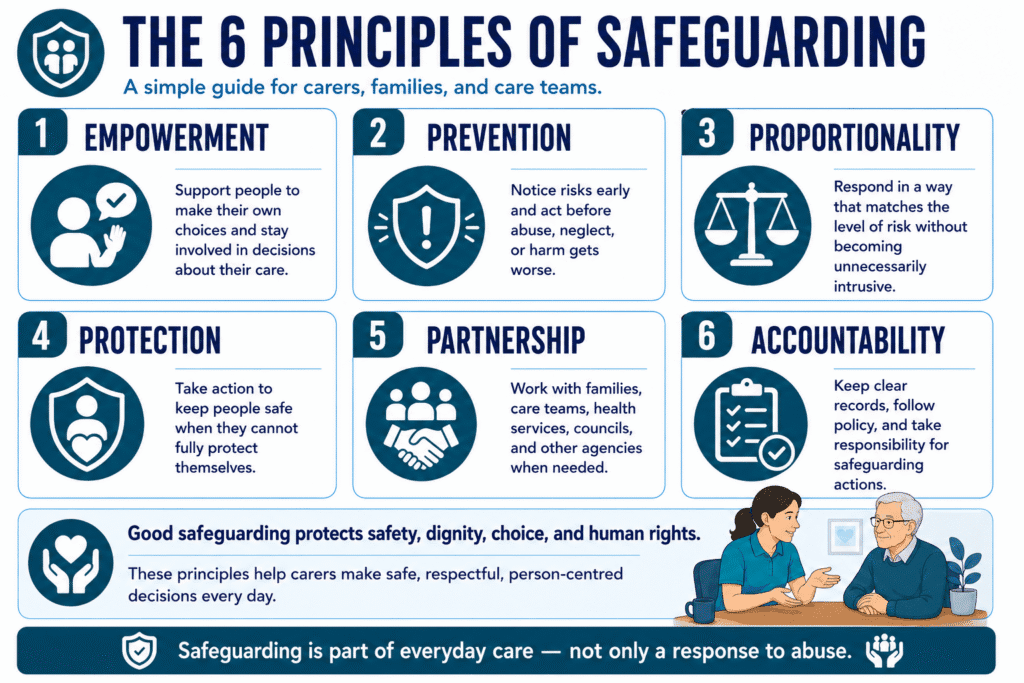
When a caregiver notices a safeguarding concern, they should act quickly, calmly, and professionally. They do not need to prove abuse before reporting it. They only need to recognise that something may place the person at risk.
A simple way to remember the right response is: recognise, respond, record, and report.
Recognise the signs. Look for injuries, fear, poor hygiene, missed medication, unsafe living conditions, sudden mood changes, or anything that feels unusual.
Respond with calm reassurance. If the person tells you something, listen carefully. Do not promise to keep it secret. Instead, explain that you may need to share the concern with the right person to help keep them safe.
Record the facts clearly. Write what you saw, what the person said, when it happened, who was present, and what action you took. Avoid guesses or personal opinions.
Report the concern through the correct safeguarding policy. This may mean speaking to a manager, safeguarding lead, local authority safeguarding team, or emergency services if the person faces immediate danger.
Strong safeguarding policies help caregivers know exactly what to do, who to contact, and how fast they must act.
Final Thoughts…
Safeguarding in care works best when people treat it as part of everyday care, not as a box-ticking exercise. A safe care culture starts with small actions: listening properly, noticing changes, asking the right questions, and acting before concerns grow into serious harm.
Families should trust their instincts. If something feels wrong, raise it. A person may seem withdrawn, frightened, neglected, confused, or unusually quiet for a reason. Early action can protect them.
Care providers should also make safeguarding easy to understand. Staff need clear policies, regular training, safe recruitment, strong supervision, and confidence to report concerns without fear.
So, what is safeguarding in care at its best? It is care that protects people from harm while still respecting their dignity, choices, independence, and human rights. It helps every child, adult, family member, and caregiver feel safer, heard, and supported.
Need Clearer Safeguarding Support for Your Care Team?
Safeguarding should never feel confusing, delayed, or ignored. When carers, families, and care providers understand what to look for and how to respond, they can protect vulnerable people earlier and with more confidence.
At Care Sync Experts, we help caregivers and care providers stay informed with practical, easy-to-understand guidance on safer care, safeguarding responsibilities, care planning, and quality support.
If your team needs clearer safeguarding awareness, better care guidance, or resources that help carers make safer decisions every day, Care Sync Experts is here to support you.
Build a safer care culture with guidance your carers can understand and apply.
FAQ
What are the 5 R’s of safeguarding?
The 5 R’s of safeguarding are usually: Recognise, Respond, Report, Record, and Refer. They help care workers remember what to do when they notice possible abuse, neglect, or harm. First, recognise the warning signs.
Then respond calmly, report the concern, record the facts clearly, and refer the issue to the right safeguarding lead, manager, local authority, or emergency service when needed. Some organisations use 4 R’s instead, but the core action remains the same.
How do you explain safeguarding in an interview?
In a care interview, explain safeguarding in a practical way. You could say: “Safeguarding means protecting vulnerable people from abuse, neglect, and harm. In my role, I would stay alert to warning signs, listen carefully if someone shared a concern, record facts accurately, and report the issue through the correct safeguarding procedure. I would never promise secrecy if someone disclosed abuse, because my priority is to keep them safe.” This answer shows that you understand both compassion and procedure.
What are the 5 aims of safeguarding?
A simple way to explain the 5 aims of safeguarding is: prevent harm, protect people at risk, promote wellbeing, respond quickly to concerns, and work with the right professionals.
In care, these aims help staff protect people’s health, wellbeing, rights, and dignity. CQC describes safeguarding as protecting people’s health, wellbeing, and human rights so they can live free from harm, abuse, and neglect.
What is an example of a safeguarding question?
An example of a safeguarding interview question is: “What would you do if a service user told you that a family member was taking their money?” A strong answer would include staying calm, listening carefully, reassuring the person, avoiding promises of secrecy, recording the exact concern, and reporting it immediately through the organisation’s safeguarding policy. This shows that you know how to protect the person without investigating the matter yourself.
Related reading
- Tender Compliance for Care Providers: A 2026 Guide
- What Does a Bid Writing Success Rate Really Tell You in 2026?
- HPFT Social Care in the Community Tender: £36m Framework Bid Guide 2026
- CQC Registration: Complete Guide for Domiciliary Care Providers
- CQC Personal Care Form: 7 Essential Application Checks
- Domiciliary Care Business Continuity Plan: A Practical 2026 Guide
Browse every article on CQC, Ofsted, CIW and RQIA compliance