What Qualifications Do You Need to Open a Care Home UK?
Text to speech
Duration: 00:00
Font size
Published: 13 Jul, 2026
Share this on:
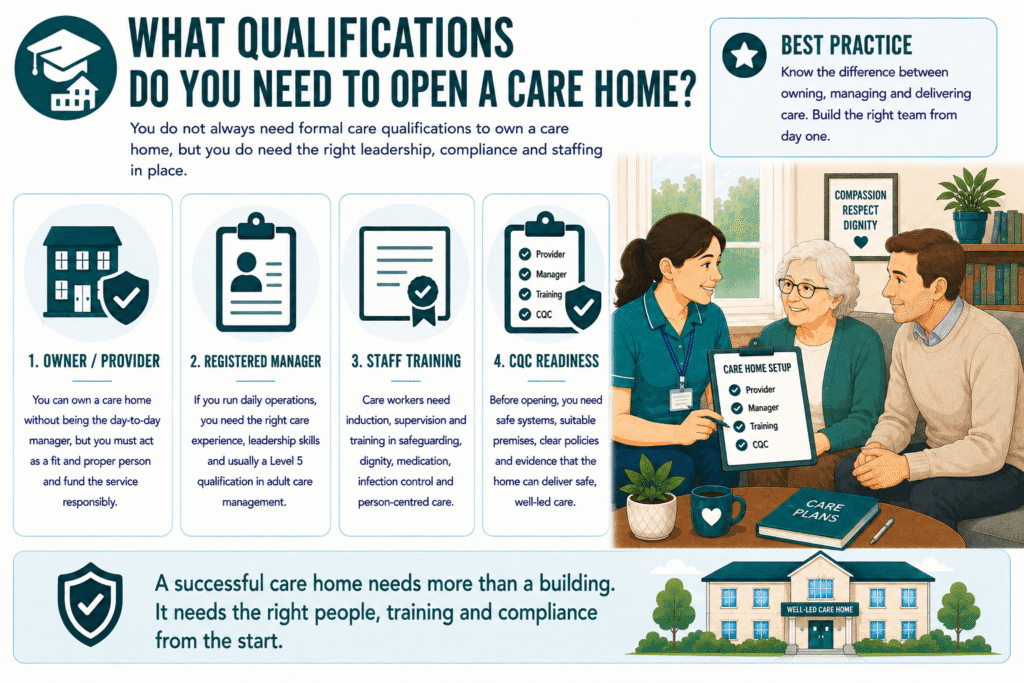
If you are asking, “what qualifications do you need to open a care home?”, the honest answer is this: you do not always need formal care qualifications to own one.
You can own a care home as an investor, director or provider, but you must prove that you understand the responsibility that comes with running a regulated care business.
The Care Quality Commission will expect you to act as a fit and proper person, show financial stability, meet legal requirements and put safe systems in place before you provide care.
If you plan to manage the home yourself, you will need the right care experience, leadership skills and usually a recognised management qualification. If you will not manage daily operations, you must appoint a competent Registered Manager.
Opening a care home is not just a property project. You are building a service where people live, receive support and trust your team with their safety, dignity and wellbeing.

What Qualifications Do You Need to Run a Nursing Home?
A nursing home carries greater responsibility than a residential care home because residents may need regular clinical support. If you want to run a nursing home, you must understand personal care, nursing oversight, medication risks, clinical governance, staffing levels and safe escalation when a resident’s health changes.
You do not have to be a nurse to own a nursing home, but the service must have the right nursing leadership in place. Registered nurses must support residents who need nursing care, and the Registered Manager must show the experience, competence and judgement needed to manage a higher-risk service.
This is where many new owners make a costly mistake. They focus on the building, beds and occupancy plan, but underestimate the clinical responsibility. The Care Quality Commission looks closely at whether nursing homes can keep people safe, meet complex needs and prove that staff have the right skills for the residents they support.
RELATED: Reg 44 Children’s Homes: 2026 Guide for Providers, Managers and Independent Visitors
CQC Registration: The Legal Step You Cannot Skip
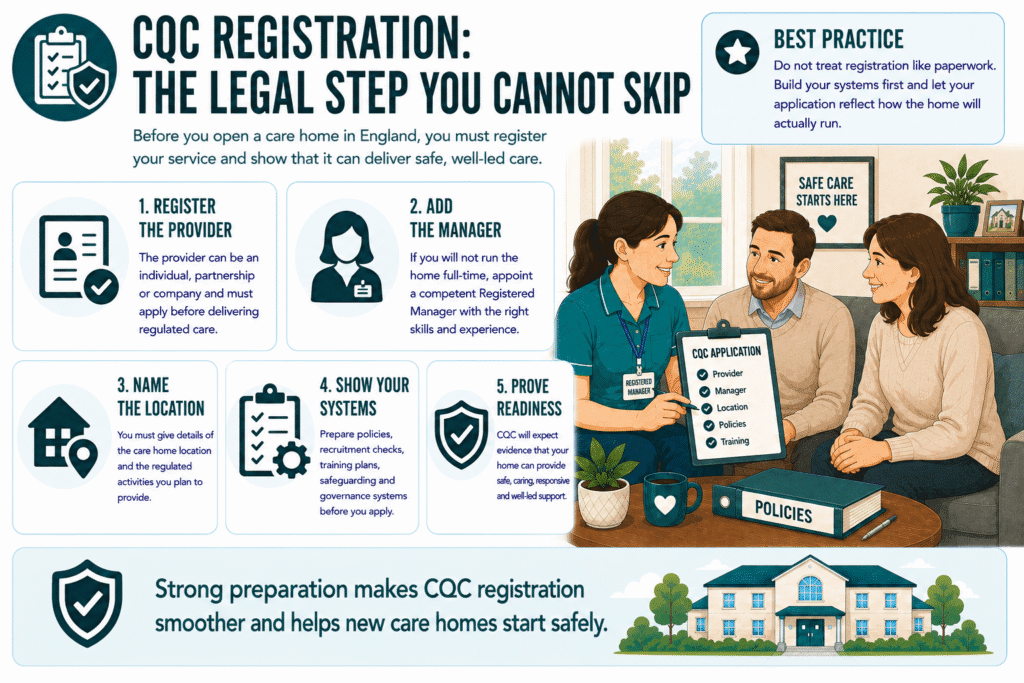
Before you open a care home in England, you must register with the Care Quality Commission. You cannot start providing regulated care first and sort out registration later. The provider, whether an individual, partnership or company, must apply and show that the service can meet the required standards.
Your application must explain the type of care you plan to provide, the location you will operate from, the regulated activities you want to deliver and the people who will manage the service. You also need strong policies, safe recruitment processes, suitable premises, financial planning and clear evidence that you can protect residents from avoidable harm.
CQC registration is not just paperwork. It tests whether your care home has the leadership, systems and culture needed to provide safe, caring and well-led support from the first day residents move in.
Care Certificate, Staff Training and Care Standards
Your care home will only run safely if your staff know what good care looks like in practice. The Care Certificate UK gives new care workers a clear foundation in the behaviours, knowledge and skills expected in adult social care. It covers key care certificate standards such as safeguarding, dignity, privacy, communication, infection prevention, duty of care and person-centred support.
However, the Care Certificate is only the starting point. Your team also needs role-specific training based on the residents you support. This may include dementia care, medication, moving and handling, nutrition, falls prevention, fire safety, mental capacity, end-of-life care and accurate record keeping.
Strong owners build a learning culture early. They do not wait for problems before training staff. They use supervision, spot checks, team meetings and care plan reviews to keep health and social care standards visible every day.
READ MORE: How to Get Private Care Clients UK: Best 2026 Guide
How Much Does a Care Home Cost to Open and Run?
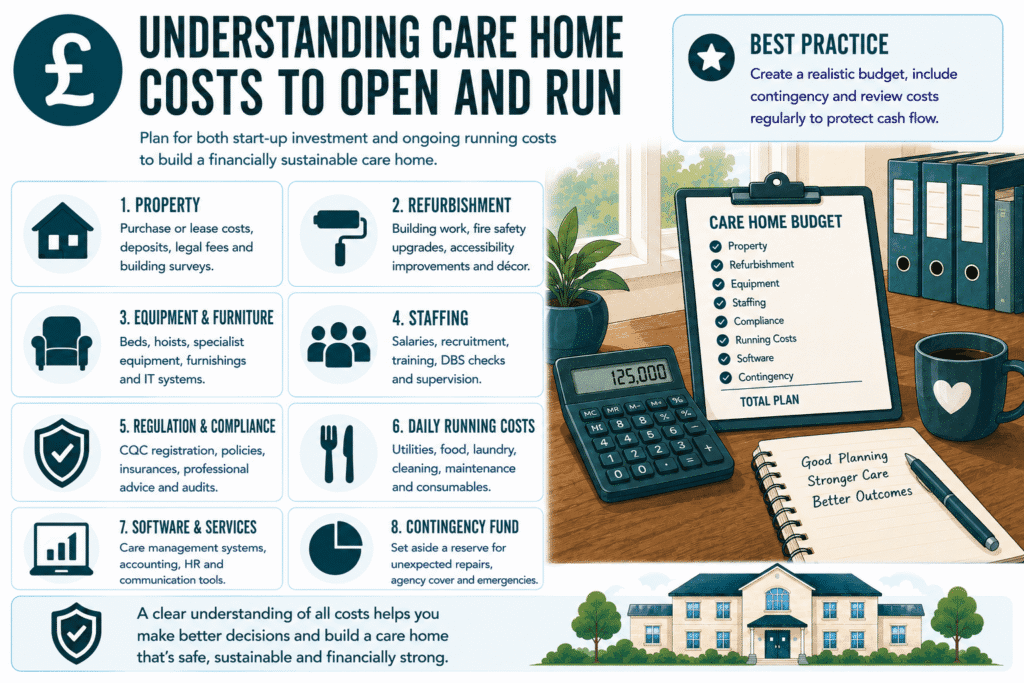
The cost of care homes varies widely because every project starts from a different point. Buying an existing care home, converting a suitable building and building from scratch all carry different costs, risks and timelines. Before you commit, you need to understand both the start-up cost and the monthly running cost.
Your main costs may include property purchase or lease, refurbishment, fire safety work, equipment, furniture, insurance, staff wages, recruitment, training, professional advice, CQC preparation, software, utilities, food, laundry, maintenance and contingency funds.
When people ask, “how much does a care home cost?”, they often focus only on the building. A stronger business owner looks at occupancy, local authority fee rates, private-pay demand, staffing ratios and cash flow. A care home can look profitable on paper and still struggle if wages, agency cover, repairs or low occupancy drain the budget.
Care Home Activities, Resident Experience and Family Trust
Families do not choose a care home because it has beds available. They choose the home that makes them feel their loved one will live safely, comfortably and with dignity. That means your care model must go beyond compliance.
Care home activities play a major role in resident wellbeing. Good activities help people stay socially connected, maintain routines, enjoy hobbies, celebrate identity and reduce loneliness. They also show families that your home sees residents as people, not just care tasks.
If a family asks how to get an elderly person into a care home, they often want more than a placement process. They want reassurance. They want to know the home will communicate clearly, involve them properly and support the person through a difficult transition. A successful care home earns trust before admission and keeps earning it after move-in day.
SEE ALSO: Housing for Autistic Adults: What Care Businesses Need to Know in 2026
Care Home vs Care Agency: Do You Need the Same Qualifications?
A care home and a care agency both support people with daily care, but they operate in different ways. A care home provides accommodation and care in one residential setting. A care agency usually sends care workers into people’s own homes to provide visiting care, live-in care or assisted living at home.
The qualification rules also differ by business model. If you ask, “what qualifications do you need to open a care agency?”, the answer is similar in principle: you do not always need formal qualifications to own the company, but you must register with CQC if you provide regulated personal care in England. You also need a competent manager, safe recruitment, staff training, policies, insurance and strong oversight.
So, if you are asking, “what qualifications do I need to open a care company?”, start with the type of service you want to provide. The rules, risks, premises, staffing model and costs will change depending on whether you open a residential care home, nursing home or home care agency.
Final Checklist Before You Open a Care Home
Before you open a care home, check that your business is ready for both care delivery and regulation.
- Choose your care model: residential care, nursing care, dementia care or another specialist service.
- Research local demand, competitors, fees and staffing availability.
- Prepare a realistic business plan and cash-flow forecast.
- Secure funding for start-up costs and early running costs.
- Choose premises that can meet safety, accessibility and care requirements.
- Understand CQC registration before you spend heavily.
- Appoint a competent Registered Manager if you will not manage the home yourself.
- Prepare policies, procedures, audits and governance systems.
- Recruit staff safely and complete DBS checks.
- Build training around the Care Certificate, supervision and residents’ needs.
- Plan care home activities, family communication and resident experience from day one.
- Get expert support before submitting your CQC application.
A care home succeeds when the owner treats compliance, compassion and commercial planning as one system. Get that right, and you build more than a business, you build a home people can trust.
MORE: What Is Supported Living? 2026 Update for Businesses
Need Support Opening a Care Home?
Opening a care home takes more than funding and a suitable building. You need the right CQC registration, policies, staffing structure, training plan, governance systems and business preparation from the start.
Care Sync Experts can support you with CQC registration preparation, care home compliance, policies and procedures, Registered Manager readiness, mock inspections and wider quality assurance. Whether you plan to open a residential care home, nursing home or care agency, we can help you build a safe, compliant and well-led service.
FAQ
How much does homecare cost per hour in the UK?
Homecare in the UK often costs around £25 per hour, but the final price depends on where the person lives, the type of support they need, the visit length and whether they need specialist care.
Short visits, complex care, overnight support and weekend care may cost more. Families should compare local providers and check whether the person qualifies for local authority funding, NHS support or attendance-related benefits.
Is a care home a good business in the UK?
A care home can be a good business in the UK, but only when the owner understands both care quality and financial discipline. Demand remains strong because many older people need residential, dementia or nursing support.
However, staffing costs, regulation, insurance, utilities, maintenance and occupancy levels can quickly affect profit. The best care home owners do not rely on demand alone. They build a safe service, recruit well, manage cash flow and create a home families trust.
How much does a care home worker earn in the UK?
A care home worker in the UK commonly earns around £20,000 to £25,000 a year, depending on experience, location, employer, shift pattern and responsibility level. Senior care workers, team leaders and staff with specialist skills may earn more.
Pay can also change when employers adjust wages in line with the National Living Wage, local recruitment pressure or additional responsibilities such as medication support, night shifts or dementia care.
Who owns the majority of care homes in the UK?
The majority of care homes in the UK sit within the independent sector, which includes private companies, charities and not-for-profit providers. Private operators play a major role, but no single company owns most care homes.
The market remains mixed, with large groups, smaller independent owners, investors, charities and local authority provision all operating in different parts of the sector.
Related reading
- Care Home Risk Assessment: 2026 Practical Guide to Safer, Person-Centred Care
- Individual Support Package: What It Means for Care at Home
- End of Life Care at Home: What to Expect in 2026, Costs, and Family Support
- Do Dementia Sufferers Have to Pay Care Home Fees in the UK? (2026 Guide)
- New Rules for Care Home Payments in 2026
- How to Open a Care Home in the UK: 2026 Guide
Browse every article on CQC, Ofsted, CIW and RQIA compliance