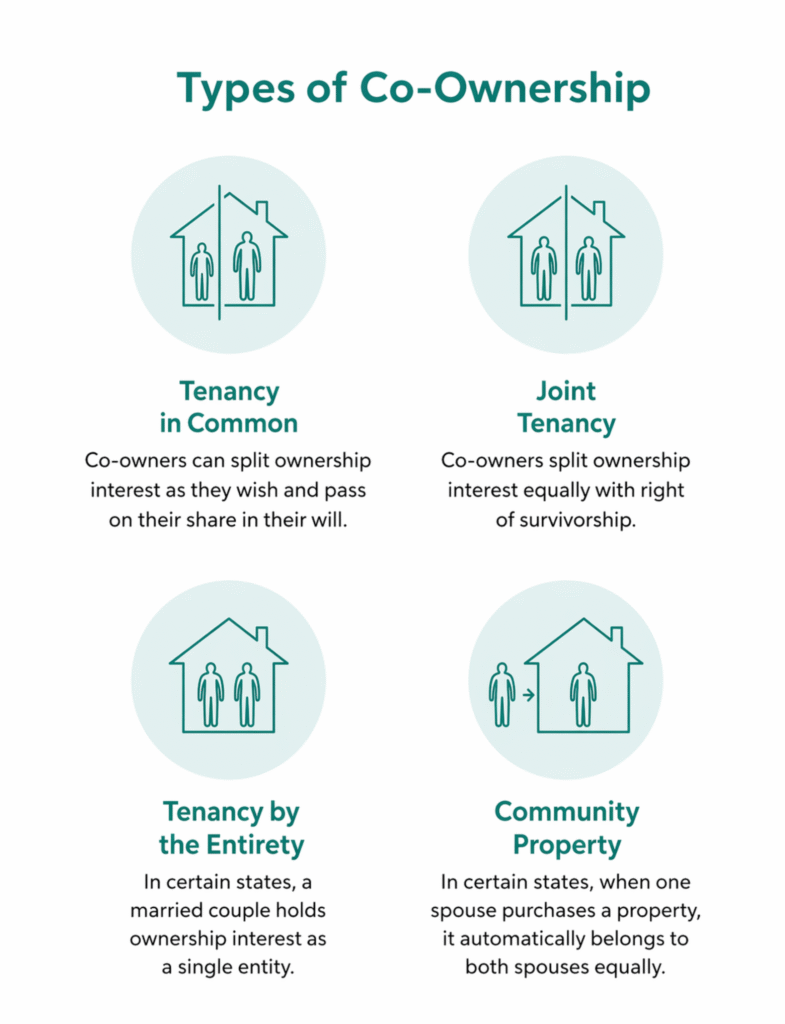
Tenants in common meaning uk: Tenants in common is a form of UK property co-ownership where two or more people own specific shares of a property, which can be equal or unequal. Unlike joint tenants, each owner controls their share and can leave it to anyone in a Will instead of it automatically passing to the other owner.
In simple terms, tenants in common gives you control over your portion of a property, making it a practical option for families, caregivers, or individuals planning ahead for inheritance and long-term care needs.
Tenants in common allows split ownership, often in unequal shares (e.g., 70/30 or 60/40).
Each owner can pass their share through a Will, instead of it going automatically to the other owner.
This structure supports care planning, especially when protecting family assets or children’s inheritance.
It differs from joint tenants, where ownership transfers automatically on death.
A Declaration of Trust is usually required to record ownership percentages and responsibilities.
It can affect care home fees assessments, as only a person’s share may be considered.
When structured correctly, tenants in common can help families and caregivers protect property, plan for future care costs, and avoid unintended inheritance outcomes, which is why it’s widely used in the UK beyond simple property ownership.
For caregivers and families, property ownership is not just about buying a home; it plays a key role in protecting assets, planning for future care, and securing inheritance for loved ones.
Tenants in common becomes especially relevant when care needs arise. Many families worry about how property will be treated if an older adult requires residential care or long-term support. With this ownership structure, each person owns a defined share, which can influence how assets are assessed.
How It Helps in Care Situations
Protecting family inheritance: A parent can ensure their share of the property goes to children, rather than automatically transferring to a partner or co-owner.
Supporting blended families: This structure works well where there are children from previous relationships who need to be included in estate planning.
Planning around care home fees: Under means testing, only an individual’s share may be considered, not the entire property, when assessing eligibility for support.
Tenants in common can affect care home fees because local authorities may assess only the individual’s share of the property, rather than the full value.
Why Caregivers Should Pay Attention
Caregivers often help families make decisions that go beyond immediate care needs. Property ownership can:
Impact funding options for care
Influence financial stability for dependents
Reduce disputes later between family members
Without proper planning, families can face unexpected outcomes, such as losing control over property inheritance or encountering complications during care assessments.
In practice, many families choose tenants in common as part of a wider care and estate planning strategy, especially when they want clarity, flexibility, and long-term protection.
What Is Tenants in Common? (UK Definition Explained)
Tenants in common definition: Tenants in common is a type of property ownership in the UK where each owner holds a specific share of a property, rather than owning it jointly as a whole.
Each tenant in common owns a defined percentage, which can be equal or unequal depending on financial contributions or agreements. For example, one person may own 60% while another owns 40%.
A tenancy in common allows each owner to control their share independently, including the right to sell, transfer, or pass it on through a Will.
Key Features of a Tenancy in Common
Separate ownership shares: Each person owns a distinct portion of the property
Unequal contributions allowed: Ownership can reflect who paid more towards the deposit or mortgage
No automatic inheritance: Shares do not pass to co-owners automatically
Full control over your share: You can leave your portion to family, children, or others
How It Works in Practice
When two or more people buy a property as tenants in common, they usually:
Agree on ownership percentages
Record this in a Declaration of Trust
Share responsibilities such as mortgage payments and maintenance
This setup gives flexibility, but it also requires clear documentation and agreement upfront to avoid disputes later.
For caregivers and families, understanding what is tenants in common helps ensure that property ownership aligns with long-term care planning, inheritance goals, and financial protection.
Tenants in Common vs Joint Tenants (UK Explained Clearly)
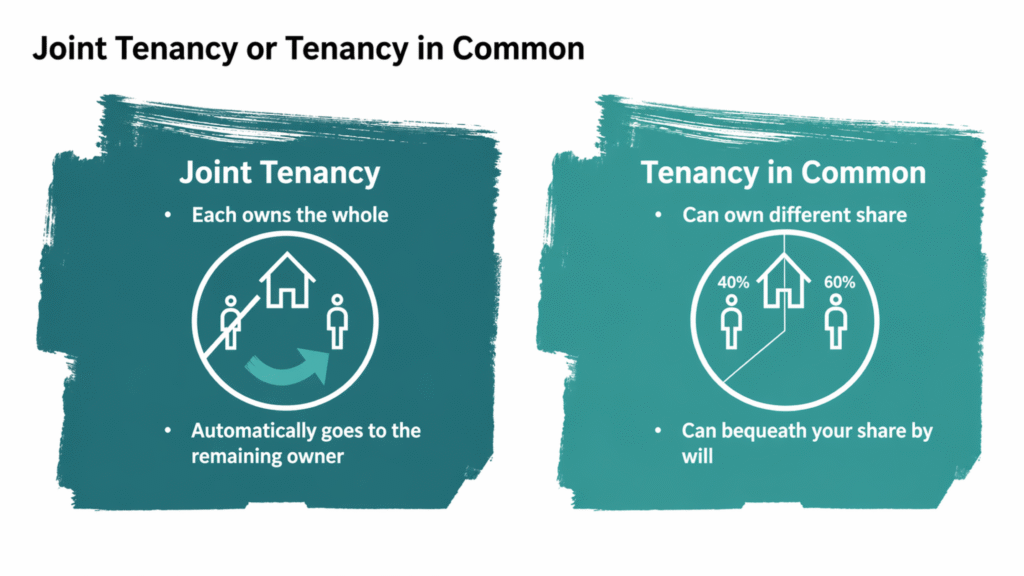
Joint Tenancy or Tenancy-In-Common
Choosing between tenants in common vs joint tenants UK depends on how you want to manage ownership, inheritance, and long-term care planning.
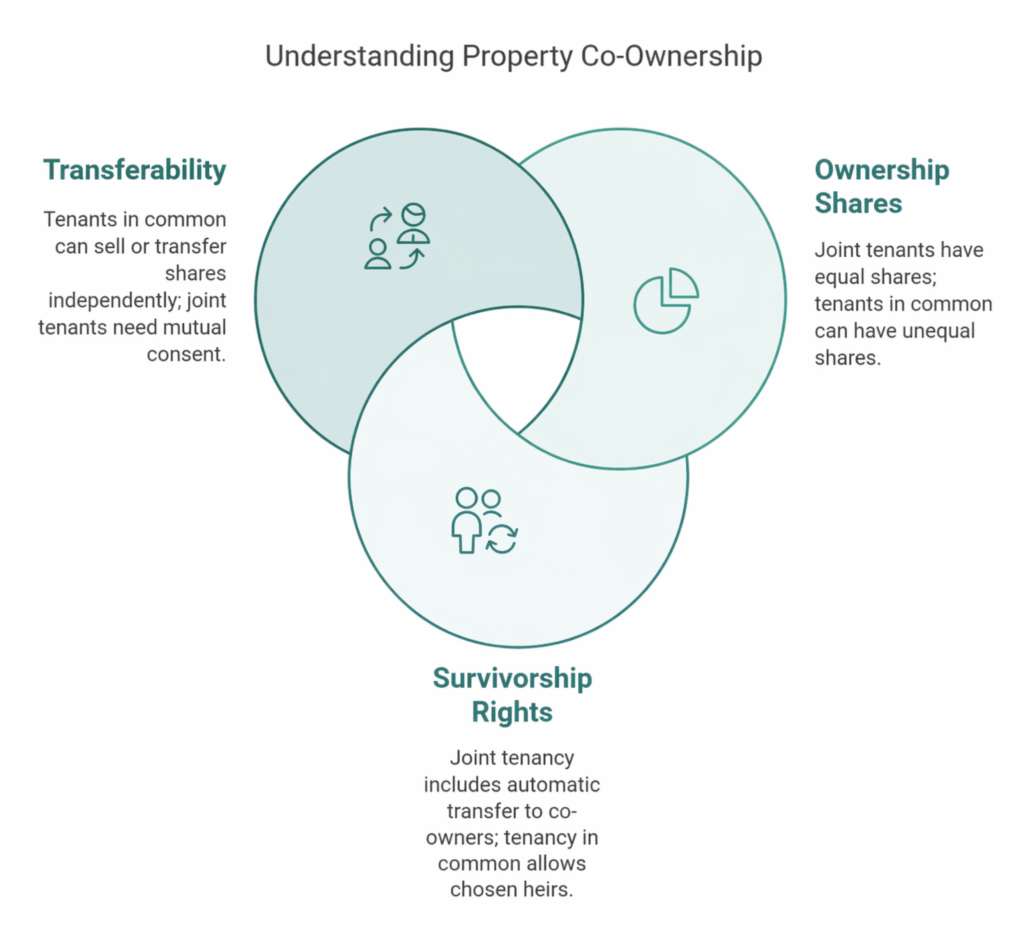
The key difference between joint tenants and tenants in common is how ownership and inheritance work.
Joint Tenants Meaning (UK)
Under joint tenants, all owners:
Own the entire property together
Hold equal shares (100% collectively)
Automatically pass ownership to the other owner(s) when one dies (known as the right of survivorship)
This means you cannot leave your share in a Will.
Tenants in Common (UK)
Under tenants in common, each owner:
Owns a specific share (equal or unequal)
Can leave their share to anyone in a Will
Does not automatically transfer ownership on death
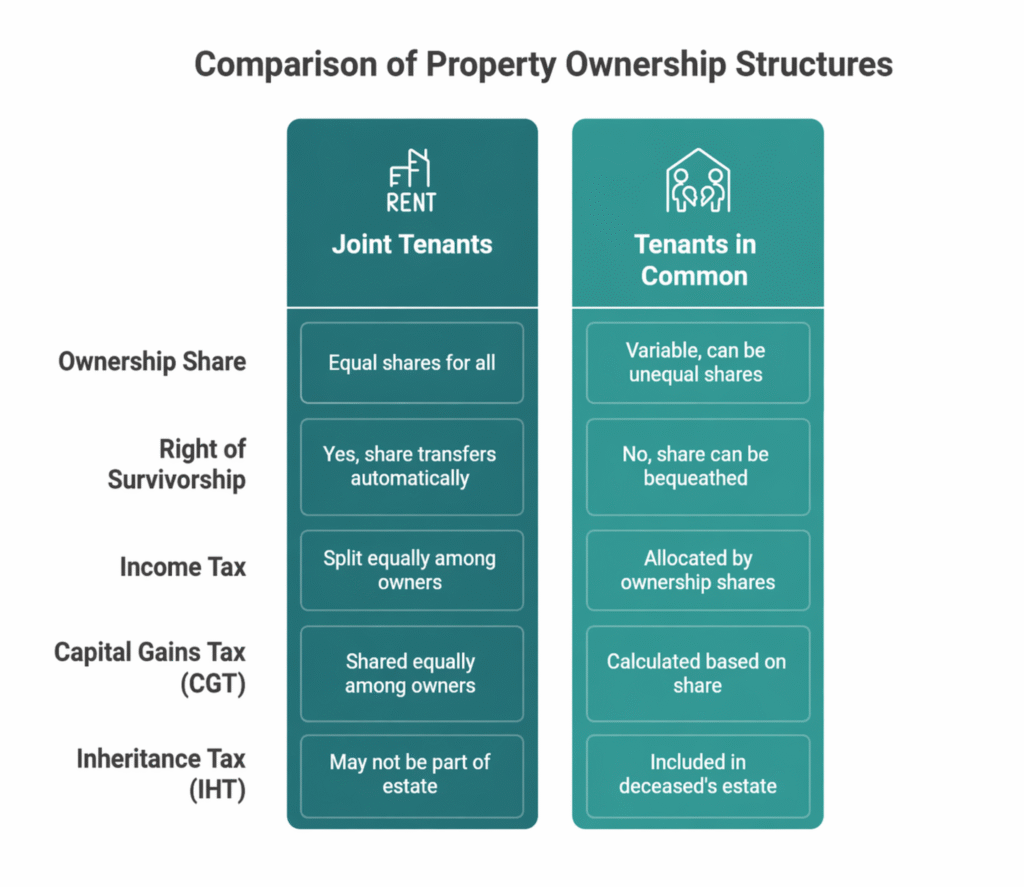
Quick Comparison Table
Feature
Joint Tenants
Tenants in Common
Ownership
Equal (shared whole)
Separate shares
Inheritance
Automatic transfer to co-owner
Passed via Will
Control
Limited individual control
Full control of your share
Best for
Married couples
Families, investors, caregivers
Care planning
Less flexible
More flexible
Which One Is Better for Care Planning?
From a caregiver and family planning perspective:
Joint tenants works best for couples who want the surviving partner to inherit everything automatically.
Tenants in common works better when families want to:
Protect children’s inheritance
Plan for care home fees
Reflect unequal financial contributions
Tenants in common provides more flexibility and control, especially when long-term care, inheritance, or blended family situations are involved.
Simple Rule of Thumb
Choose joint tenants if you want simplicity and automatic inheritance
Choose tenants in common if you want control, flexibility, and estate planning options
Understanding the difference between joint tenants and tenants in common is essential before buying property, especially when care needs and family dynamics play a role.
Real-Life Care Scenario: Why Families Choose Tenants in Common
Understanding tenants in common becomes much clearer when you look at real care situations.
Scenario: Protecting a Parent’s Share for Children
A widowed parent moves in with a new partner later in life. They buy a home together, but the parent wants to ensure their children still inherit their portion of the property.
If they choose joint tenants, the entire property would automatically pass to the partner if the parent dies.
If they choose tenants in common, the parent can:
Own a defined share (e.g. 50%)
Leave that share to their children in a Will
Protect family inheritance while still co-owning the property
Tenants in common allows families to balance current living arrangements with future inheritance planning.
Scenario: Planning Around Care Home Fees
An older adult requires long-term care. The local authority assesses their finances to determine care home fees.
With tenants in common:
Only the individual’s share of the property may be considered
The remaining share still belongs to the other owner
This structure can provide more flexibility during financial assessments, although outcomes depend on local authority rules.
Scenario: Unequal Contributions Between Family Members
A caregiver or adult child contributes more toward:
The deposit
Mortgage payments
Property improvements
With a tenancy in common, ownership can reflect this:
Parent: 40%
Child: 60%
This avoids disputes later and ensures fairness.
Why This Matters for Caregivers
Caregivers often support families through:
Financial decisions
Long-term planning
Property transitions
Without the right ownership structure, families may face:
Inheritance disputes
Loss of control over property
Complications during care assessments
Tenants in common gives families clarity, control, and protection—especially when care needs and complex family dynamics are involved.
In real life, most families do not think about ownership structures until a crisis happens. Choosing tenants in common early helps prevent difficult decisions later.
Disadvantages of Tenants in Common (What Families Must Consider)
Tenants in Common Meaning UK
While tenants in common offers flexibility, it also comes with risks that caregivers and families should understand before making a decision.
The main disadvantages of tenants in common relate to complexity, potential disputes, and lack of automatic protection for co-owners.
1. No Automatic Inheritance
Unlike joint tenants, ownership does not pass automatically to the surviving owner.
The deceased’s share goes to beneficiaries named in a Will
If no Will exists, intestacy rules apply
This can create uncertainty for the surviving partner, especially in care situations.
2. Risk of Ownership Disputes
Because each owner holds a separate share, disagreements can arise over:
Selling the property
Managing the home
Financial responsibilities
These tenants in common problems often occur when expectations are not clearly documented.
3. Complex Ownership After Death
When a share passes to beneficiaries:
New co-owners may become involved (e.g. children)
The surviving owner may need to deal with multiple parties
This can make decisions harder, especially during emotional or care-related periods.
4. Selling the Property Can Be Difficult
One owner cannot always sell the whole property without agreement.
A share can sometimes be sold independently
But disputes may require legal intervention
This creates delays and added stress for families.
5. Requires Proper Legal Documentation
Without a Declaration of Trust:
Ownership shares may become unclear
Financial contributions may not be protected
Many disadvantages of tenants in common come from poor documentation rather than the structure itself.
6. Not Always Effective for Care Fee Planning
Some families use tenants in common to manage care home fees, but:
Local authorities can challenge arrangements
They may view changes as “deliberate deprivation of assets”
Tenants in common provides control and flexibility, but it also demands:
Clear planning
Strong legal documentation
Open communication between owners
For caregivers, the goal is not just choosing an ownership type—but choosing one that avoids future conflict while supporting care and inheritance planning.
Understanding these tenants in common problems helps families make informed decisions and avoid complications later.
Can Tenants in Common Affect Care Home Fees?
Tenants in Common vs Joint Tenants
For many families, one of the biggest concerns is how property ownership impacts care home fees. This is where tenants in common often becomes part of the conversation.
Tenants in common can affect care home fees because local authorities may assess only the individual’s share of the property, rather than the full value.
How Care Home Fee Assessments Work
When someone requires residential care, the local authority carries out a means test. This assessment looks at:
Savings and income
Property ownership
Other assets
If a person owns property outright, its full value may be considered. However, with tenants in common, the situation can differ.
What Happens With Tenants in Common?
Because ownership is split:
Only the individual’s percentage share may be assessed
The co-owner’s share remains separate
The property may not need to be sold immediately
This can provide more flexibility for families, especially where another person continues living in the home.
Important Limitations to Understand
While this structure can help, it is not a guaranteed solution.
Local authorities may:
Investigate recent ownership changes
Challenge arrangements made to reduce fees
Apply “deliberate deprivation of assets” rules
If authorities believe tenants in common was set up purely to avoid care costs, they may still include the full value in the assessment.
Why This Matters for Caregivers
Caregivers often support families navigating:
Financial assessments
Property decisions
Long-term care planning
Understanding tenants in common care home fees helps caregivers:
Set realistic expectations
Avoid risky assumptions
Guide families toward informed decisions
Practical Takeaway
Tenants in common may reduce financial exposure, but it does not eliminate care costs
Proper legal and financial advice is essential before making changes
Early planning is more effective than last-minute adjustments
In practice, families use tenants in common as one part of a broader care planning strategy, not a standalone solution.
When people search for “Martin Lewis tenants in common”, they usually want a simple answer: Is this a smart financial move?
While Martin Lewis does not give one-size-fits-all advice, his guidance on property and inheritance consistently focuses on protecting assets, planning ahead, and avoiding unintended outcomes.
Martin Lewis generally supports using tenants in common where it helps protect inheritance and provides better financial control.
Key Takeaways from His Approach
Plan for the future, not just the present Property ownership should reflect long-term goals, including inheritance and care planning.
Use a Will alongside tenants in common Without a valid Will, your share may not go where you intend.
Get proper legal advice Property ownership decisions can have lasting financial and legal consequences.
Why This Matters for Families and Caregivers
From a caregiver perspective, this aligns with real-world needs:
Families want to protect children’s inheritance
Individuals want control over their share of property
Care planning often requires clear financial structures
This is where tenants in common becomes a practical tool, not just a legal concept.
A Balanced View
Martin Lewis often emphasises:
Avoid making decisions based purely on tax or fee avoidance
Focus on legitimate planning, not loopholes
Ensure all arrangements are transparent and properly documented
Tenants in common works best when it forms part of a clear, well-documented financial and care planning strategy.
In short, the principle behind Martin Lewis tenants in common advice is simple: Use it for control and protection, but only with proper planning and legal clarity.
Common Problems to Avoid with Tenants in Common
While tenants in common offers flexibility, many families run into issues because they overlook key details during setup.
Most tenants in common problems come from poor planning, not the ownership structure itself.
1. No Declaration of Trust
A Declaration of Trust clearly defines:
Ownership percentages
Financial contributions
What happens if the property is sold
Without it:
Disputes become more likely
Contributions may not be protected
This is one of the most common tenants in common problems
2. Unequal Payments Without Documentation
In many cases, a joint mortgage paid by one person or uneven contributions create tension later.
One person may pay more toward the deposit or mortgage
Without written agreement, ownership may still appear equal
This can lead to disputes when selling the property or dividing assets.
3. Lack of a Will
With tenants in common, your share does not pass automatically.
If no Will exists, intestacy rules apply
The share may go to unintended beneficiaries
This creates avoidable complications for families and caregivers.
4. Poor Communication Between Owners
Disagreements can arise over:
Selling the property
Maintenance costs
Financial responsibilities
Without clear agreements, small issues can escalate quickly.
5. Misunderstanding Care Fee Implications
Some families assume tenants in common will automatically reduce care home fees.
This is not guaranteed
Local authorities may challenge arrangements
Relying on assumptions can lead to financial surprises.
6. Adding Unintended Co-Owners After Death
When a share passes to beneficiaries:
New owners may become involved (e.g. children)
Decision-making becomes more complex
This can make selling or managing the property more difficult.
Tenants in common works best when families treat it as a structured agreement, not just a property arrangement.
By addressing these risks early, families and caregivers can use tenants in common effectively, without facing unnecessary complications later.
Final Summary
Tenants in common offers a flexible way to own property in the UK, especially for families and caregivers planning for the future.
Tenants in common allows each owner to hold a defined share of a property and pass it on through a Will, rather than automatically transferring ownership like joint tenants.
What This Means in Practice
You can protect inheritance for children or beneficiaries
You can reflect unequal financial contributions
You gain more control over your share of the property
You can align property ownership with care planning goals
When It Works Best
Tenants in common is particularly useful when:
Families want to plan for care home fees and long-term support
There are blended families or dependents to consider
Owners want clarity over who gets what and when
Key Consideration
While it offers flexibility, tenants in common also requires:
Clear documentation (Declaration of Trust)
A valid Will
Open communication between owners
Choosing between joint tenants or tenants in common is not just a legal decision, it is a financial and care planning decision.
When used correctly, tenants in common helps families protect assets, reduce uncertainty, and plan with confidence for the future.
For caregivers and families alike, understanding tenants in common meaning ensures that property ownership supports both present needs and future care decisions.
Care Sync Experts helps caregiver businesses and families structure property ownership correctly, protect inheritance, and navigate complex care planning decisions with confidence.
Speak to our team today and ensure your property and care strategy supports the people who matter most.
FAQ
Does marriage override tenants in common in the UK?
No, marriage does not override a tenancy in common arrangement. Even if you are married, each spouse still owns their defined share of the property. That share will pass according to their Will, not automatically to the surviving spouse. This is why many married couples choose tenants in common when they want to protect children’s inheritance.
Can I change from tenants in common to joint tenants?
Yes, you can switch from tenants in common to joint tenants, but all owners must agree. This process is known as “merging the titles” and usually involves updating the property records with HM Land Registry. It’s advisable to seek legal advice before making this change, as it affects inheritance rights.
What are the risks of joint tenancy?
The main risk of joint tenants is the lack of control over inheritance. When one owner dies, their share automatically passes to the surviving owner, regardless of what is written in a Will. This can create problems in blended families or where children from previous relationships need to be considered.
Can a surviving tenant in common sell the property in the UK?
A surviving tenant in common cannot usually sell the entire property alone. They can only deal with their own share unless all co-owners or beneficiaries agree. If disagreements arise, the matter may require legal resolution, which can delay the sale process.