What is the Health and Safety at Work Act 1974?
Text to speech
Duration: 00:00
Font size
Published: 1 Apr, 2026
Share this on:
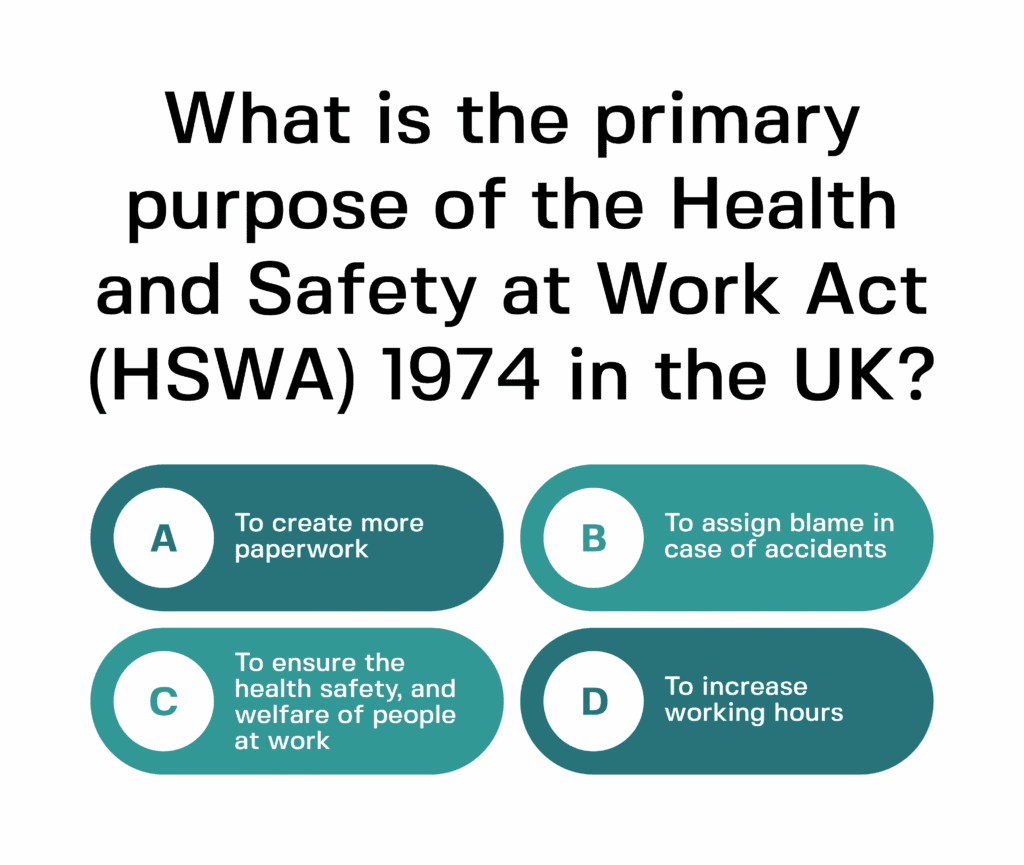
The Health and Safety at Work Act 1974 (HASAWA) is the primary UK law that requires employers to protect the health, safety, and welfare of employees and anyone affected by their work.
It applies to most workplaces, including care homes and domiciliary care services, and places legal responsibility on those who create risks to manage them.
In simple terms, the HASAWA meaning is this: if you run a care business, you must take all reasonably practicable steps to keep your staff, patients, and the public safe at all times.

Health and Safety at Work Act 1974 Summary
- The Health and Safety at Work Act 1974 is the main law governing workplace safety across the UK, including care homes and domiciliary care services.
- Employers must protect the health, safety, and welfare of employees and anyone affected by their work activities.
- Employees must take reasonable care of their own safety and follow workplace procedures and training.
- The Act places responsibility on those who create risks to manage and control them effectively.
- The law applies to most workplaces in England, Scotland, and Wales, including high-risk care environments.
- The Health and Safety Executive (HSE) and local authorities enforce the Act and can issue fines or shut down unsafe services.
These health and safety at work act 1974 key points form the foundation of safe care delivery and regulatory compliance for caregiver businesses.
Why the Health & Safety at Work Act Matters in Care Settings
The health & safety at work act directly affects how caregiver businesses operate every day. Care providers work in high-risk environments where staff support vulnerable people, handle medication, and perform physical tasks like lifting and moving patients. Without strong safety practices, both carers and service users face serious harm.
The health and safety act 1974 ensures care businesses build safe systems of work. For example, a domiciliary care agency must train staff on safe manual handling to prevent injuries when assisting clients. A care home must control infection risks to protect residents and staff. These are not optional practices, they are legal duties under hasawa health and safety at work act.
In real terms, this law helps care providers:
- Reduce staff injuries from lifting, slips, and fatigue
- Protect patients from unsafe care practices
- Maintain compliance required for CQC inspections
- Avoid incidents that could lead to service closure or legal action
For caregiver businesses, the Act is not just a legal requirement—it is the foundation of safe, high-quality care.
Health and Safety at Work Act 1974 Employers Responsibilities
The Health and Safety at Work Act 1974 employers responsibilities require care providers to actively protect staff, patients, and anyone affected by their services. Employers must not wait for incidents to happen; they must prevent risks before harm occurs.
In a caregiver business, this means putting clear systems, training, and safeguards in place every day.
Key Employer Duties Under HASAWA
- Provide a safe working environment
Employers must maintain clean, hazard-free care settings, whether in care homes or clients’ homes.
- Ensure safe equipment and systems of work
Care providers must supply and maintain equipment such as hoists, PPE, and medical tools, and ensure staff use them correctly.
- Carry out risk assessments
Employers must identify risks (e.g. manual handling, infection, medication errors) and take action to control them.
- Deliver proper training and supervision
Staff must receive training in areas like safeguarding, moving and handling, and infection control to work safely.
- Provide adequate welfare facilities
This includes access to rest areas, hygiene facilities, and support systems for staff wellbeing.
- Create and maintain a health and safety policy
Businesses with five or more employees must document how they manage health and safety and communicate it clearly to staff.
What This Means in Practice
A care provider must ensure carers know how to safely lift a client, use protective equipment correctly, and respond to emergencies. If an employer fails to provide training or safe systems, they breach the health and safety policy requirements and risk enforcement action.
In short, employers carry the primary responsibility for creating a safe care environment under the health and safety at work act 1974.
READ MORE: Can you use the DBS Update Service for CQC registration?
Health and Safety at Work Act 1974 Section 2 Explained
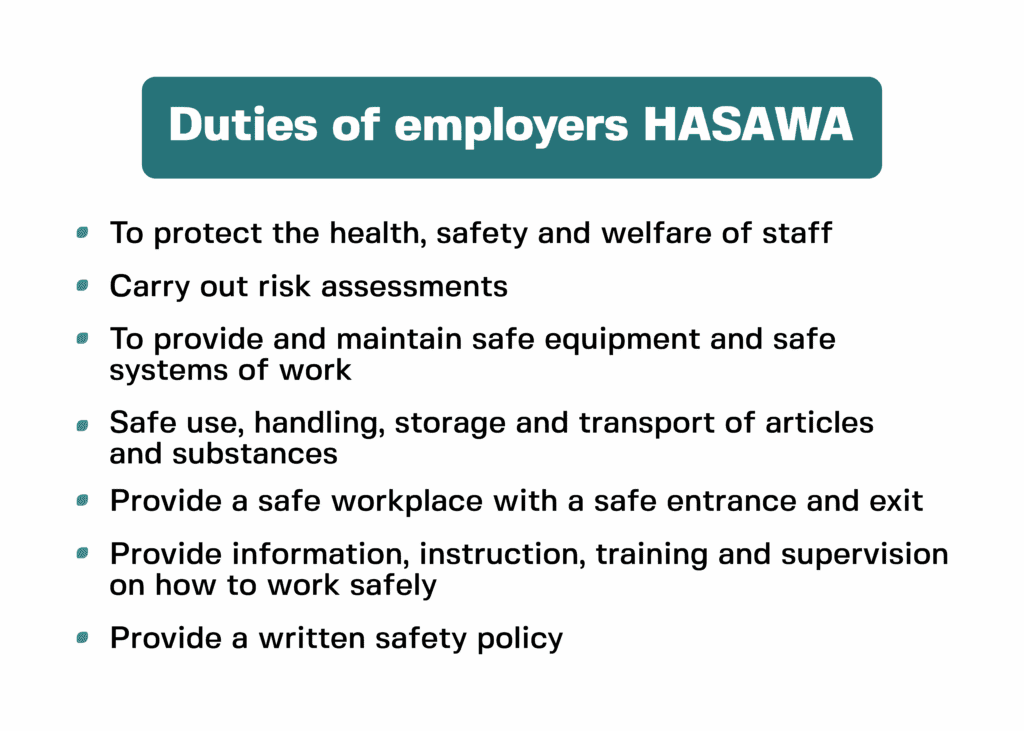
Section 2 of the Health and Safety at Work Act 1974 sets out the core duty of employers: they must protect the health, safety, and welfare of employees while they are at work.
In simple terms, Health and Safety at Work Act 1974 Section 2 means employers must take practical steps to prevent harm, not just react when something goes wrong.
What Section 2 Requires from Care Providers
Section 2 focuses on five key areas:
- Safe systems of work
Care providers must design tasks so staff can work safely—for example, using proper moving and handling procedures when assisting patients.
- Safe use, handling, and storage of equipment and substances
This includes safely managing medications, cleaning chemicals, and medical devices.
- Adequate training, instruction, and supervision
Employers must ensure carers understand risks and know how to perform their duties safely.
- Safe workplace environment
Care settings must be free from hazards such as slippery floors, faulty equipment, or unsafe layouts.
- Welfare provisions
Employers must provide facilities that support staff wellbeing, such as rest areas, clean washing facilities, and access to drinking water.
What This Means in a Care Setting
For example, a domiciliary care agency must train carers on how to safely support a client with limited mobility. A care home must ensure staff follow infection control procedures when handling residents or equipment.
If an employer ignores these responsibilities, they breach Section 2, which can lead to enforcement action by regulators.
In practice, Section 2 forms the backbone of how caregiver businesses deliver safe, compliant, and high-quality care every day.
Who is Responsible for Health and Safety in the Workplace?
Many care providers ask: Who is responsible for health and safety in the workplace?
The Health and Safety at Work Act 1974 makes this clear—responsibility is shared, but employers carry the primary duty.
Employer Responsibility
Employers hold the main legal responsibility under the health and safety act 1974. They must:
- Create safe systems of work
- Provide training, equipment, and supervision
- Carry out risk assessments
- Protect both staff and service users
In a care business, this means ensuring carers can safely support clients, manage risks in home environments, and follow proper procedures at all times.
Employee Responsibility
Employees also have legal duties. Under HASAWA, they must:
- Take reasonable care of their own safety and others
- Follow training and workplace procedures
- Use equipment correctly (e.g. PPE, hoists)
- Report hazards, incidents, or unsafe conditions
For example, a carer must report a faulty hoist instead of continuing to use it.
Manager and Supervisor Responsibility
Managers act on behalf of the employer and must:
- Enforce safety procedures
- Monitor staff performance
- Address risks quickly
- Ensure compliance with policies
The Key Principle
According to the health and safety at Work Act 1974, who is responsible for health and safety at Work?
Everyone has a role, but employers are ultimately accountable.
In caregiver businesses, strong teamwork between employers, managers, and staff ensures a safe environment for both carers and vulnerable service users.
SEE ALSO: Central Reservations System for Caregivers UK: Importance of Digital Care Management
What Does HSE Stand For and What Do They Do?
HSE stands for the Health and Safety Executive. It is the UK government body responsible for enforcing the Health and Safety at Work Act 1974 and ensuring workplaces operate safely.
What the HSE Does
The HSE regulates and monitors how businesses manage health and safety. In caregiver settings, this includes:
- Inspecting workplaces
HSE inspectors visit care providers to check compliance with safety laws and procedures.
- Investigating incidents
They investigate serious accidents, injuries, or unsafe practices in care environments.
- Enforcing the law
The HSE can issue improvement notices, prohibition notices, fines, or even prosecute businesses that fail to meet safety standards.
- Providing guidance
They publish practical guidance to help employers understand and meet their legal duties.
HSE and Care Providers
For care businesses, the HSE works alongside regulators like the CQC. While the CQC focuses on care quality, the HSE focuses specifically on health and safety risks, such as staff injuries, unsafe equipment, or poor working conditions.
If a care provider ignores safety responsibilities, the HSE can take immediate action to protect workers and the public. This makes compliance with the health and safety at work act 1974 not just important, but essential for staying operational.
How the Management of Health and Safety at Work Regulations 1999 Supports HASAWA
The Management of Health and Safety at Work Regulations 1999 builds on the Health and Safety at Work Act 1974 by focusing on how businesses manage risks in practice.
While HASAWA sets the legal duty, these regulations explain how to carry it out day-to-day.
What These Regulations Require
Care providers must:
- Carry out risk assessments
Identify hazards in care settings, such as manual handling risks, infection exposure, or unsafe home environments.
- Implement control measures
Take action to reduce or eliminate risks, for example, using hoists, PPE, or safer care plans.
- Appoint competent persons
Assign trained individuals to manage health and safety within the organisation.
- Provide clear procedures
Ensure staff know what to do in emergencies, such as falls, medication errors, or safeguarding concerns.
- Protect vulnerable people
Consider risks to both staff and service users, especially those with higher care needs.
What This Means for Caregiver Businesses
In practice, a care provider cannot rely on policies alone. They must actively assess each situation, whether in a care home or a client’s house, and adapt safety measures accordingly.
For example:
- Before lifting a client, a risk assessment must confirm the safest method
- Before administering medication, staff must follow clear safety procedures
- Before entering a client’s home, carers must identify environmental risks
The Key Difference
The health and safety at work act 1974 sets the duty
The Management of Health and Safety at Work Regulations 1999 ensures the duty is properly managed
Together, they form the backbone of effective safety systems in caregiver businesses.
What Happens If Care Providers Fail to Comply?
Failing to follow the Health and Safety at Work Act 1974 puts care providers at serious legal, financial, and operational risk. Regulators do not overlook breaches, especially in environments where vulnerable people depend on safe care.
Legal Consequences
If a care business fails to meet its duties under the health and safety act 1974, enforcement bodies like the HSE can:
- Issue improvement notices requiring immediate corrective action
- Issue prohibition notices to stop unsafe activities instantly
- Impose fines or prosecute the business and its directors
- In severe cases, pursue criminal charges
Impact on Care Operations
Non-compliance does not just lead to legal action—it disrupts the entire business:
- Service suspension or closure
Unsafe care environments can lead to immediate shutdowns.
- Failed inspections (CQC impact)
Poor safety practices often result in lower inspection ratings.
- Loss of contracts
Local authorities and the NHS avoid working with non-compliant providers.
- Reputational damage
Negative reports reduce trust from families, commissioners, and staff.
Real Risk in Care Settings
In caregiver businesses, safety failures can lead to:
- Staff injuries from unsafe lifting practices
- Medication errors due to poor procedures
- Infection outbreaks from weak controls
- Harm to vulnerable service users
The health & safety act 1974 is not just a legal framework; it protects lives. Care providers who ignore their responsibilities risk losing their business, their reputation, and most importantly, the safety of the people they serve.
Health and Safety Checklist for Caregiver Businesses
Care providers must apply the Health and Safety at Work Act 1974 in daily operations—not just in policy documents. Use this checklist to stay compliant and protect both staff and service users.
Practical Health and Safety Checklist
- Carry out regular risk assessments
Assess risks in care homes and clients’ homes, including manual handling, infection control, and environmental hazards.
- Maintain a clear health and safety policy
Document how your organisation manages risks and ensure all staff understand it.
- Provide ongoing staff training
Train carers on moving and handling, safeguarding, medication safety, and emergency procedures.
- Supply and maintain safe equipment
Ensure hoists, PPE, and medical tools are safe, regularly checked, and used correctly.
- Monitor staff compliance
Supervisors must check that staff follow procedures and apply training in real situations.
- Report and record incidents properly
Log accidents, near misses, and risks to improve safety and meet legal requirements.
- Ensure proper supervision and support
Provide guidance to staff, especially when handling complex care situations.
- Review and update procedures regularly
Adapt safety measures based on new risks, feedback, or regulatory updates.
Following this checklist helps care providers meet their duties under the health & safety at work act, avoid enforcement action, and deliver safe, high-quality care consistently.
In caregiver businesses, strong safety practices are not optional—they are essential for protecting lives and maintaining trust.
Final Thoughts…
The Health and Safety at Work Act 1974 is more than a legal requirement—it is the foundation of safe, reliable care delivery. For caregiver businesses, it defines how you protect your staff, your service users, and your reputation.
At its core, the health and safety act 1974 places responsibility on those who create risks to manage them. This means care providers must take proactive steps every day—through training, supervision, risk assessments, and clear procedures—to prevent harm before it happens.
Understanding what the health and safety at work act is helps care businesses move beyond compliance and build safer, more efficient operations. Whether you run a care home or a domiciliary care service, applying these principles strengthens your ability to pass inspections, win contracts, and deliver high-quality care.
In simple terms:
– Safe care is not optional
– Compliance is not a one-time task
– Responsibility sits with everyone, but starts with the employer
Care providers who take the health & safety act 1974 seriously do more than follow the law, they create environments where both carers and service users can thrive safely.
Need Help with DBS Compliance or Care Business Setup?
At Care Sync Experts, we help care providers stay compliant, win contracts, and grow with confidence.
Whether you need support with:
- Enhanced DBS processes and safeguarding compliance
- CQC registration and inspection readiness
- Tender writing and contract acquisition
- Policies, documentation, and operational setup
We’ve got you covered.
Don’t risk delays, failed inspections, or lost opportunities.
Let our experts handle the complexity so you can focus on delivering quality care.
Book a consultation with Care Sync Experts and take the next step toward building a compliant, scalable care business.
FAQ
What law regulates health and safety in the workplace?
The Health and Safety at Work Act 1974 is the main law that regulates workplace health and safety in the UK. It sets the legal duties for employers and employees and is supported by additional regulations, such as the Management of Health and Safety at Work Regulations 1999, which focus on risk assessments and day-to-day safety management.
What is health and safety?
Health and safety refers to the systems, procedures, and actions put in place to prevent injury, illness, and harm in the workplace. In care settings, this includes safe patient handling, infection control, proper use of equipment, and protecting both staff and service users from risks.
Why is health and safety important in the workplace?
Health and safety is important because it protects lives, reduces workplace injuries, and ensures businesses operate legally. In caregiver businesses, strong safety practices prevent harm to vulnerable service users, reduce staff injuries, and improve overall care quality.
What is a risk in health and safety?
A risk in health and safety is the chance that a hazard could cause harm. For example, lifting a patient without proper equipment creates a risk of injury to both the carer and the service user. Care providers must identify these risks and take steps to control or eliminate them.
Related reading
- What Is a Tender in Health and Social Care? 2026 Update
- The 5 Principles of Mental Capacity Act: A Practical Guide for 2026
- NVQ Level 3 Health and Social Care: Requirements, Jobs, Salary, How to Get It in 2026
- Equality Act Protected Characteristics: 2026 Importance for Care Work
- Manager Application Evidence: 9 Essential Home Care Checks
- How to Apply for CQC Registration in 2026: Forms, Evidence and Assessment
Browse every article on CQC, Ofsted, CIW and RQIA compliance