AGNI
Cheshire West Overturned: Why the Old Test Is Dead for Supported Living in 2026
Cheshire West overturned in 2026: what supported living providers must reassess, record and share with commissioners under the new legal test.
- Published
- Reading time
- 17 min read

Last updated: 13 October 2026 | By Collins Bonsi, Care Sync Experts
Cheshire West overturned: that is the legal position after the UK Supreme Court judgment of 2 June 2026. In A Reference by the Attorney General for Northern Ireland [2026] UKSC 16, commonly called AGNI, the Court rejected the acid test that had shaped deprivation of liberty practice since 2014.
For supported living providers, this is the most important change to deprivation of liberty practice in more than a decade. It does not remove the duties created by the Mental Capacity Act 2005. It changes how professionals decide whether a person’s arrangements amount to a deprivation of liberty, and it gives much greater weight to the person’s lived experience, wishes and feelings.
This guide explains the Cheshire West overturned decision, how the new multifactorial test works, what the first Court of Protection cases show, and what supported living providers should review now.
For providers, “Cheshire West overturned” is not a signal that liberty safeguards have ended. It is a signal to replace mechanical assumptions with stronger, person-specific evidence.
Important: This article provides general information, not legal advice. Individual cases should be referred to the commissioning body and, where appropriate, a solicitor experienced in the Mental Capacity Act and Court of Protection.
What Did the Supreme Court Decide in AGNI?
The case reached the Supreme Court as a devolution reference from the Attorney General for Northern Ireland. The central issue was whether a revised Northern Ireland code of practice could lawfully depart from the approach taken in P v Cheshire West and Chester Council [2014] UKSC 19.
Seven justices heard the case in October 2025. Lord Sales and Lady Simler delivered a joint judgment, and the other five justices agreed. The Court concluded that the acid test had not been adopted by the European Court of Human Rights and was wrong in principle. It used the 1966 Practice Statement to depart from its earlier decision, meaning Cheshire West was overturned with immediate effect.
The judgment does not replace one neat formula with another. Instead, it returns the assessment to the individual facts of each case. That is why supported living providers now need evidence that describes the person’s experience rather than relying on staffing ratios or a locked door alone.
Read the Supreme Court judgment and press summary for the Court’s complete reasoning.
Cheshire West Overturned: Why Was the Acid Test Dropped?
Under Cheshire West, a person was treated as deprived of their liberty if they were under continuous supervision and control and were not free to leave. The person’s contentment, compliance, relative normality and reason for the arrangements were considered irrelevant to the objective question.
The test was easy to state, but it produced a very wide result. In the year before the 2014 decision, 13,700 referrals were made for a DoLS authorisation. By 2023 to 2024, the judgment records 332,455 referrals in England and a backlog of 123,790 cases. The latest official figures show 364,900 DoLS applications in England during 2024 to 2025. At 31 March 2025, 118,850 applications remained incomplete, and only 21.1 per cent were completed within the 21 day statutory timeframe.
The Supreme Court was also told that about 60,000 people were treated as deprived of their liberty in settings outside the DoLS scheme, including supported living, shared lives and private homes. These arrangements required a different legal route, usually through the Court of Protection.
Those pressures did not decide the law by themselves. The Court’s central concern was that the acid test had moved too far from the ordinary meaning of confinement and from the approach taken in Strasbourg case law. Once the Cheshire West overturned position took effect, decision makers had to consider all relevant circumstances again.
The official DoLS statistics for England explain the scale of the existing system.
What Is the New Multifactorial Test?
The starting point is the specific situation of the individual. The Supreme Court said that the assessment is multifactorial and no single factor is determinative. Drawing on the judgment and the Department of Health and Social Care guidance, relevant factors include:
- The type of restriction, including locked doors, sensors, supervision, restricted contact, restraint or medication.
- The duration of each restriction and whether it is constant, occasional or used only in particular situations.
- The actual effect on this person, taking account of their communication, preferences, routines and responses.
- The manner in which restrictions are implemented, including whether support is explained, negotiated, coercive or enforced.
- Whether the person objects through words, behaviour, distress or attempts to leave.
- The relative normality of the arrangements, particularly where the person is living in their own home.
- The purpose of the measures, including whether they support care and protection or operate as control.
- How far the situation is from the clearest example of detention, which the Court described as confinement in a prison cell.
The three elements derived from Storck v Germany remain relevant. There must be confinement in a restricted space for a significant period, no valid consent, and state responsibility. What has changed is how the first two elements are examined.
The Cheshire West overturned judgment rejected an approach that gave two features almost decisive force. Under the new test, a locked front door may matter, but it does not answer the question by itself. A high staffing ratio may matter, but it does not automatically mean confinement. The evidence must show what the whole arrangement is like for the person.
Can a Person Give Valid Consent Without Mental Capacity?
This is one of the most significant parts of the ruling. The Court described valid consent for Article 5 purposes as an autonomous concept. It is not identical to legal capacity under the Mental Capacity Act 2005.
A person who lacks capacity to decide where to live may still be aware of their environment, understand their situation in basic terms and show genuine acceptance of it. In that narrow Article 5 context, the Court said their wishes should be respected. If a person can express where they want to live and is happy with their arrangements, it may be difficult to characterise the situation as coercive.
This does not mean that capacity assessments can be skipped. It does not change the five statutory principles, the best interests process or the need to seek consent to care and treatment. CQC has expressly said that the judgment’s approach to valid consent does not determine whether a person consents to care and treatment under Regulation 11.
Care teams should therefore keep two questions separate:
- Does the person have capacity to make the specific decision under the Mental Capacity Act?
- Looking at Article 5, does the person understand their living situation in basic terms and show genuine acceptance of it?
Our guide to the five principles of the Mental Capacity Act explains the first question in everyday care practice.

When valid consent should not be inferred
Compliance is not automatically consent. A person may appear settled because they are frightened, heavily sedated, unable to communicate, worried about consequences or unaware that another option exists. Mere acquiescence may carry little weight.
The judgment says that where a person can express a view and there is serious doubt about their attitude, no inference of valid consent should be drawn. Warning signs include:
- Repeated attempts to leave or persistent requests to go elsewhere.
- Distress when doors are locked or support is imposed.
- Refusal or physical rejection of care.
- Restraint or high-level supervision used to manage behaviour.
- Covert medication where the person objects.
- Sedation that may suppress communication or resistance.
- Markedly different responses with different staff, relatives or in different settings.
Where these signs are present, the provider should record them accurately and refer the position to the commissioner. Cheshire West was overturned, but uncertainty must not be used to remove protection from someone who may be objecting.
Why the Cheshire West Overturned Decision Matters Most in Supported Living
DoLS applies in hospitals and care homes. It does not provide the authorisation route for supported living. Where supported living arrangements amount to a deprivation of liberty, authorisation is normally sought from the Court of Protection by the commissioning local authority or NHS body.
That distinction made the old acid test particularly difficult for community services. Many people living in ordinary houses with tenancies, staff support and active community lives fell within the test, even when they appeared content with their home. Applications could be slow, inconsistent or never made.
The Supreme Court discussed supported living directly, including placements with a tenancy signed on a person’s behalf, shared staff and communal areas. It confirmed that a domestic setting can still involve a deprivation of liberty. It also recognised that living in one’s own home in accordance with one’s wishes makes a finding of deprivation less likely. More severe or extensive measures, such as a combination of restraint, medication and seclusion, may be needed before the threshold is crossed.
This is not a reason to assume that supported living is exempt. It is a reason to examine the person’s actual home life. Our supported living setup guide explains why tenancy rights, the separation of housing and care, and real choice are central to a credible supported living model.
Who is responsible for what?
The roles remain broadly the same:
- The provider delivers support, observes how restrictions affect the person, keeps accurate records and raises concerns.
- The commissioning local authority or NHS body decides whether to apply to the Court of Protection or seek review of an existing order.
- The Court of Protection decides whether a deprivation of liberty exists and whether the arrangements should be authorised.
Providers do not make the final legal decision. However, their evidence is now more important. Daily notes, incident records, communication profiles, medication reviews and accounts of the person’s wishes may determine whether a commissioner refers the case and how a court understands it.
What Do the First Supported Living Cases After AGNI Show?
Several Court of Protection judges have already applied the new approach. These first instance decisions illustrate how the test is working, but they do not create a fixed checklist for every service.
| Case | Setting and restrictions | Outcome |
|---|---|---|
| Oxfordshire County Council v P [2026] EWCOP 33 (T2) | Supported living with locked external doors, sensors, window restrictors and 35 hours of one-to-one support each week | The existing arrangements were accepted as a deprivation of liberty and authorised. P’s views about where to live changed over time. |
| Salford City Council v AR [2026] EWCOP 45 (T2) | Supported living with 24 hour one-to-one support, two-to-one support in the community, locked doors, CCTV and structured routines | Not deprived of liberty. Protective purpose, relative normality and AR’s community life weighed against confinement. |
| Derby City Council v SM [2026] EWCOP 46 (T2) | A single-occupancy supported living bungalow with two-to-one support, no restraint and distraction used to manage behaviour | Not deprived of liberty. The objective element was not established, even though the parties agreed SM was not validly consenting. |
Three practical lessons stand out:
- Heavy staffing and locked doors do not decide the outcome on their own.
- A lack of valid consent does not automatically establish deprivation of liberty.
- Inconsistent or changing views can make it unsafe to infer consent.
These cases also show why a generic care plan is inadequate. The record needs to explain what happened, how the person responded, what communication support was used and whether the response changed over time.
What Have CQC and DHSC Said?
CQC’s position
CQC published its statement on 8 June 2026 and updated it on 16 June. It confirms that the judgment has immediate effect and that providers should continue to consider, case by case, whether an authorisation may be required. CQC says it will take a proportionate approach while the practical impact becomes clearer.
Two points are especially important. First, the Mental Capacity Act 2005 and Regulation 11 have not changed. Second, the new meaning of valid consent in the judgment does not apply when deciding whether a person has consented to care and treatment.
Read the CQC statement on the Supreme Court judgment.
DHSC interim guidance
DHSC published interim guidance on 15 June 2026 and updated it on 22 September. It says that some people covered by existing authorisations may no longer be deprived of their liberty under the new test. Cases should be reviewed as soon as practicable, but an authorisation does not become unlawful simply because it remains in place while that review happens.
The guidance also says providers should share the judgment across their organisation, train staff on the changed definition and review policies, protocols and public information. If restrictions are no longer needed, they should not be kept merely because an authorisation exists. Any change must still be safe, person-centred and properly coordinated.
DHSC plans further practical case studies. Until those are available, the interim government guidance remains essential reading.
What Should Supported Living Providers Do Now?
Use this seven step plan as a structured review. It is a triage and evidence process, not a substitute for the commissioner’s decision or legal advice.
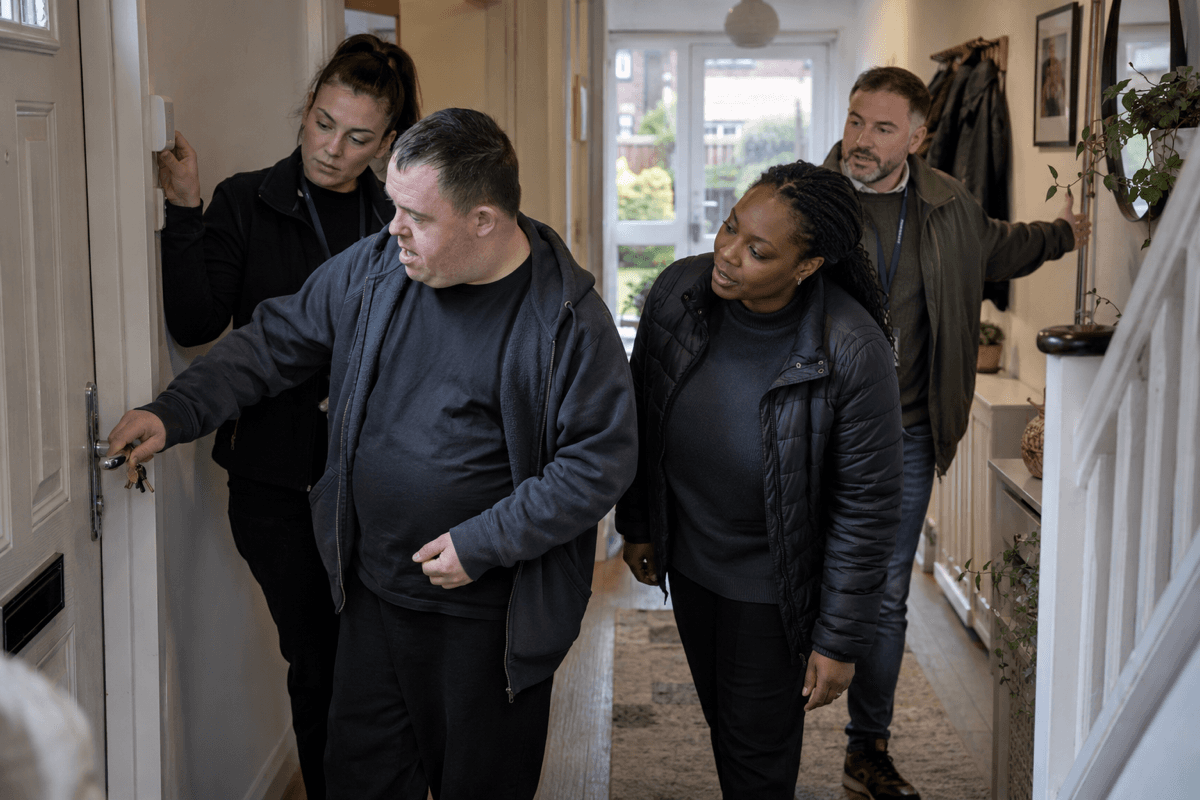
1. Build a complete list of people affected
Include every person with a Court of Protection order, a pending application or a previous concern under the acid test. Also include people whose circumstances may never have been referred. Record the commissioner, responsible professional, order date, review date and current advocacy arrangements.
2. Describe restrictions as they are actually lived
Avoid vague statements such as “supervised for safety”. Record the specific restriction, who applies it, when it is used and what happens if the person resists. “The front door remains locked between 10 pm and 7 am, and staff hold the key” is useful evidence. General labels are not.
3. Gather wishes and feelings evidence over time
Record what the person says and shows about their home, support and routines across different days, staff and settings. Use the person’s communication method, including speech, Makaton, pictures, objects of reference, assistive technology or behaviour. One calm observation is not enough to demonstrate acceptance.
4. Screen for objection and communication barriers
Look for attempts to leave, distress around locked doors, refusal of support, use of restraint, covert medication, sedating medication and restrictions on contact. Consider whether fear, trauma, communication barriers or a wish not to be a burden may be suppressing objection.
5. Place each case into a working priority group
Use three provisional groups to organise referrals:
- Urgent referral: clear objection, restraint, seclusion, sedation or significant enforced restrictions.
- Borderline: mixed signals, changing views, limited communication or uncertainty about the person’s experience.
- Review with commissioner: settled home life and good evidence of acceptance, but an existing or previous authorisation remains relevant.
Do not present these categories as legal conclusions. They help the service decide which cases require the fastest professional review.
6. Write to the commissioner and preserve safeguards
Send the local authority or NHS body a concise evidence summary. Ask whether it plans to apply, review, vary or end an order. Do not stop advocacy, cancel reviews or remove a person from oversight simply because Cheshire West was overturned. Do not continue an unnecessary restriction merely because an order exists. Coordinate any change with the responsible body and record the decision.
7. Update care plans, policies, audits and training
Remove wording that still presents the acid test as the complete current legal test. Add a structured wishes and feelings section to care planning, brief staff on signs of objection and audit whether restrictions are the least restrictive option. Ensure managers can explain the distinction between Article 5 consent and consent to care or treatment.
Care Sync Experts’ policy development service supports providers to update restrictive practice, consent, safeguarding and supported living policies coherently.
How to Record Wishes and Feelings
Good records help the person, the provider, the commissioner and the Court. They should be factual, person-centred and capable of showing change over time. Add the following fields to your existing care planning system:
| Field | What to record |
|---|---|
| Restriction | The exact measure, such as a locked door or one-to-one support in the community |
| Purpose | The identified risk and why the measure is thought necessary |
| Frequency and duration | When it applies and how long it lasts |
| Communication method | Speech, Makaton, gestures, behaviour, pictures or assistive technology |
| What the person said or showed | Their own words or a neutral description of observed behaviour |
| Signs of acceptance | Choices to return home, engagement with routines and expressed contentment |
| Signs of objection | Attempts to leave, distress, refusal, resistance or requests to live elsewhere |
| Medication affecting expression | Regular or PRN sedation and any covert administration |
| Observer and context | Name, date, time, place and who else was present |
| Information shared | Commissioner, social worker, advocate or family member, with the date |
Review the record whenever circumstances, medication, behaviour or support arrangements change. A monthly review may be a useful minimum for active cases, but frequency should reflect risk and the person’s situation.
The aim is not to manufacture evidence of contentment. It is to understand the person’s experience honestly. Good notes include disagreement, uncertainty and changes of mind.
Common Mistakes After Cheshire West Was Overturned
- Treating contentment as consent without evidence gathered over time.
- Reading silence as acceptance where sedation, fear or communication barriers may be present.
- Assuming high staffing automatically means deprivation of liberty.
- Assuming a domestic home can never involve deprivation of liberty.
- Confusing Article 5 consent to living arrangements with consent to care and treatment.
- Ending reviews or advocacy without involving the commissioner.
- Keeping restrictions that are no longer necessary simply because an authorisation remains in place.
- Leaving the old acid test as the only test in policies, training and care plans.
- Treating “not deprived of liberty” as meaning that Mental Capacity Act duties no longer apply.
The Cheshire West overturned position makes the law more fact-sensitive, not less important. Providers need better individual evidence, not fewer safeguards.
What Is the Position on LPS, Wales and Northern Ireland?
Liberty Protection Safeguards
The Liberty Protection Safeguards have not been implemented. In October 2025, the Government announced that it intended to consult during 2026 on LPS and an updated Mental Capacity Act Code of Practice. In the official material checked on 13 October 2026, no new consultation or implementation timetable was identified. Providers should not plan on the assumption that LPS is about to replace the current system.
Wales
The Mental Capacity Act 2005 also applies in Wales. Supported living deprivations of liberty continue to require the Court of Protection route. Care Inspectorate Wales published a statement on 15 June 2026, confirming the immediate effect of the judgment and asking providers to review arrangements, seek legal advice where necessary and continue meeting their Mental Capacity Act duties.
Providers registered in Wales should follow the Care Inspectorate Wales statement and current Welsh Government guidance rather than relying only on CQC material.
Northern Ireland
The case began in Northern Ireland, where the Mental Capacity Act (Northern Ireland) 2016 applies. The Department of Health has said that guidance and documentation require significant updating following the judgment. RQIA registered providers should follow current Department of Health material and local RQIA processes, checking for updates before making operational changes.
Should Supported Living Providers Be Concerned?
There are two honest answers. For well-run services with strong person-centred practice, the ruling recognises that a settled and supported home life is not the same as detention. For services where restrictions have accumulated without meaningful review, the new test exposes the weakness because the evidence must now describe how the person actually experiences those restrictions.
Disability organisations have raised concerns that people who cannot easily communicate objection may lose independent scrutiny or advocacy. That risk makes careful observation and supported communication more important, not less.
Official Family Court statistics recorded 1,864 deprivation of liberty applications between April and June 2026, 13 per cent fewer than the same quarter in 2025. The bulletin does not establish how much of the fall was caused by the Supreme Court decision, so providers should not treat the figure as evidence that fewer people need protection.
The practical balance is clear: avoid mechanical applications based only on the former acid test, but refer wherever there is real doubt. Maintain lawful safeguards, challenge unnecessary restrictions and keep the person’s voice at the centre.
Final Thoughts
The phrase “Cheshire West overturned” means the acid test is dead as the governing test, but the duty to protect liberty remains. The new approach asks what restrictions are really like for each person, whether the arrangements resemble confinement and whether the person shows genuine acceptance of their home.
For supported living providers, the quality of daily evidence now carries even more weight. Staff must understand how each person communicates. Managers must distinguish acceptance from acquiescence. Commissioners need concise, reliable evidence when reviewing applications and orders.
The Cheshire West overturned judgment does not make good practice unrecognisable: support decision-making, use the least restrictive option, record wishes and feelings, escalate doubt and keep restrictions under review.
Need Help Updating Your Supported Living Practice?
Care Sync Experts helps supported living providers review restrictive practices, update consent and deprivation of liberty policies, strengthen care planning evidence and prepare teams for regulatory scrutiny.
If you are unsure how the new legal test affects your service, contact Care Sync Experts or call 0333 577 0877 to discuss practical compliance support. We can help you turn the judgment into clear policies, defensible records and safer day-to-day practice.
Frequently Asked Questions
Has Cheshire West been overturned?
Yes. The Cheshire West overturned decision came from the UK Supreme Court on 2 June 2026 in A Reference by the Attorney General for Northern Ireland [2026] UKSC 16. The Court rejected the acid test as the sole basis for deciding whether arrangements amount to a deprivation of liberty. Decision makers must now use a multifactorial assessment focused on the individual’s circumstances.
Do people in supported living still need deprivation of liberty authorisation?
Some people will. A person who objects, is restrained, is sedated or lives under extensive enforced restrictions may still be deprived of their liberty. Supported living cases normally require Court of Protection authorisation. The provider should supply evidence and refer doubt to the commissioning local authority or NHS body rather than making the final legal decision alone.
Can someone who lacks capacity consent to their living arrangements?
In the narrow Article 5 sense described by the Supreme Court, yes. A person may lack decision-making capacity under the Mental Capacity Act but still understand their situation in basic terms and show genuine acceptance. Mere compliance is not enough, and consent should not be inferred where there is serious doubt. This does not replace capacity assessments or consent requirements for care and treatment.
Are existing Court of Protection orders still valid after AGNI?
Yes. Existing authorisations do not automatically become unlawful after Cheshire West was overturned. DHSC says cases should be reviewed as soon as practicable. Providers should continue to follow lawful conditions, share new evidence with the responsible commissioner and coordinate any change. Restrictions that are no longer necessary should not be retained merely because an order exists.
Topics
AGNI · Cheshire West · deprivation of liberty · DoLS · mental capacity act
Written by
Collins Bonsi
Manager, Care Sync Experts
Care Sync Experts helps care providers with CQC, Ofsted, CIW and RQIA registration, compliance and tenders. Our team has more than 10 years' experience and has supported over 1,200 providers.
Published 27 Oct, 2026
Want this handled for you?
Our team has supported over 1,200 care providers with registration, compliance and tenders, with a 94% first-time approval rate.