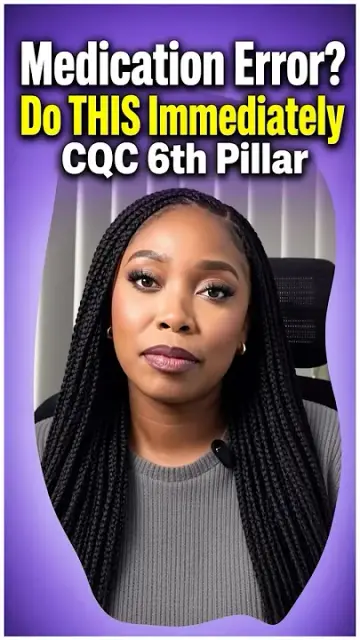
Short1:16
5 Steps To Handle Medication Errors
Medication errors happen. The steps to take next to protect the person, your team and your CQC rating.
Transcript
223 words, about 1 minute to read.
And lastly, pillar six, and I want to be honest with you here. Things will sometimes go wrong, even in the best services with the best systems. Medication errors happen. What matters is how you respond. And when an error happens, first priority, the person. Check they're safe and get medical advice if needed. Be open and honest with them and their family about what happened.
That's duty of candour. And make sure you document everything. What happened, when, who was involved, and what immediate action was taken. And make sure to investigate properly. Not to blame, but to understand what went wrong in the systems. Was it training, workload or confusing documentation? Or lastly, time pressure. And make sure to learn and improve. What changes will prevent this happening again?
And have you shared the learning with your team? Now, CQC don't require you to notify them about every single medication error, but you must notify them if a medication error caused or may have caused death, serious injury, abuse, or an incident involving the police that needs investigating. And here's what separates good services from struggling ones. Good services learn from errors.
They're not defensive about mistakes. They use them to get better. CQC can see the difference between a service that hides problems and one that actually learns from them.
Transcribed from the video's captions and lightly edited. Where the wording differs, the video is the record.
Want help with this?
Tell us where you are now and we will tell you honestly what it will take, and what we would do first.
More one-minute answers
Back to the Videos Hub 1 minute 24 secondsThe 3 Biggest MAR Chart Mistakes (And How to Fix Them)
 1 minute 36 secondsWhy your PRN records are a CQC risk
 1 minute 5 secondsWhy 'Good' Care Providers Fail CQC Inspections
 1 minute 16 secondsThe secret reason good staff files fail inspections
 1 minute 22 secondsCQC Evidence Library Explained: 3 Layer System That Makes Inspection Prep Easy (2026)
 1 minute 32 secondsCQC Inspection: How Inspectors Cross-Check Staff Files
 2 minutes 20 secondsHow to Handle the CQC Document Audit
 1 minute 13 secondsEvidence based care