CQC registration15:42
14-Month Wait for CQC Registration? Do This Instead
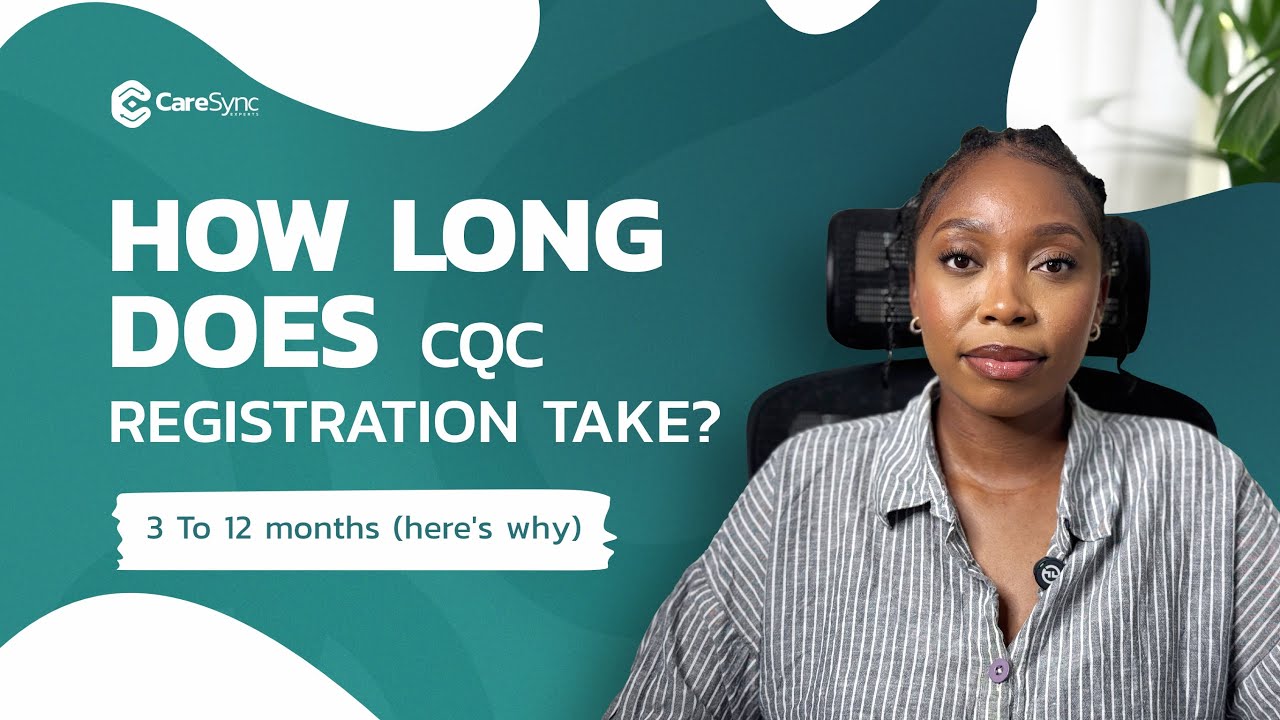
How long CQC registration takes, and practical ways to plan your timeline and avoid delays.
Transcript
2,988 words, about 13 minutes to read. Press a time to play from that moment.
Hi, and welcome back to our page. Today I'm going to answer probably the second most common question we get asked right after, "Do I need CQC registration?" And that question is, "How long is this going to take?" Today I'm going to try to give you somewhat of a realistic timeline. Not the best case scenario that hardly ever happens.
Not the nightmare scenario that only happens when everything goes wrong, but the actual typical timeline you should be planning for. And then I'm going to share some tips that can help you speed things up a bit or at least avoid the common mistakes that slows everything down.
Because whilst you can't fast-track the process entirely, there are definitely things you can do to make sure you're not adding unnecessary delays. So let's start with the main question. How long does it take from start to finish? Well, at the moment I'm talking about right now in 2025, you're looking at somewhat between 8 and 14 months.
That's from the point where you submit your application to the point you're actually registered and can start operating. Now, I know it's a big range, 8 to 14 months. Why is there such a variation? Well, it depends on a few things.
How you complete your application is how you experienced you are, whether CQC have any concerns, how busy they are at the time you apply, and frankly a bit of luck in terms of which inspector you get assigned to. But as a general planning figure, I'd assume 12 months. If it happens quicker, then brilliant. You're ahead of schedule.
If it takes a bit longer, you've planned for it and you're not panicking. The important thing is you cannot operate during this time. You cannot take clients. You can't provide care. And you cannot start earning money from your care business. You're in limbo waiting. And you still have bills to pay. So, you need to have a funding in place to cover yourself for that entire period.
We've come across people who've quit their jobs to start a care business thinking they'll be up and running within weeks. Then they find out it's going to be nearly a year and they're in serious financial trouble. Don't let that be you. So, why does it take so long? What's actually happening during those months? Well, firstly, you have to submit your application.
That's not just filling in the form, by the way. There's a lot that goes into it. You need all your policies and procedures written, your business plan sorted, your financial forecast done, and your statement of purpose, disclosure and barring checks completed, and references obtained. It's a substantial piece of work. Once you've submitted everything, it goes into CQC system.
They've got to review it and they're checking whether you've included everything they need, whether it meets their requirements or whether there are any obvious red flags. If something's missing or not right, they'll reject your application and your application goes straight to the back of the queue. Every time that happens, it adds time to the process.
If they ask you a question and you take 2 weeks to respond, that's 2 weeks added or more if your application is fully rejected. After you've satisfied them with all the required documents in the first portion of the application process, the second part is scheduling an interview with you.
This is where they'll talk to you about your plans, your experience, and how you're going to run the service. After the interview, and if they're happy, they'll arrange an inspection on your premises. Now, for supported living, this can be a bit complicated because you might not have premises yet, but they still need to satisfy themselves that you've got arrangements in place should that come about.
They'll write up their assessment. It goes through various approval stages internally and eventually if everything's okay, you get your registration. All of this takes time and unfortunately there's no way around it. Right. We need to be honest with you about the current state of things because it's not great. CQC are backlogged.
They've been backlogged for a while now and it's not getting better as quickly as anyone would like. A while back, they tried to launch an online portal to make the application process more efficient, but that didn't work properly, and things weren't getting through. Documents were going missing. It was a bit of a disaster if we're being completely honest.
So, they've gone back to doing everything by email, which of course is slower. They're working through a lot of applications, and they're short of inspectors in most areas. I'm not telling you this to put you off. I'm telling you so you can plan realistically. If someone's telling you they can get you registered in 4 to 6 weeks, they're either lying or don't know what they're talking about.
It's not really happening in that time frame, well, not right now for sure. Let's talk about some of the things that really slow the process down. Because if you can avoid these, you'll save yourself a lot of time. First thing, submitting an incomplete application.
If you send in your application and you're missing documents or your policies aren't finished or you've not got all your DBS checks back, CQC will just send it back to you. You're then at the back of the queue again. Don't submit until everything is ready. Second thing is not having the right experience. CQC expects a person who's going to be the registered manager to have relevant experience.
If you've never worked in care before or you've only worked as a care worker and never in management, they're going to have concerns. Those concerns mean more questions, more back and forth, and more delays. Third thing, poor quality paperwork. If your policies are just generic templates you've downloaded from somewhere and you haven't adapted them properly, CQC will spot it.
They'll ask more questions about them and if you can't answer them, then you're doomed. The fourth thing is being difficult to get a hold of. If CQC email you with questions and you don't respond for weeks, that's adding time. You need to be responsive. So, make sure you check your emails, reply promptly, and give them what they need.
Fifth thing is trying to cut corners. Some people think they can bluff their way through the process. You really can't. CQC have seen every trick in the book and if you're not genuine about what you're doing, they'll spot it and they'll dig deeper, which means more delays and they'll refuse your application altogether. So, what can you do to keep things moving as smoothly as possible?
Let me give you some practical tips. Tip one, get your paperwork properly sorted before you submit and don't rush it. Take the time to do it properly. And every policy needs to be complete, adapted to your service, and you need to understand it. Your business plan needs to be thorough. Your finances need to be realistic.
If it takes you an extra month to get all this right, that's better than submitting something that's half finished and have your application rejected. Tip two, make sure you've actually got the experience CQC are looking for. If you're the registered manager, you need to have managed care services before. And if you don't, CQC probably may not approve you.
Either get someone else to be your registered manager who does have the experience or go and get the experience yourself first. I know that's not what people want to hear, but it's the reality. Tip three, be really responsive to CQC. When they email you, respond within one or two days, not a week or two, and give them complete answers to their questions.
Don't make them chase you. Every time they have to follow up, it adds time. Tip four, prepare properly for your interview. They're going to ask about your service, your experience, and how you handle different situations. If you turn up unprepared and stumble through the interview, they're going to have doubts about whether you're ready. Practice beforehand and know your stuff.
Tip five, have your finances properly in order. CQC want to know that your business is financially viable. If your financial forecasts don't make sense or you've clearly not got enough capital to sustain the business, they'll have concerns. Get proper financial projections done, not just something you've cobbled together on Excel. Let's talk a bit more about the interview because this is where people become a bit stuck.
The interview is really important. It's CQC's chance to meet you, assess your knowledge and experience, and decide whether they think you're capable of running a safe service. They're going to ask you about your background, what experience do you have, and why do you want to do this? What makes you qualified to run this type of service? They're going to ask you about safeguarding.
What would you do if you suspected abuse? How would you handle a safeguarding concern? And what are your responsibilities under safeguarding legislation? They're going to ask you about the care you provide, how you'll assess people's needs, how you write care plans, and how you'll involve people in their decisions about their care.
They're going to ask you about staffing, how you'll recruit, how you'll train them, and how you'll supervise them, and what you'll do if someone's not performing well. They'll ask you about managing the business, how you'll monitor quality, how you'll handle complaints, and how you'll work with other agencies like GPs and social workers.
If you can answer all these questions confidently, showing that you understand what's involved and you've got proper plan, you'll be fine. If you're vague or you don't really know the answers or you're clearly making it up as you go along, they'll have a lot of concerns. And once they have doubts or concerns, they're going to scrutinise everything more carefully.
They're going to ask more questions. The whole process is going to take longer. So, you want to get the interview right the first time. Now, if you're applying to do supported living specifically, there are some extra complications you need to be aware of. Supported living is quite different from other types of care in important ways. The people you're supporting are tenants, not residents.
They have tenancy agreements and you're providing care in their home, not providing accommodation as part of a care service. There needs to be a clear separation between housing and care. You're not their landlord. Usually, there's a housing association or registered social landlord who provides the property and you just provide the care. CQC are really hot on this.
They want to make sure you understand the distinction. They'll ask you questions about it in your interview. If you're not clear about how tenancy structures work, how you'll ensure choice and control for people, how you work with housing providers, they'll have concerns. I've seen people come from a residential care background who don't really get this.
They're used to running care homes where the provider owns or leases the building and provides both accommodation and care together. Supported living doesn't really work like that and if you don't understand the difference, you'll struggle in the interview. There's also the issue of whether you're actually going to be providing regulated activities.
If the people you're supporting don't need personal care, you might not technically need the registration, but some local authorities require it anyway. This can create a weird situation where you're applying for registration, but you're not actually going to do anything that needs regulating. CQC are getting wise to this. They'll ask you why you're applying if you're not providing personal care.
You need to have a good answer. Usually, it's because the local authority won't work with you otherwise on their frameworks, which is fair enough, but you need to explain that clearly. Now, let's talk about something people don't really want to think about. What happens if CQC refuse your application? It does happen. Not to everyone, obviously, but it happens more than you think.
Usually, it's because the person doesn't have the right experience or they've made a mess on the application or they're not being honest about something. If you're refused, you can appeal, but appeals take even more time and they're not guaranteed for success. You need to address whatever the concerns were properly, which might mean getting more experience or bringing someone else into the fold.
Some people decide at that point that it's not worth it, and they give up. Others persist, sort out the problems, and reapply. But either way, it's months more delay, and it's demoralising. This is why it's so important to get it right the first time. Don't rush into applying before you're ready. Make sure you've got everything in place properly, and get help if you need it.
You might have insurance policies that you're paying for in readiness for starting. Those need paying whether you're registered or not. Often times with CQC, they only require a policy quote to avoid such costs accumulating. If you've already committed to a property, which you shouldn't have done, but some people have, you're paying rent on that as well.
You might have staff on standby, or you might be paying for training for staff who are ready to start once you're registered. All of this adds up. If your registration takes 3 months longer than you expected, that could be thousands of pounds of additional costs, maybe tens of thousands if you've got expensive commitments.
This is why I keep banging on about having proper financial backing in place before you start. You need a cushion. You need to be able to sustain yourself for 12 months minimum without any income from your business. So the question everyone asks is, is there any way to actually speed up the process? Can you pay for faster processing or anything of that nature?
The short answer is no. CQC don't offer fast-track applications. You can't pay extra to jump the queue and everyone's applications go through the same process and it takes as long as it takes. However, what you can do is make sure you're not the cause of delays. And honestly, in most cases where applications take longer than average, it's because the applicant has done something to slow it down.
Incomplete paperwork, slow responses, poor interview performance, that kind of thing. If you get everything right the first time, respond quickly, and don't give CQC any reasons to have concerns, you'll move through the process as quickly as anyone can. The other thing that can help is working with someone who knows the process really well. Not because they've got any special relationship with CQC or can influence the decision.
Obviously, they can't, but because they know what CQC are looking for. They know what mistakes people commonly make and they can help you to avoid these mistakes. Think of it like passing your driving test. You could learn to drive by yourself, and some people do, but most people use an instructor because it's faster and you're less likely to develop bad habits.
It's the same principle with CQC registration. Let's discuss the mental side of things. Waiting for CQC registration is frustrating. You've done all this work. You're ready to go. You're excited about starting and you're just stuck waiting. It's easy to lose motivation during this time and people start doubting themselves, wondering if they're doing the right thing, wondering whether it's going to work out.
My advice is to use the time productively. Don't just sit around waiting. There's loads you can do whilst you're waiting for your registration. During this time, build relationships with local authority commissioners. Introduce yourself and tell them about your plans.
Start getting known because again, this is very key when it comes to your CQC registration and application process as well as your interview as CQC wants to know that there's an actual demand or need for your local community. Research the frameworks you'll need to apply to. Start preparing your tender responses so you're ready to submit them as soon as you're registered if there are tenders available.
And do additional training. Learn about the new approaches to care. Get familiar with best practice and develop your knowledge. Set up your systems, your care planning software, your rota system, your communications methods. Get it all ready so you can hit the ground running once you're registered. But also be sure to take into consideration your pricing and structure model.
Network with other providers, join professional groups, go to provider forums, and learn from people who are already doing it. All of this will pay off once you're registered and it will make the waiting time feel less like dead time and more like preparation time. Right? I hope that's given you a realistic picture of what to expect with CQC registration timelines.
The key takeaway is plan for 12 months. Make sure you've got the finances in place to sustain yourself in that time and do everything you can to avoid unnecessary delays. If you're feeling overwhelmed by all of this or you're not sure where to start your application, that's where we can help. At Care Sync, we support people through the whole CQC registration process.
We'll help you get your paperwork right, prepare for your interview, and avoid the common mistakes that slow things down or lead to applications being refused. Thank you for watching, and I hope this video has been insightful and meaningful. If you like what you saw, please subscribe, like, and share our content.
Transcribed from the video's captions and lightly edited. Where the wording differs, the video is the record.
Want help with this?
Tell us where you are now and we will tell you honestly what it will take, and what we would do first.
More on cqc registration
All cqc registration videos 14 minutes 59 secondsDom Care First? Here's Why CQC Expects More in 2026CQC registration
 4 minutes 10 secondsCQC 2025 Registration Changes, What Was Removed? Documents, Portal Updates and What to Do InsteadCQC registration
 7 minutes 2 secondsYour CQC Application Was Rejected, Don't Make These Mistakes AgainCQC registration
 6 minutesMissing Policies? Here's What CQC Will FlagCQC registration
 7 minutes 37 secondsNew CQC Rules February 2026: No Second Chances on Your ApplicationCQC registration
 5 minutes 12 secondsRegistered Manager Required: CQC's New 2025 Home Care Registration RulesCQC registration