Short1:43
Don't get caught out during your next inspection
A training matrix shows who completed a course, not which carer is ready for which person. How a client and condition training map closes the gap.
Transcript
276 words, about 1 minute to read.
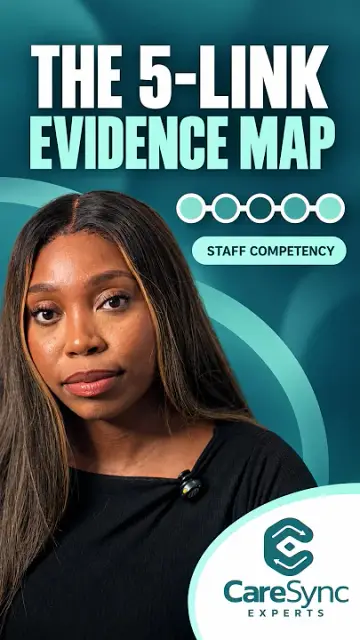
So, how do you close the gap? I'm going to introduce you to a system I call the client condition training map. The concept is simple but powerful. For every person you support, you create a clear chain of evidence. Step one, the person's conditions. List every health condition, need or characteristic that requires specific staff.
For example, Mrs. Thompson: type 2 diabetes with insulin, vascular dementia, falls risk and hearing impairment. Step two, required training for each condition. Identify what training staff need, whether it's diabetes management including insulin, dementia awareness with focus on vascular type, falls prevention and equipment use. And lastly, communication with people with hearing loss. Step three, allocated staff. Who is actually allocated to support this person?
Not everyone on your team, specifically the staff who provide their regular care. Step four, training evidence. For each allocated staff member, link to their training records showing completion of the required courses. Step five, competency evidence. And this is crucial, evidence that they can actually apply it. Competency assessments, spot checks, observations, supervision records discussing their care of this specific person.
In practice, this could be as simple as a spreadsheet. One tab per client showing their conditions, required training, allocated staff, and links or references to the evidence. Or if you use care management software, it might be built into your system, a way to link training records to client profiles. The format matters less than the principle.
If you can pull up a document that shows the chain, condition, required training, allocated staff, training completed and competency assessed, you're demonstrating safe staffing in a way that most providers simply cannot match.
Transcribed from the video's captions and lightly edited. Where the wording differs, the video is the record.
Want help with this?
Tell us where you are now and we will tell you honestly what it will take, and what we would do first.
More one-minute answers
Back to the Videos Hub 55 secondsWhy "zero concerns" is a CQC red flag
 1 minute 12 secondsThe Shocking Truth About Safeguarding Concerns in England
 1 minute 13 secondsWhat inspectors really want to see in your logs
 1 minute 18 secondsTraining Is Not Competency: What CQC Looks For
 1 minute 32 secondsCQC Inspection: How Inspectors Cross-Check Staff Files
 1 minute 16 secondsThe secret reason good staff files fail inspections
 1 minute 16 seconds5 Steps To Handle Medication Errors
 1 minute 24 secondsThe 3 Biggest MAR Chart Mistakes (And How to Fix Them)