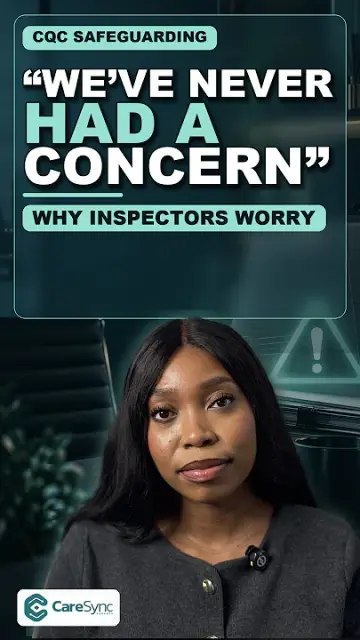
Short0:55
Why "zero concerns" is a CQC red flag
Saying your service has never had a safeguarding concern can worry CQC. Are concerns being recognised, recorded and acted on?
Transcript
176 words, about 1 minute to read.
Let me tell you about something that happened on almost every mock inspection that I've ever conducted. I'd sit down with the registered manager, we'd be talking through how they keep people safe, and at some point, almost without fail, they would say this. We've never had any safeguarding concerns.
They'd say it with pride, like it was proof they were doing a good job, like it was something to celebrate. And every single time I heard it, my heart sank, because that phrase doesn't tell me your service is safe. It tells me one of two things. Either you're not recognising safeguarding concerns when they happen, or you don't really understand what safeguarding actually means.
Both of these are serious, serious problems. That's not how safeguarding works, and by the end of this episode, you'll understand why the best services, the ones rated Good and Outstanding, don't say, we've never had concerns. Instead, they say, we identify them, we report them, and we learn from every single one. That's the difference. That's what inspectors trust.
Transcribed from the video's captions and lightly edited. Where the wording differs, the video is the record.
Want help with this?
Tell us where you are now and we will tell you honestly what it will take, and what we would do first.
More one-minute answers
Back to the Videos Hub 1 minute 43 secondsDon't get caught out during your next inspection
 1 minute 12 secondsThe Shocking Truth About Safeguarding Concerns in England
 1 minute 13 secondsWhat inspectors really want to see in your logs
 1 minute 18 secondsTraining Is Not Competency: What CQC Looks For
 1 minute 32 secondsCQC Inspection: How Inspectors Cross-Check Staff Files
 1 minute 16 secondsThe secret reason good staff files fail inspections
 1 minute 16 seconds5 Steps To Handle Medication Errors
 1 minute 24 secondsThe 3 Biggest MAR Chart Mistakes (And How to Fix Them)