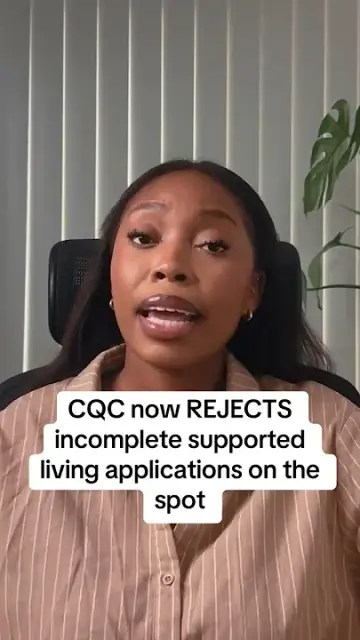
Short1:45
Problems we see with providers trying to get CQC registered
The problems we see again and again when providers apply to register supported living services with CQC, and why incomplete applications are now rejected.
Transcript
303 words, about 1 minute to read.
We've helped a lot of providers register supported living services with CQC and we've seen this same problem come up again and again. Incomplete applications. From July 2025, CQC now rejects incomplete applications at the initial check stage. They don't assess them, they don't ask you to fix them, they reject them.
And if you want to try again, you submit as a new application and you lose your place in the queue. That's a significant change. It means your application has to be right the first time. Another issue is statements of purpose that don't align. Your statement of purpose has to match your application form exactly. Same locations, same service user bands and same regulated activity.
If your application says you're supporting adults 18 to 65 with learning disabilities, but your statement of purpose says something different, CQC will reject it. Alignment matters. Next is policies written for the wrong service type. We see this constantly. Providers use policies written for domiciliary care or worse, policies copied from a care home template. Supported living is different.
Your policies need to reflect that. Your safeguarding policy, your mental capacity policy, your care planning, all of it needs to be written for supported living specifically. Next is not understanding Right support, right care, right culture. If you're planning to support autistic people or people with a learning disability, this is CQC statutory guidance. It's not optional. CQC will assess your application against it.
They'll ask about it at interview and your registration can be refused if you can't demonstrate alignment. Right support means your model maximises choice, control and independence. Right care means person-centred care that promotes dignity and human rights. And right culture means your values, attitudes and behaviours support people to lead confident, inclusive lives. You need to evidence all three.
Transcribed from the video's captions and lightly edited. Where the wording differs, the video is the record.
Want help with this?
Tell us where you are now and we will tell you honestly what it will take, and what we would do first.
More one-minute answers
Back to the Videos Hub 23 secondsCan You Own Both Property and Care?
 2 minutes 2 secondsInspectors Can Tell If Your Policies Are Lived
 1 minute 47 secondsWhy you shouldn't accept that care hour cut
 1 minute 13 secondsWhat inspectors really want to see in your logs
 1 minute 12 secondsThe Shocking Truth About Safeguarding Concerns in England
 55 secondsWhy "zero concerns" is a CQC red flag
 1 minute 43 secondsDon't get caught out during your next inspection
 1 minute 18 secondsTraining Is Not Competency: What CQC Looks For