Inspection and compliance14:34
The Secret to a Well-Led CQC Rating: Are You Answering This Question?
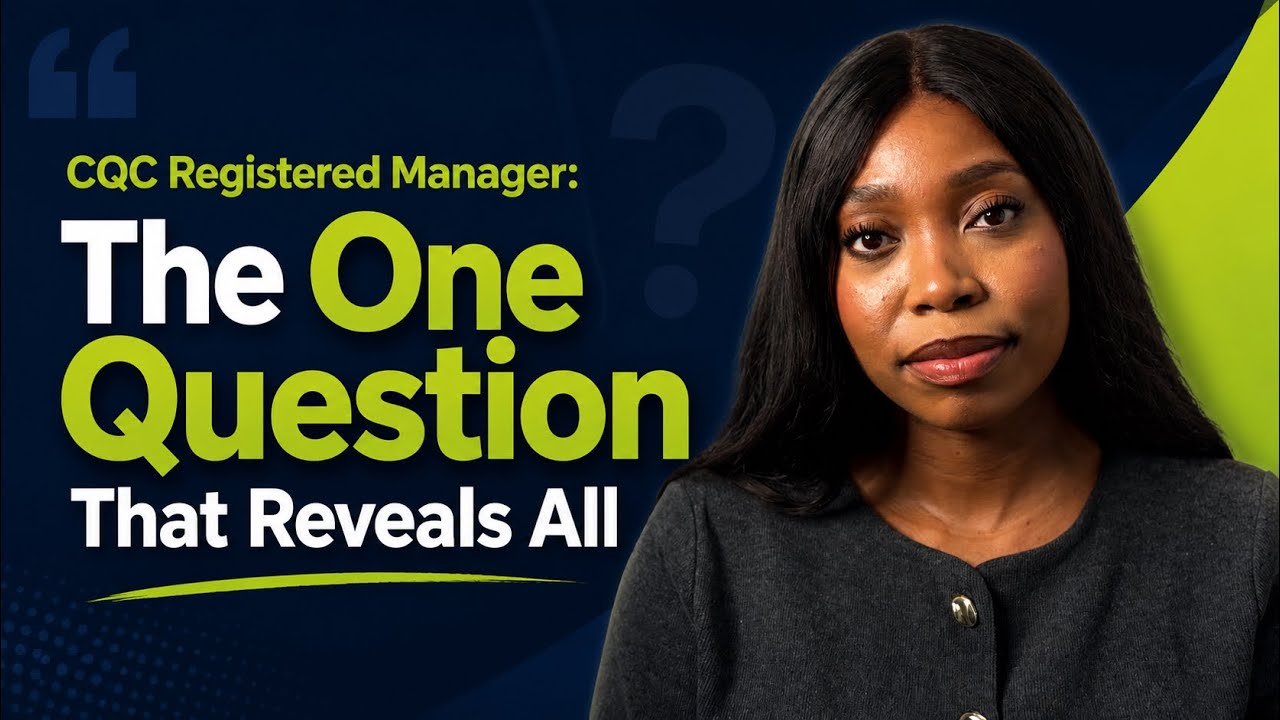
Well-led is where good care can still be rated Requires Improvement. The one question that catches registered managers out, what Well-led really means, and how to show your leadership makes the service better.
In this video
Transcript
2,918 words, about 13 minutes to read. Press a time to play from that moment.
Introduction to Well Led Care
Hi, and welcome back to our page. If you've watched the series from the beginning, you will have picked up some practical frameworks for evidence gathering, medication management, safeguarding, staff files, and auditing. All of that matters, all of it will help you. But none of it works without what we're talking about today.
Because you can have beautiful care plans, you can have a spotless medication system, and you can have a safeguarding log that would make a textbook proud, and still get rated requires improvement. How, you may ask? Because CQC found that the leadership was not holding it all together. The systems existed, but nobody was making sure they actually worked.
The policies were written, but the culture did not match what was on paper. The audits were completed, but nothing changed because of them. That is a well-led failure, and it can drag your entire inspection down, even if in every other area you were strong. During a few of our previous mock inspections, there was one question I asked every registered manager.
One question that told me almost everything I needed to know about whether a service was genuinely well-led or was going through the motions. Some of them stumbled, some gave vague reassuring answers that sounded confident but said nothing. A few panicked and started listing policies, but the ones who answered it well, they almost always ran services rated good or outstanding.
In this episode, I'm going to tell you that question, show you what a strong answer looks like, and break down what well-led actually means in practice for domiciliary care.
The Key Question for Registered Managers
Not the theory, the reality. How do you know right now that your service is safe? Here it is, the question. How do you know right now that your service is safe? Notice the wording. Not, is your service safe? That's a yes or no question, and everyone says yes. Not, was your service safe the last time you checked?
That's retrospective. Right now, today, in this moment. This question tests something specific. It tests whether you have what I call grip. Real-time awareness of what is happening in your service. Not what happened last month when you did your last audit, not what your training makes it look like at the start of the year, what is happening today.
Can you tell me without looking anything up whether your MAR charts from the last 7 days are compliant? And can you tell me whether the actions from your last audit have been completed? Can you tell me which staff members are overdue for supervision? Can you tell me what the last safeguarding concern was and what you learned from it?
That is grip. And it's what separates the managers who truly lead their services from the ones who manage paperwork. I want to be clear about something. This is not about knowing every tiny detail from the top of your head. Nobody expects you to memorise every single MAR chart entry. What inspectors are looking for is whether you have systems that give you a current picture of your service.
What "Grip" Means in CQC Inspections
And whether you actually use those systems to stay on top of things. A manager who says, "I know my service is safe because I reviewed my service improvement plan yesterday, and all actions from the last month are closed. My training matrix is current, and the last feedback from our service users was positive with two areas I'm actively addressing."
That manager has grip. Manager who says, "Well, we haven't had any complaints recently, so I think we're doing okay." That manager is hoping. And as we said in episode two, hope is not a strategy. Let me explain why this matters so much structurally. Under the CQC single assessment framework, well-led has eight quality statements. That is more than any other key question.
Safe has eight, effective has six, caring has five, responsive has seven, and well-led has eight. And here is what makes it even more significant. Well-led is always assessed, whether CQC are doing a comprehensive inspection or a focused one, they always look at well-led. Always. You cannot escape it.
Those eight quality statements cover shared direction and culture, and do you have a vision for your service, and does your team share it? Capable, compassionate, and inclusive leaders. Do your leaders have the skills, knowledge, and integrity to deliver? There's also freedom to speak up.
CQC Well Led Quality Statements
Can your staff raise concerns without fear? There's also workforce equality, diversity, and inclusion. Do you value diversity and actively work towards fairness? There's also governance, management, and sustainability. So, do you have clear systems to monitor and improve quality? And lastly, partnership and communities. Do you work effectively with other organisations? Learning, improvement, and innovation is also very important.
Do you use feedback and data to continuously improve? And lastly, environmental sustainability. Do you understand and address your environmental impact? Now, I know what some of you are thinking, environmental sustainability in a domiciliary care service? And I understand the reaction. But CQC are assessing this across all service types now, and even small steps matter. Do you consider mileage and route efficiency?
Do you minimise paper waste? Do you think about the impact on the environment? You don't need to be perfect, but you do need to show that you have thought about it. But here's the really critical point about well-led. A failing well-led rating can pull your entire inspection results down.
We've seen services where the care was genuinely good, where clients were happy, where staff were dedicated, but the governance was very weak. The oversight was patchy and there was little to no evidence that leadership was driving improvements. The result, requires improvement overall, because if the leadership isn't holding things together, CQC cannot be confident that the good care will continue.
How Poor Leadership Can Lower Your Rating
Let me show you what a well-led failure actually looks like in a real domiciliary care inspection, because it's not always dramatic, sometimes it's surprisingly subtle. Here's a phrase that appears in report after report for services rated requires improvement. The management and leadership was inconsistent. Leaders and the culture they created did not always support the delivery of high-quality person-centred care.
Notice the word inconsistent. Not absent, not terrible, inconsistent. The care was good on some days with some staff for some clients, but the leadership had not created the systems and the culture to make it consistently good across the whole service. Here's another pattern I've seen repeatedly. Services where audits were happening, but the same problems appeared month after month.
If you watched episode 8, you'll recognise this is a failure to close the improvement loop. But from a well-led perspective, it tells the inspector something deeper. It tells them that the leadership is not actually using the information that their own systems are generating. Let me give you some specific examples of what triggers a well-led downgrade. Notifications.
Common Well Led Failures
This one is non-negotiable.
If you're not submitting statutory notifications to CQC as required by the regulation, you will never get better than requires improvement overall. CQC have been explicit about this, and in September 2025, a domiciliary care service in Dover was rated inadequate partly because leaders had failed to notify safeguarding bodies of incidents. The leadership knew about the concerns and did not report them.
That is a fundamental governance failure. Those disconnected systems. Your audits do not connect to your training plan. Your complaints do not feed into your service improvement plan. And your incidents do not lead to changes in risk assessments. Everything exists on its own. And the leadership team is not pulling the threads together. Inspectors see this instantly. Invisible leadership.
The registered manager is desk-bound. They do not go out on care calls. They don't know clients personally, and they cannot answer specific questions about how individual people are supported. If you remember the advice from the provider who shared their inspection experience, the thing that helped them the most was that they could answer any question about their clients, their routines, and their needs.
That comes from being visible, not from sitting in an office. Staff also not feeling heard. When CQC speak to your care workers in those hour-long phone calls, and staff say they don't feel supported, or they cannot raise concerns, or they have never had a meaningful supervision conversation, that directly undermines your well-led rating.
The Role of the Registered Manager
Staff voice is evidence for all 34 quality statements, but it hits the hardest here. I want to talk specifically to registered managers for a moment because well-led starts with you. The regulation seven of the Health and Social Care Act, you must be fit and proper person to manage a regulated activity. That means you must be of good character.
You must have the necessary skills, qualification, competence, and experience. And you must be able to perform the tasks that are intrinsic to your role. Share legal responsibility with the provider to meet the regulations. CQC can take enforcement action against you personally if there are serious breaches. That's not something to be frightened of. It's something you take seriously.
But here's what's important to understand. Your role is not about compliance. It's about culture. You set the tone for your entire service. Your response to problems tells your staff whether honesty is valued or whether they should keep quiet. The way you handle complaints tells your clients whether their voice matters.
The way you conduct supervisions tells your team whether their development is a priority or a box to tick. When an inspector walks into your service, they are assessing you. Not just your paperwork, you. Your knowledge, your awareness, your passion, and your grip. Registered managers who impress inspectors are not the ones with the biggest folders.
They're the ones who can talk about their service with genuine understanding and warmth. They know Mrs Davis prefers to have her tea before her personal care.
What a Well Led Care Service Looks Like
They know that Tom in the team has just completed his medication competency and is doing brilliantly. They know that last month's audit found a gap in PRN recording and that the refresher training has already been delivered. That is leadership. That is well led. And it comes from being present in your service, not just managing it from a distance.
Let's flip this around. What does a well-led domiciliary care service actually look like in practice? Not in theory, in the day-to-day reality of running a home care service. Indicator one: the registered manager can answer the question confidently. They have a service improvement plan that is current. They review it regularly. They can point to specific examples of problems found, actions taken, and measurable improvement.
They don't need to dig through files to tell you the state of their service. They just know it. Indicator two: staff describe a culture of openness. When CQC calls your care workers, they can say things like, "I can always speak to my manager. And if I raise a concern, it will be taken seriously. And I feel valued and supported."
These aren't rehearsed answers. They are the natural output of leadership that genuinely listens and acts. You cannot fake this. You can only build it. Indicator three: governance connects everything. The audit from January identified a gap. The training in February addressed it. The re-audit in March confirmed improvement. The team meeting minutes showed it was discussed, and the supervision records show individual conversations about it.
Everything is threaded together, not sitting in files. Indicator four: people at the centre are genuinely involved. Their care plans reflect what matters to them, not just what's clinically necessary. Their feedback has been collected and acted on. When something changes in their needs, the care plan is updated promptly, not at the next scheduled review.
The people you can support always describe their care in a way that shows they feel ownership of it.
Freedom to Speak Up
Indicator five, the service improves over time. This is the one that separates good from outstanding. Can you show a trajectory? Not just that you're compliant today, but that you are better than you were six months ago. That your staff survey scores have improved, that your complaint themes have reduced, that your feedback from professionals is more positive. That is the evidence of leadership that makes a real difference.
Before I give you your action steps, I want to highlight one quality statement that is directly under well-led and that most providers underestimate. Freedom to speak up. Quality statement says, we foster a positive culture where people feel they can speak up and that their voices will be heard. That is about your staff feeling safe to raise concerns.
It's about your clients feeling confident that their complaints will be taken seriously. And it's about professionals being able to flag issues without being ignored. Here's why this one matters so much for domiciliary care specifically. Your staff work alone in people's homes, behind closed doors.
If they see something that worries them, if they notice a colleague cutting corners, if they feel uncomfortable about how a situation is being handled, there is nobody else there to witness this. Your entire safeguarding system, your entire quality system, depends on those staff feeling confident enough to report what they see.
If they do not speak up, you lose your early warning system, and problems that could have been caught early become serious problems that inspectors find.
Five Actions to Strengthen Well Led Evidence
So, how do you evidence freedom to speak up? Through your whistleblowing policy being accessible and understood, through staff surveys that ask specifically about whether people feel safe raising concerns and showing you have acted on the results. Also, through supervision records where staff have raised issues and you can demonstrate what happened next. Through team meeting minutes where open discussion is encouraged, not shut down.
Through examples of concerns raised and resolved, with the outcome feeding back to the person who raised it. If a staff member raises a concern and never hears what happened, they will not bother raising the next one. That feedback loop is everything. Right, let me give you five concrete actions that will strengthen your well-led evidence starting this week.
Action one, answer the question. Sit down right now and answer it honestly. How do I know right now that my service is safe? Write your answer down. If it's a strong, brilliant. If it's vague, then you have just identified your most important priority. Use this as your benchmark and come back to it every single week. Action two, review your service improvement plan.
If you don't have one, create one today. Episode eight gave you the framework. And if you do have one, is it current and when did you last update it? Are there open actions that you should have closed? And is it genuinely driving improvement or is it gathering dust? Make it a living document that you touch every single week.
Action three, get out on care calls. If you've not accompanied a care worker on a visit recently, book one this week and know your clients. Know what their care looks like in practice, not just on paper. When an inspector asks you about Mrs Thomas's routine, you should be able to describe it from personal experience, not from reading a care plan.
Action four, ask your staff one question. In your next supervision or even a quick conversation, ask them, "Is there anything about the way we work that you think could be better?" Then listen, genuinely listen to them and do something about what they tell you. Document the conversation and the outcome. That is freedom to speak up in action.
Action five, cross-reference your notifications. Check that every safeguarding referral in your log has a corresponding CQC statutory notification. Check that every death, serious injury, and abuse allegation has been notified without delay. If there are gaps, address them today. That's not optional. It's a legal requirement and getting this wrong is an automatic well-led failure.
I want to finish with something that I think gets lost in all the talk about quality statements, frameworks, regulations, and so on and so forth.
Final Thoughts on Leadership and Culture
Well-led is not about being a perfect manager. Nobody's a perfect manager. It's about caring enough to stay close to your service, to know the people you support, to listen to your team, to look honestly at what's working and what's not, to fix problems than to hide them, to keep learning, keep improving, and keep pushing for better.
The people you support depend on your leadership, not your policies, not your audit schedules, your leadership. The decisions you make, the culture you create, the standards you hold yourself to, and your team, that is what CQC are really assessing when they look at well-led. Not whether you have the right documents, whether you have the right mindset.
In the next episode, I'm going to show you what 3.5% of services rated outstanding actually do differently. And I can tell you now, it's not what most people think. It's not about having more resources or fancy systems, it's about something much more fundamental, and it builds directly on everything we have covered in the last few episodes.
Next Episode: Outstanding Services
It's leadership and culture. That's episode 10. Make sure you're subscribed so you don't miss it. And thank you for watching. Make sure to like, comment, and share this video if you found it helpful.
Transcribed from the video's captions and lightly edited. Where the wording differs, the video is the record.
Want help with this?
Tell us where you are now and we will tell you honestly what it will take, and what we would do first.
More on inspection and compliance
All inspection and compliance videos 16 minutes 2 secondsHow to Get Outstanding at CQC: The 3.5% Secret (2026)Inspection and compliance
 13 minutes 2 secondsIs Your Governance Real? How to Prove It to the CQCInspection and compliance
 4 minutes 18 secondsCQC Inspectors Are Looking For This, And It's Not In Your FilesInspection and compliance
 4 minutes 39 secondsCare Notes: Don't Make This Mistake. A Coroner Found It in Her FileInspection and compliance
 13 minutes 49 secondsThe 10 Types of Abuse: Is Your Care Agency Ready for 2026?Inspection and compliance
 13 minutes 43 secondsThe Missing Link in Your CQC Staff Files (And How to Fix It)Inspection and compliance