Adult Social Care
Delegated Healthcare Tasks in Home Care: Who Trains, Who Signs Off, Who Is Accountable?
When a nurse delegates PEG feeding, insulin, catheter, stoma or respiratory support, this guide explains who trains, signs off competence and remains accountable.
- Published
- Reading time
- 9 min read
Short answer: A delegated healthcare activity is a person-specific task that a regulated healthcare professional passes to a named, trained care worker. The professional remains accountable for the decision to delegate and the clinical plan. The provider remains accountable for safe staffing, governance, records and insurance. The worker is responsible for accepting only within their competence, following the plan and escalating concerns. The national guiding principles are voluntary, but CQC Regulations 12, 17 and 18 still apply.
Checked and updated: 18 November 2026. Reading time: 9 minutes.
Delegated healthcare tasks can help a person receive consistent support at home. They also create serious risk when a training certificate is mistaken for clinical delegation or nobody owns the decision.
This practical acceptance test for delegated healthcare tasks reflects the Skills for Care guiding principles, revised in November 2024, and CQC guidance available on 18 November 2026. It is general information, not clinical or legal advice.
Contents
What counts as a delegated healthcare activity?
A delegated healthcare activity is usually a clinical activity that a regulated healthcare professional judges can be carried out safely by a paid care worker or personal assistant. It must be person-centred, supported by consent and backed by an individual plan.
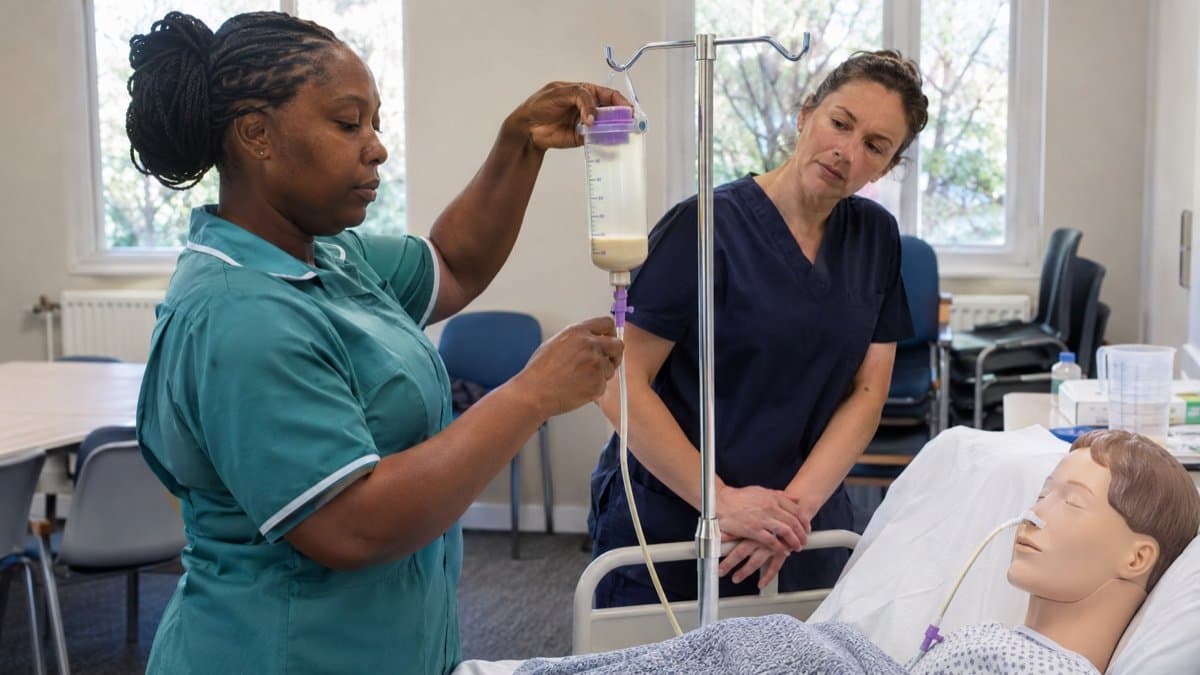
Delegated healthcare tasks may include:
- support with insulin or another person-specific diabetes activity
- medicines given through a PEG or other enteral feeding tube
- aspects of catheter or stoma care
- a prescribed bowel intervention, including a suppository, where clinically appropriate
- suction or respiratory support involving CPAP or BiPAP
- wound care or monitoring that follows a defined clinical plan
These are not automatic permissions. Skills for Care provides no definitive task list. The person, worker, activity, equipment, environment and clinical support all affect safety.
Clinical assessment, diagnosis, treatment changes and healthcare planning cannot simply be passed to a care worker. If the worker must decide whether an intervention is required or alter prescribed settings, stop and clarify the arrangement.
The guiding principles in plain English
The national guiding principles cover person-centred care, accountability, competence, monitoring and review.
The guiding principles for delegated healthcare tasks are voluntary. A provider or worker is not statutorily required to accept a delegated activity. Once a regulated service accepts it, existing legal duties still apply.
CQC Regulation 12 requires safe care, risk assessment and competent workers. Regulation 17 requires complete records and effective governance. Regulation 18 requires sufficient competent staff, with training and supervision.
In February 2026, CQC highlighted services with no identified delegating professional. An enteral feeding company may provide support but is not automatically the professional who owns delegation.
Who does what: the responsibility matrix
For delegated healthcare tasks, different parties remain accountable for different decisions and actions.
| Decision or control | Delegating professional | Care provider and registered manager | Care worker |
|---|---|---|---|
| Decide whether the activity is clinically appropriate to delegate | Owns and records the clinical decision | Confirms the service can safely accept it | Shares relevant concerns and may decline |
| Define the person-specific plan and clinical limits | Owns the clinical plan and escalation thresholds | Builds instructions into operational records | Follows the plan without making new clinical decisions |
| Arrange training | Agrees task-specific content and clinical requirements | Releases staff, checks the trainer and keeps records | Attends, practises and identifies learning needs |
| Confirm competence | Named, clinically competent regulated professional should confirm or authorise the assessment arrangement | Verifies that valid sign-off exists before deployment | Demonstrates competence honestly |
| Provide safe staffing and day-to-day supervision | Provides agreed clinical support and review | Owns rota cover, supervision, governance and contingency | Works only when authorised and supported |
| Review | Reviews clinical appropriateness, the healthcare plan and changes in need | Monitors incidents, competence dates and service capacity | Reports changes, errors, near misses and loss of confidence |
The professional remains accountable for the clinical decision and plan. The provider accepts responsibility for its employees’ work, including vicarious liability. The worker is responsible for accepting within their competence and for their performance.
Training and competency sign-off: what good looks like on file
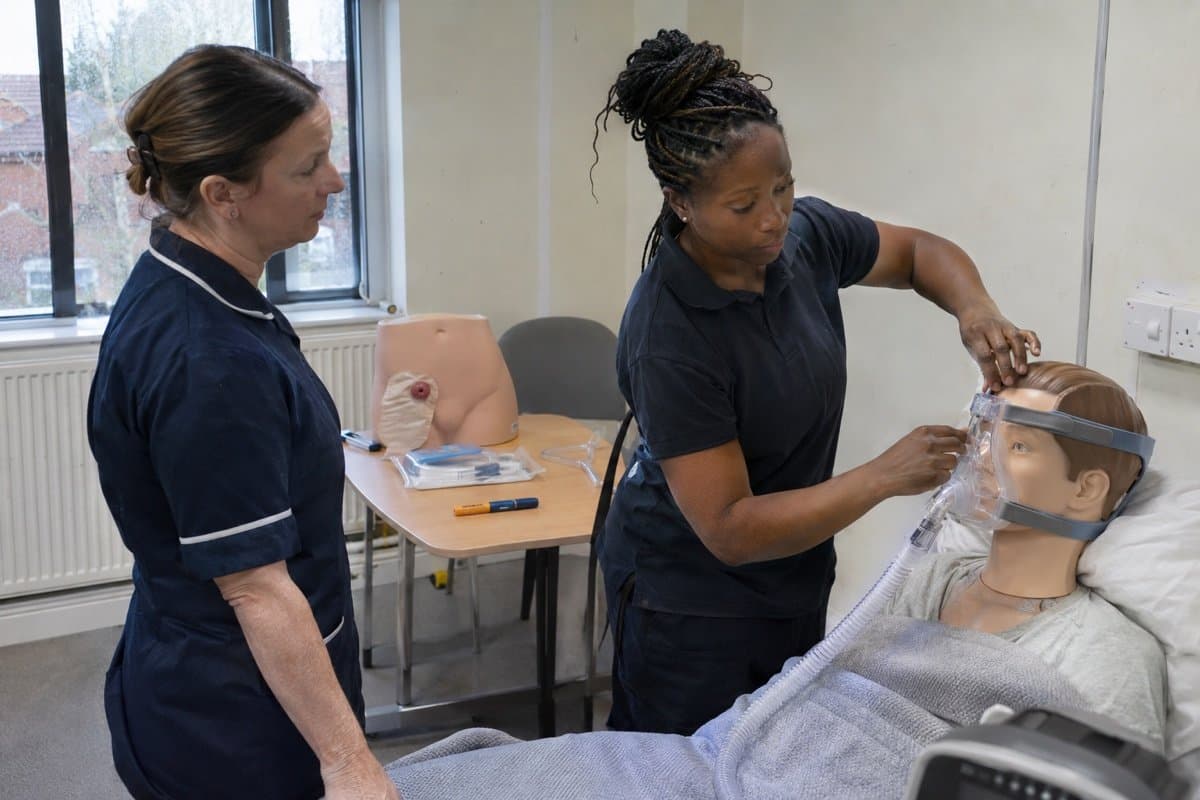
For delegated healthcare tasks, the trainer and competence assessor are not always the same. An approved trainer may teach the activity, but a named regulated professional must still own delegation and the agreed assessment route.
A certificate showing attendance is not enough. Before deployment, the file should show:
- the person’s consent and a current, person-specific healthcare plan
- the named delegating professional, their role and contact route
- the exact activity, equipment, limits and conditions covered
- training title, date, duration, trainer and learning content
- observed assessment against clear competence criteria
- the assessor’s name, professional status and decision
- review date and triggers for earlier reassessment
- escalation instructions for routine queries and urgent changes
- worker confirmation that they understand their limits
- provider authorisation before the worker appears on the rota for that activity
Reassess when needs, equipment or the plan changes, after an incident or near miss, or when a worker loses confidence. Managers should spot-check whether practice still matches the plan.
Watch: why a training certificate is not competence
This Care Sync Experts video explains why completion evidence must be supported by assessment and practice evidence. For delegated activities, the person-specific clinical plan and agreed sign-off route still govern what the worker may do.

Can your own nurse train and sign off care workers?
For delegated healthcare tasks, employing a nurse does not automatically transfer clinical ownership from the person’s responsible healthcare team.
An employed nurse may contribute where they are clinically competent, the responsible team agrees, and it fits their code, scope and indemnity. The provider must also consider whether the model falls within CQC’s regulated activity of Treatment of disease, disorder or injury.
CQC distinguishes external delegation from treatment provided or supervised by the provider’s own healthcare professional. Check its scope guidance on Treatment of disease, disorder or injury before changing the model. If uncertain, seek a written view from CQC and the commissioner.
When to say no: seven stop points
Do not start, or pause delegated healthcare tasks, when:
- there is no named regulated healthcare professional owning the delegation
- the plan is generic, out of date or lacks clear escalation thresholds
- consent is absent, unclear or has materially changed
- the worker has training but no person-specific competence assessment
- the rota cannot guarantee suitably competent cover and contingency
- insurance, contract or CQC registration scope is unclear
- the person is unwell, the activity or equipment has changed, or the worker is asked to make a clinical decision
Record the concern, follow the escalation route and ask the professional or commissioner to resolve it. A worker must know who to contact during the visit and outside normal hours.
Insurance, contracts and payment for the extra skill
For delegated healthcare tasks, ask your broker or insurer to confirm cover in writing for each activity and workforce model. Check conditions about sign-off, reassessment, equipment, records and incident notification. “Complex care is covered” may be too vague.
A contract covering delegated healthcare tasks should identify:
- who provides and funds training, assessment and reassessment
- who pays for training time and enhanced skills
- whether visits include preparation and records
- who supplies, maintains and replaces equipment
- the clinical contact and out-of-hours escalation route
- what happens when competent cover is unavailable
Before adding an activity, check whether the commissioned time and rate permit safe delivery. Record the cost and capacity impact and raise it with the commissioner. Workers need enough time, support and supervision.
One-page checklist before accepting a delegated task
Before accepting delegated healthcare tasks, use three outcomes: accept, accept with conditions, or do not start.
| Check | Evidence required | Decision trigger |
|---|---|---|
| Person and consent | Current plan and recorded consent | No consent or unclear capacity route: do not start |
| Clinical owner | Named regulated professional and contact details | No named delegator: do not start |
| Task boundaries | Written steps, limits and escalation thresholds | Worker expected to make clinical decisions: do not start |
| Training | Task-specific programme and competent trainer | Missing content: accept only when corrected |
| Competence | Observed, person-specific assessment and sign-off | Attendance certificate only: do not deploy |
| Staffing | Enough signed-off workers plus contingency | Unsafe rota or lone point of failure: do not start |
| Governance | Policy, risk assessment, records, audit and incident route | Gaps can be closed before start: accept with conditions |
| Insurance | Written confirmation for the activity and model | Unconfirmed or excluded: do not start |
| Contract and resources | Time, equipment, funding and responsibilities agreed | Unsafe resourcing: renegotiate before start |
| Review | Review date and change triggers agreed | No clinical review route: do not start |
Add the downloadable checklist to a referral or package-start file. It does not replace the clinical plan.
Final thoughts
Safe delegated healthcare tasks are not created by a training event. Safe delivery is a live agreement between the person, professional, provider and worker. Make every boundary visible: the clinical decision, permitted activity, competence evidence, stop points and response to change.
If any one of those answers is missing, do not use goodwill or experience to fill the gap. Pause, document and escalate.
Need stronger governance for delegated healthcare activities?
Care Sync Experts can strengthen the policies, acceptance checks, competency records, audits and governance around delegated healthcare tasks. We do not provide clinical training or competency sign-off. We help you build a defensible compliance system and identify where professional, commissioner, insurer or CQC input is required.
Explore compliance management support or contact Care Sync Experts. You may also find our guides to medication management and CQC mandatory training for care workers useful.
Frequently asked questions
Are delegated healthcare tasks a legal requirement?
No. The national guiding principles are voluntary, and a provider or worker is not legally required to accept a delegated activity. If a regulated service accepts it, duties under CQC regulations, employment law, professional codes, the contract and general safety law still apply.
Can a care worker give insulin?
Potentially. A registered nurse may delegate a person-specific insulin activity when it is clinically appropriate, the worker has suitable training and assessed competence, responsibilities are recorded, and monitoring and escalation remain in place. A care worker should never adjust treatment or make a new clinical decision outside the plan.
Who should sign off competency?
The assessment route should be agreed with the named delegating professional. A clinically competent regulated professional should confirm competence or formally authorise an appropriate assessment arrangement for the person-specific activity. The provider must verify the evidence before deploying the worker.
Can we employ our own nurse to sign off competencies?
An employed nurse may be able to train or assess within their competence, professional code and indemnity, but this does not automatically replace the person’s responsible clinical team. It may also change whether your service needs CQC registration for Treatment of disease, disorder or injury. Agree the model in writing and check with CQC before relying on it.
Does our insurance cover delegated tasks?
Do not assume it does. Ask your broker or insurer for written confirmation that identifies the activities, staff model, training and sign-off conditions, equipment and any exclusions. Keep the response with the governance records and notify the insurer when the task or model changes.
Topics
Adult Social Care · cqc · delegated healthcare · domiciliary care · Supported Living
Written by
Collins Bonsi
Manager, Care Sync Experts
Care Sync Experts helps care providers with CQC, Ofsted, CIW and RQIA registration, compliance and tenders. Our team has more than 10 years' experience and has supported over 1,200 providers.
Published 25 Nov, 2026
Want this handled for you?
Our team has supported over 1,200 care providers with registration, compliance and tenders, with a 98% first-time approval rate.