

Where Care Excellence Meets Business Success. Transform your operations today - 0333 577 0877
 We are here to help 24/7.

CareSync Logo

Home

About Us

CQC Registration service icon

CQC Registration

Navigate the CQC registration process with confidence. We provide complete support from initial application to successful registration, including statement of purpose, policies, DBS checks, and interview preparation to ensure you meet all regulatory requirements.

Marketing Support service icon

Marketing Support

Grow your care business with strategic digital marketing tailored to the sector. From SEO optimised websites and social media management to content creation and online reputation management, we help you attract more clients and build trust in your community.

Comprehensive Training service icon

Comprehensive Training

Develop a skilled, confident workforce with our accredited training programs. From mandatory care certificates to specialist clinical skills, leadership development, and CQC preparation, we deliver engaging training that improves practice and enhances care quality.

Tender Writing service icon

Tender Writing

Win more NHS and local authority contracts with our specialist tender writing service. Our experienced team crafts compelling bids that demonstrate your capabilities, showcase innovation, and align perfectly with commissioning requirements to maximise your success rate.

Ofsted Related Services service icon

Ofsted Related Services

Expert guidance for childcare providers navigating Ofsted registration and compliance. We support nurseries, childminders, and daycare services with Early Years Register applications, EYFS compliance, inspection preparation, and ongoing quality improvement.

PIR Writing service icon

PIR Writing

Professional Provider Information Return completion that showcases your service excellence. Our expert writers craft compelling responses aligned with CQC key lines of enquiry, highlighting your achievements, quality improvements, and evidence based outcomes.

Business Setup service icon

Business Setup

Launch your care business with expert guidance from concept to operation. We provide business planning, financial forecasting, legal structure advice, insurance guidance, and complete setup support to establish a strong foundation for sustainable growth.

Compliance Management service icon

Compliance Management

Stay compliant with evolving care regulations through our comprehensive management systems. We provide ongoing monitoring, policy updates, audit support, and governance frameworks to ensure you maintain CQC fundamental standards and achieve outstanding ratings.

Client Acquisition service icon

Client Acquisition

Implement proven strategies to attract and convert new clients consistently. We develop targeted campaigns, referral programs, community partnerships, and digital funnels that connect you with families seeking quality care, ensuring sustainable business growth

Branding service icon

Branding

Create a distinctive brand identity that reflects your care values and stands out in the market. From logo design and brand guidelines to marketing materials and signage, we develop cohesive branding that builds trust and recognition with clients and partners.

Domiciliary Care service icon

Domiciliary Care

Professional care delivered in the comfort of your own home. Our domiciliary care services support individuals with personal care, medication management, meal preparation, and companionship, helping you maintain independence while receiving the assistance you need.

Temporary Staffing service icon

Temporary Staffing

Reliable healthcare staffing solutions for care providers. We supply fully vetted, qualified nurses, care assistants, and support workers to cover planned leave, sickness absence, or increased demand, ensuring continuity of care without compromising quality.

Combined Care Agency service icon

Combined Care Agency

Integrated care solutions bringing together multiple services under one provider. We coordinate domiciliary care, complex care packages, and specialist support services, offering seamless care delivery with consistent quality standards and simplified administration.

Supported Living service icon

Supported Living

Empowering adults with learning disabilities, autism, or mental health needs to live independently. Our supported living services provide tailored assistance with daily activities, skill development, and community integration while you maintain your own tenancy and lifestyle choices.

CIW Domiciliary Care Agency service icon

CIW Domiciliary Care Agency

Specialist domiciliary care services for Wales, fully registered with Care Inspectorate Wales. We meet all Welsh regulatory standards and Social Services and Wellbeing Act requirements, delivering culturally appropriate care that respects Welsh language preferences and local community values.

RQIA Domiciliary Care Agency service icon

RQIA Domiciliary Care Agency

Quality domiciliary care services for Northern Ireland, registered with the Regulation and Quality Improvement Authority. We adhere to all RQIA minimum standards and regulations, ensuring dignified, person centered care that promotes independence and respects individual choices.

Domiciliary Care service icon

Domiciliary Care

Win domiciliary care and home care tenders across the UK — council frameworks, dynamic purchasing systems, NHS packages and spot contracts, with specialist bid writing and CQC-ready evidence.

Supported Living service icon

Supported Living

Supported living tenders for learning disability, autism, mental health and physical disability services, staying inside the regulatory perimeter of tenancy-based support, backed by your CQC compliance.

Residential Care service icon

Residential Care

Residential care home tenders — block-bed frameworks and specialist lots, with the staffing ratios, dementia care and quality evidence commissioners score most closely.

Extra Care service icon

Extra Care

Extra care housing tenders — care and support in extra care schemes, with original, scheme-specific writing backed by CQC, CIW and RQIA registration and compliance.

Reablement service icon

Reablement

Reablement tenders across the UK — outcomes-led, strengths-based bids that prove rapid mobilisation, hospital discharge capability and measurable independence outcomes.

Children & Young People service icon

Children & Young People

Children and young people's services tenders — Ofsted-regulated residential care, supported accommodation, family support and leaving care contracts.

Tenders

Website Development service icon

Website Development

Build a high performing care website that converts enquiries into placements. We create fast, accessible, and search optimised websites tailored for care providers that win trust and generate quality enquiries.

Policy Development service icon

Policy Development

Get tailored policies that stand up to inspection and work in daily practice. Our custom policy suites map directly to CQC requirements with smart workflows that keep everything current and evidenced.

Business Training service icon

Business Training

Practical training that builds confident teams and measurable competence. We deliver focused learning through real scenarios, helping your staff excel in their roles and meet regulatory expectations.

Guidance and Support service icon

Guidance and Support

Your expert partner for compliance, inspections, and sustainable growth. Get calm, clear, and actionable guidance through set up, daily operations, and inspection moments with concrete next steps.

Success Stories service icon

Success Stories

Living Plus Care Services Ltd successfully secured six out of seven tenders.

Videos service icon

Videos

Explore our curated video library to stay informed about the latest trends.

Brochures service icon

Brochures

Explore our exclusive brochures to learn valuable insights about our services.

Ebooks service icon

Ebooks

Our ebooks serve as in-depth guides to CQC, RQIA, CIW, and Ofsted regulations.

Blogs service icon

Blogs

Stay informed with our expert blogs covering the latest updates, tips, and best practices.

FAQ service icon

FAQ

Read our most frequently ask questions

Free Expert Guides

CQC Notifications: What Providers Must Report

One of the most critical requirements is the duty to notify CQC of specific events without undue delay. This guidance explains what CQC notifications are, why they matter, and how to fulfil your legal obligations.

Care quality providers in England must understand their statutory obligations under the Care Quality Commission registration regime
The Care Quality Commission (CQC) is the independent regulator of health and social care services in England. As part of their registration requirements, all providers must maintain compliance with Regulation 18 of the CQC (Registration) Regulations 2009. This regulation sets out your statutory duty to notify CQC of certain events and circumstances that affect the safety and quality of care provision.
Care professional
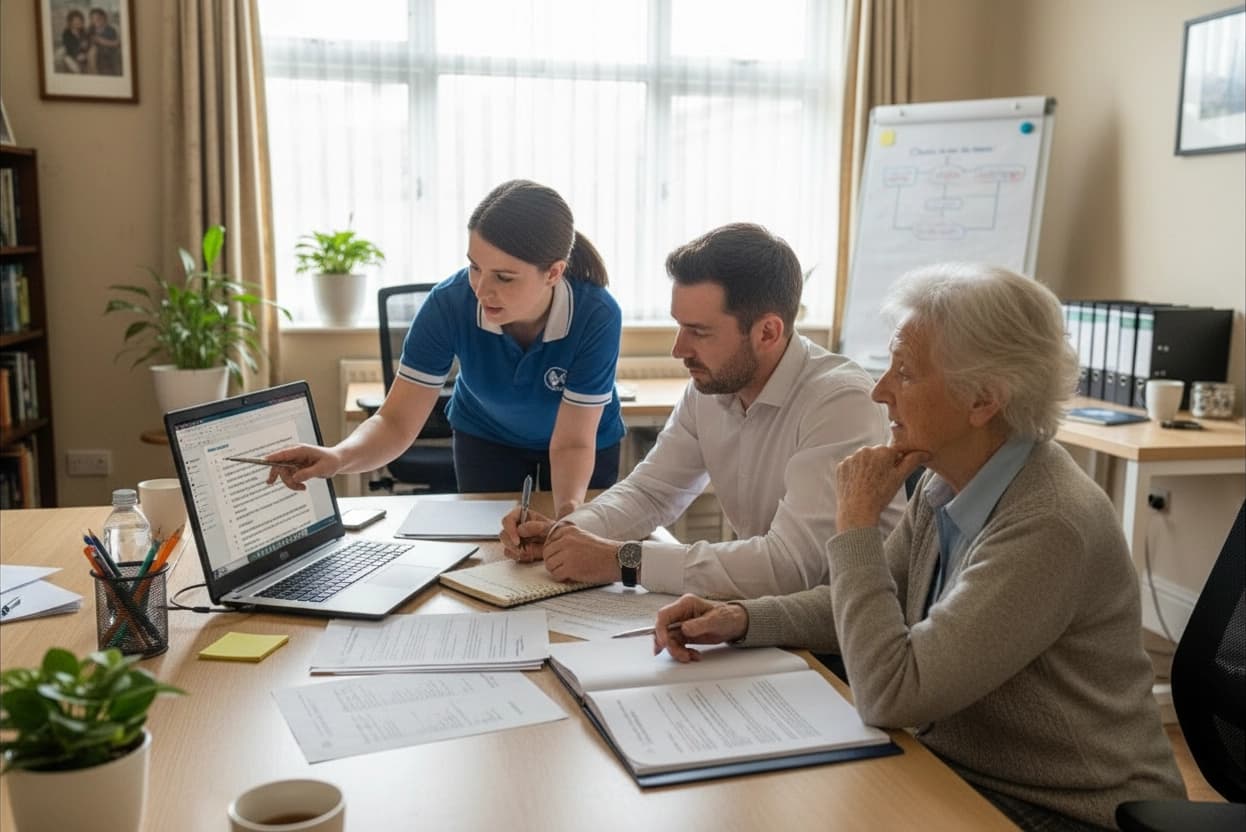
Care professionals supporting an older person

Failure to notify CQC when required is a serious breach of registration conditions and can result in enforcement action, conditions being imposed on your registration, prosecution, or even cancellation of registration. This makes understanding your notification obligations absolutely essential for any care provider in England.

hello@caresyncexperts.co.uk.

Legal Framework

CQC notifications are regulated under several key pieces of legislation:

Health and Social Care

The Health and Social Care Act 2008 provides the primary legislation enabling CQC regulation

Regulations 2009

The CQC (Registration) Regulations 2009, specifically Regulation 18, sets out the notification duty

CQC's published guidance

CQC's published guidance on notifications clarifies requirements and processes

Related regulations on safeguarding

Related regulations on safeguarding, deprivation of liberty, and duty of candour supplement notification requirements

Regulation 18 states that providers must notify CQC of any event in relation to the carrying on of the regulated activity that affects, or could affect, the health, safety or welfare of service users. This is intentionally broad, placing responsibility on providers to exercise professional judgment about what requires reporting.

Types of Statutory Notifications

Providers must submit notifications for the following categories of events. Understanding which events fall into which category is essential for meeting your obligations.

1

Deaths of Service Users

You must notify CQC of all deaths of service users, whether expected or unexpected, that occur during the course of the regulated activity. This includes natural deaths of individuals with advanced conditions. Notification must occur without delay, typically within one working day. The CQC distinguishes between routine notifications for expected deaths and more urgent reporting for sudden or unexpected deaths, particularly where circumstances are unclear or concerning.

2

Serious Injuries and Harm

Notification is required when a service user suffers a serious injury. Examples include significant fractures, head injuries, severe burns, or poisoning. The threshold is whether the injury could reasonably affect the person's wellbeing or require hospitalisation. Serious injuries must be notified without delay. Documentation of how the injury occurred and what immediate action was taken is essential.

3

Abuse or Allegations of Abuse

Any actual or alleged abuse must be notified to CQC. This includes physical abuse, sexual abuse, emotional or psychological abuse, neglect, and financial exploitation. Allegations made by service users, family members, staff, or other agencies must all be reported. Notification is required without delay. Simultaneously, you must follow your safeguarding procedures and usually notify the local safeguarding adults team and police where appropriate.

1

Events Affecting Service Delivery

Notification is required if an event occurs that stops or threatens to stop the regulated activity. Examples include loss of key personnel, loss of utilities (electricity, water, heating), structural damage to premises, or loss of premises entirely. These events are notifiable because they directly impact the provider's ability to deliver safe care

2

Absence of Registered Manager or Provider

If the registered manager is absent for more than 28 consecutive days, or the registered provider is absent for more than 28 consecutive days (for sole proprietorships), this must be notified. This requirement exists because CQC needs to ensure accountability for the management and operation of services at all times.

3

Deprivation of Liberty Safeguards Authorisations

Providers must notify CQC when they apply for or receive a Deprivation of Liberty Safeguards (DoLS) authorisation. Given the rights implications of DoLS, CQC needs to be aware of such applications and decisions. For more detail, see our comprehensive guidance on Deprivation of Liberty Safeguards.

Police Involvement and Criminal Proceedings

If a police incident occurs on premises, or if criminal proceedings are initiated against the provider or any member of staff in connection with the carrying on of the regulated activity, this must be notified. Criminal investigations or prosecutions directly affect public confidence and safety oversight.

Changes to Statement of Purpose

If the provider makes a significant change to the statement of purpose that has not been notified to CQC previously, this must be reported. The statement of purpose describes what the service provides and how. Material changes affect CQC's understanding of what is being inspected.

CQC Registration Step-by-Step Guide

Not sure where to start with CQC registration? Our step-by-step guide walks you through every stage of the process, from application to approval.

Read the full guide

How to Submit Notifications

CQC notifications are submitted through the CQC online notification portal. Providers access the portal using their registration account credentials. The portal guides you through a series of questions to determine the event type and collect necessary information.

Step 1

Log in to the CQC notification portal using your registration account details

Step 2

Select the event type from the dropdown menu

Step 3

Complete mandatory fields with accurate, detailed information

Step 4

Attach supporting documentation if required

Step 5

Review your submission for completeness and accuracy

Step 6

Submit the notification electronically

CQC will issue a confirmation reference number on submission. Keep this reference number for your records. CQC may request additional information or clarification after submission, so ensure your contact details are current.

Notification Forms Breakdown

CQC provides standardised forms for different notification types. Using the correct form ensures all necessary information is captured and speeds processing.

Notification Type

Form To Use

Timeline

Death of service user

Notification of death form

Without delay (usually within 1 working day)

Serious injury

Notification of serious injury form

Without delay

Abuse or allegation

Notification of abuse form

Without delay

Event affecting service

Notification of event form

Without delay

Registered person absence (28+ days)

Notification of absence form

Before or within 10 working days

DoLS application/ authorisation

DoLS notification form

Within 3 working days of application

Police involvement

Police incident notification form

Without delay

Statement of purpose change

Statement change notification form

Within 28 days of change

CQC's online portal now guides providers through an electronic notification system. The specific form field structure depends on your event type, and the system will ask clarifying questions to ensure you provide complete information.

Common Mistakes Providers Make

Healthcare and social care providers frequently make errors with CQC notifications. Being aware of these mistakes can help you avoid them.

Late Submissions

The most common error is notifying CQC late. Providers delay submission hoping to gather more information or because they underestimate the severity of an event. CQC's expectation is that notification occurs promptly, not after investigation is complete.

→
Solution

You must notify without delay, then provide updates if additional information emerges.

Using the Wrong Form

Submitting an incident using an incorrect form type delays processing and may result in CQC requesting resubmission.

→
Solution

Use the form that corresponds to the actual event type, not the closest match.

Incomplete Information

Submitting notifications with missing mandatory fields, vague descriptions, or incomplete incident timelines is problematic. CQC will request additional information, which further delays their ability to assess whether regulatory action is needed.

→
Solution

 Provide comprehensive details at submission.

Failing to Notify at All

Some providers fail to recognise that an event requires notification. This is particularly common with allegations of abuse that appear minor, or incidents that occur at night when managers are not present.

→
Solution

 Regulation 18 places responsibility on the provider to recognise notifiable events and report them.

Conflating Notifications with Safeguarding Reports

Providers sometimes assume that because they have reported an incident to the local safeguarding adults team or police, they have automatically notified CQC. Notification to safeguarding is separate from CQC notification.

→
Solution

Both obligations must be fulfilled independently.

Poor Documentation

Failing to maintain a record of what was notified, when, and what reference number was issued makes it impossible to demonstrate compliance

→
Solution

Your internal records must clearly document your notification decisions.

CQC's online portal now guides providers through an electronic notification system. The specific form field structure depends on your event type, and the system will ask clarifying questions to ensure you provide complete information.

Consequences of Failing to Notify CQC

Failure to notify CQC when required is a breach of registration conditions and can result in serious consequences for your organisation and individuals responsible for compliance.

Enforcement Action

CQC can take enforcement action proportionate to the breach. This may include serving warning notices, conditions notices, or suspension/cancellation of registration.

Conditions on Registration

CQC may place conditions on your registration requiring you to implement specific processes or reporting mechanisms to prevent future failures.

Prosecution

Regulation 18 is a criminal offence. CQC can prosecute registered persons and managers for failure to notify under Section 73 of the Health and Social Care Act 2008. Conviction can result in fines and, in some cases, disqualification from managing health and social care services.

Reputational Damage

Enforcement action, prosecution, or cancellation of registration is recorded on the CQC register and publicly visible. This damages reputation, trust, and your ability to recruit staff and attract service users.

Loss of Registration

In serious cases, particularly where there is a pattern of non-notification or where failure to notify has contributed to harm, CQC may cancel your registration entirely, meaning you cannot operate a regulated activity.

Best Practice Approaches to Notification Compliance

Developing robust internal systems and processes ensures you meet your CQC notification obligations consistently and demonstrably.

Establish Clear Internal Notification Procedures

Document a clear policy setting out which events require CQC notification, who decides whether to notify, who completes the notification, and within what timescale. Ensure all staff understand the procedure and their role within it.

Staff Training and Awareness

All staff, particularly management and those likely to be first aware of incidents, need training on what constitutes a notifiable event. Annual refresher training ensures compliance. Training should be role-specific, with managers receiving more detailed guidance than frontline staff

Maintain Detailed Incident Records

Establish incident reporting systems that capture detailed information about events. This creates an audit trail and provides material for decision-making about whether notification is required. Records should include date, time, people involved, description of what happened, immediate actions taken, and whether notification was made.

Decision Matrix

Create a decision matrix or tool that helps staff determine whether an event is notifiable. This reduces reliance on individual judgment and ensures consistency. The matrix should reference Regulation 18 criteria and provide examples.

Timely Notification Process

Once a notifiable event is identified, ensure the notification is submitted without delay. Establish a process where managers can submit notifications even outside normal office hours. CQC's online portal is available 24/7 for submissions.

Keep Records of All Notifications

Maintain a log of all CQC notifications submitted, including the date submitted, the event type, and the CQC reference number issued. This provides evidence of compliance and helps identify patterns if similar events are occurring.

Review and Learning

Use notifications as an opportunity for organisational learning. When notifiable events occur, investigate the root cause and implement improvements to prevent recurrence. CQC is more likely to be satisfied with a provider that demonstrates learning and improvement than one with a pattern of unreported incidents.

Stuck on Requires Improvement or Inadequate?

Our guide walks you through the recovery process, what inspectors need to see at reinspection, and how to build an evidence portfolio that demonstrates sustained improvement.

Read the rating improvement guide

Related Compliance Obligations

CQC notification is often part of a broader compliance picture. Related obligations include:

Duty of Candour

Your obligation to be honest and open with service users and families when something goes wrong

Safeguarding Adults

Local authority safeguarding duties for incidents involving potential abuse

Deprivation of Liberty Safeguards

Specific requirements for DoLS applications and authorisations

These obligations operate in parallel with CQC notification. Meeting your CQC obligation does not discharge your safeguarding or candour obligations, and vice versa.

How Care Sync Experts Supports CQC Notification Compliance

Care Sync Experts works with healthcare and social care providers to develop and maintain robust CQC notification compliance systems.

Care professional providing support

Policy and Procedure Development: We help you develop clear, compliant notification policies tailored to your service type and risk profile.

Staff Training: We deliver comprehensive training to managers and staff on recognising and reporting notifiable events.

Incident Management System Implementation: We assist in establishing or improving incident recording systems to support notification decision-making.

Compliance Auditing: We audit your current notification practices against Regulation 18 requirements and identify gaps.

Regulatory Liaison Support: We help prepare documentation and evidence of your notification processes should CQC wish to inspect this area

Ongoing Support: We provide updates when CQC guidance changes and help integrate new requirements into your procedures.

To discuss how Care Sync Experts

For support developing your CQC notification compliance, contact Care Sync Experts today.

Call 0333 577 0877 hello@caresyncexperts.co.uk

Free Resources Hub

Access free CQC checklists, templates, and guides to help with registration, inspection preparation, and ongoing compliance.

Browse free resources

Frequently asked questions

You must notify CQC of all deaths of service users without delay, typically within one working day. This applies to both expected deaths (e.g. in patients with advanced terminal conditions) and unexpected deaths. Unexpected deaths or those with unclear circumstances may warrant even more urgent notification. The notification must be submitted through the CQC online portal using the notification of death form.
A notifiable safety incident is any event that affects, or could affect, the health, safety or welfare of service users. This includes serious injuries (fractures, head injuries, severe infections), abuse or allegations of abuse, events that stop or threaten to stop service delivery, and incidents involving police. The threshold is objective: would a reasonable person consider this event affects safety or welfare?
Log in to the CQC online notification portal using your registration account credentials. Select the appropriate event type from the dropdown menu, answer all mandatory questions, attach supporting documentation if requested, review your submission for completeness and accuracy, and submit electronically. CQC will issue a reference number confirming receipt.
Late notification is a breach of Regulation 18. CQC may view a late notification as a failure to notify without delay, which is a registration breach. If CQC becomes aware that a notifiable event occurred but was not reported, they may take enforcement action, place conditions on registration, or in serious cases pursue prosecution. The key is to notify promptly rather than waiting for investigation to be complete.
Yes. You must notify CQC within 3 working days of applying for a DoLS authorisation or receiving a DoLS authorisation decision. This requirement exists because DoLS involves restricting an individual's liberty, which has serious rights implications. Notification allows CQC to understand capacity issues within your service user population.
Use the notification of abuse form available through the CQC online portal. This form applies to any actual or alleged abuse, including physical abuse, sexual abuse, emotional abuse, neglect, and financial exploitation. Complete the form with details of who made the allegation, what was alleged, when it is alleged to have occurred, and what immediate action has been taken.
You should notify CQC without delay regardless of whether you have reported to the local safeguarding adults team. Notification to safeguarding and notification to CQC are separate legal obligations. In practice, you may make both notifications on the same day, but this does not excuse late notification to CQC.
Staff who discover a notifiable incident must escalate it to their manager immediately. The manager receiving the escalation must then assess whether notification is required and, if so, submit the notification without delay. CQC's online portal operates 24/7, so notification can be submitted outside normal office hours.
No. You must notify CQC without delay when a notifiable event occurs. This does not mean you must have investigated fully or confirmed all details. Provide the information you have at the time of notification, clearly stating what is confirmed and what is still being clarified. You can provide updates to CQC as your investigation progresses.
Maintain a log of all CQC notifications submitted, including the date the notifiable event occurred, the date notification was submitted, the event type, the information provided in the notification, and the CQC reference number issued. Also keep copies of any correspondence with CQC about the notification.
Image 1
Image 1
Image 1

Still have questions?

Can't find the answer you're looking for? Please chat to our friendly team.

Get In Touch

Book a Free Consultation

Ready to take the next step? Speak to one of our care registration experts today. We will assess your situation, answer your questions, and give you a clear plan of action.

Book your free consultation

Learn how we can support your success

Email: hello@caresyncexperts.co.uk

Phone: 0333 577 0877

CareSync Logo

Would you like to receive update from CareSync Experts?

Our Packages

  • Domiciliary Care
  • Supported Living Services
  • Temporary Staffing Solutions
  • Combined Care Agency

Quick Links

  • FAQs
  • Success Stories
  • Download Our Brochures
  • Privacy Policy

Stay Connected

  • +44 333 577 0877
  •  hello@caresyncexperts.co.uk

All rights reserved. Copyright © - Care Sync Experts.

logoslogoslogoslogos

Call us

Enquire online

CareSync Logo
Home
About Us
Our Services
CQC Registration
Navigate the CQC registration process with confidence. We provide complete support from initial application to successful registration, including statement of purpose, policies, DBS checks, and interview preparation to ensure you meet all regulatory requirements.
Marketing Support
Grow your care business with strategic digital marketing tailored to the sector. From SEO optimised websites and social media management to content creation and online reputation management, we help you attract more clients and build trust in your community.
Comprehensive Training
Develop a skilled, confident workforce with our accredited training programs. From mandatory care certificates to specialist clinical skills, leadership development, and CQC preparation, we deliver engaging training that improves practice and enhances care quality.
Tender Writing
Win more NHS and local authority contracts with our specialist tender writing service. Our experienced team crafts compelling bids that demonstrate your capabilities, showcase innovation, and align perfectly with commissioning requirements to maximise your success rate.
Ofsted Related Services
Expert guidance for childcare providers navigating Ofsted registration and compliance. We support nurseries, childminders, and daycare services with Early Years Register applications, EYFS compliance, inspection preparation, and ongoing quality improvement.
PIR Writing
Professional Provider Information Return completion that showcases your service excellence. Our expert writers craft compelling responses aligned with CQC key lines of enquiry, highlighting your achievements, quality improvements, and evidence based outcomes.
Business Setup
Launch your care business with expert guidance from concept to operation. We provide business planning, financial forecasting, legal structure advice, insurance guidance, and complete setup support to establish a strong foundation for sustainable growth.
Compliance Management
Stay compliant with evolving care regulations through our comprehensive management systems. We provide ongoing monitoring, policy updates, audit support, and governance frameworks to ensure you maintain CQC fundamental standards and achieve outstanding ratings.
Client Acquisition
Implement proven strategies to attract and convert new clients consistently. We develop targeted campaigns, referral programs, community partnerships, and digital funnels that connect you with families seeking quality care, ensuring sustainable business growth
Branding
Create a distinctive brand identity that reflects your care values and stands out in the market. From logo design and brand guidelines to marketing materials and signage, we develop cohesive branding that builds trust and recognition with clients and partners.
Our Packages
Domiciliary Care
Professional care delivered in the comfort of your own home. Our domiciliary care services support individuals with personal care, medication management, meal preparation, and companionship, helping you maintain independence while receiving the assistance you need.
Temporary Staffing
Reliable healthcare staffing solutions for care providers. We supply fully vetted, qualified nurses, care assistants, and support workers to cover planned leave, sickness absence, or increased demand, ensuring continuity of care without compromising quality.
Combined Care Agency
Integrated care solutions bringing together multiple services under one provider. We coordinate domiciliary care, complex care packages, and specialist support services, offering seamless care delivery with consistent quality standards and simplified administration.
Supported Living
Empowering adults with learning disabilities, autism, or mental health needs to live independently. Our supported living services provide tailored assistance with daily activities, skill development, and community integration while you maintain your own tenancy and lifestyle choices.
CIW Domiciliary Care Agency
Specialist domiciliary care services for Wales, fully registered with Care Inspectorate Wales. We meet all Welsh regulatory standards and Social Services and Wellbeing Act requirements, delivering culturally appropriate care that respects Welsh language preferences and local community values.
RQIA Domiciliary Care Agency
Quality domiciliary care services for Northern Ireland, registered with the Regulation and Quality Improvement Authority. We adhere to all RQIA minimum standards and regulations, ensuring dignified, person centered care that promotes independence and respects individual choices.
Tenders
Elevate Your Care Services
Website Development
Build a high performing care website that converts enquiries into placements. We create fast, accessible, and search optimised websites tailored for care providers that win trust and generate quality enquiries.
Policy Development
Get tailored policies that stand up to inspection and work in daily practice. Our custom policy suites map directly to CQC requirements with smart workflows that keep everything current and evidenced.
Business Training
Practical training that builds confident teams and measurable competence. We deliver focused learning through real scenarios, helping your staff excel in their roles and meet regulatory expectations.
Guidance and Support
Your expert partner for compliance, inspections, and sustainable growth. Get calm, clear, and actionable guidance through set up, daily operations, and inspection moments with concrete next steps.
Our Resources
Success Stories
Living Plus Care Services Ltd successfully secured six out of seven tenders.
Videos
Explore our curated video library to stay informed about the latest trends.
Brochures
Explore our exclusive brochures to learn valuable insights about our services.
Ebooks
Our ebooks serve as in-depth guides to CQC, RQIA, CIW, and Ofsted regulations.
Blogs
Stay informed with our expert blogs covering the latest updates, tips, and best practices.
FAQ
Read our most frequently ask questions
Contact Us